
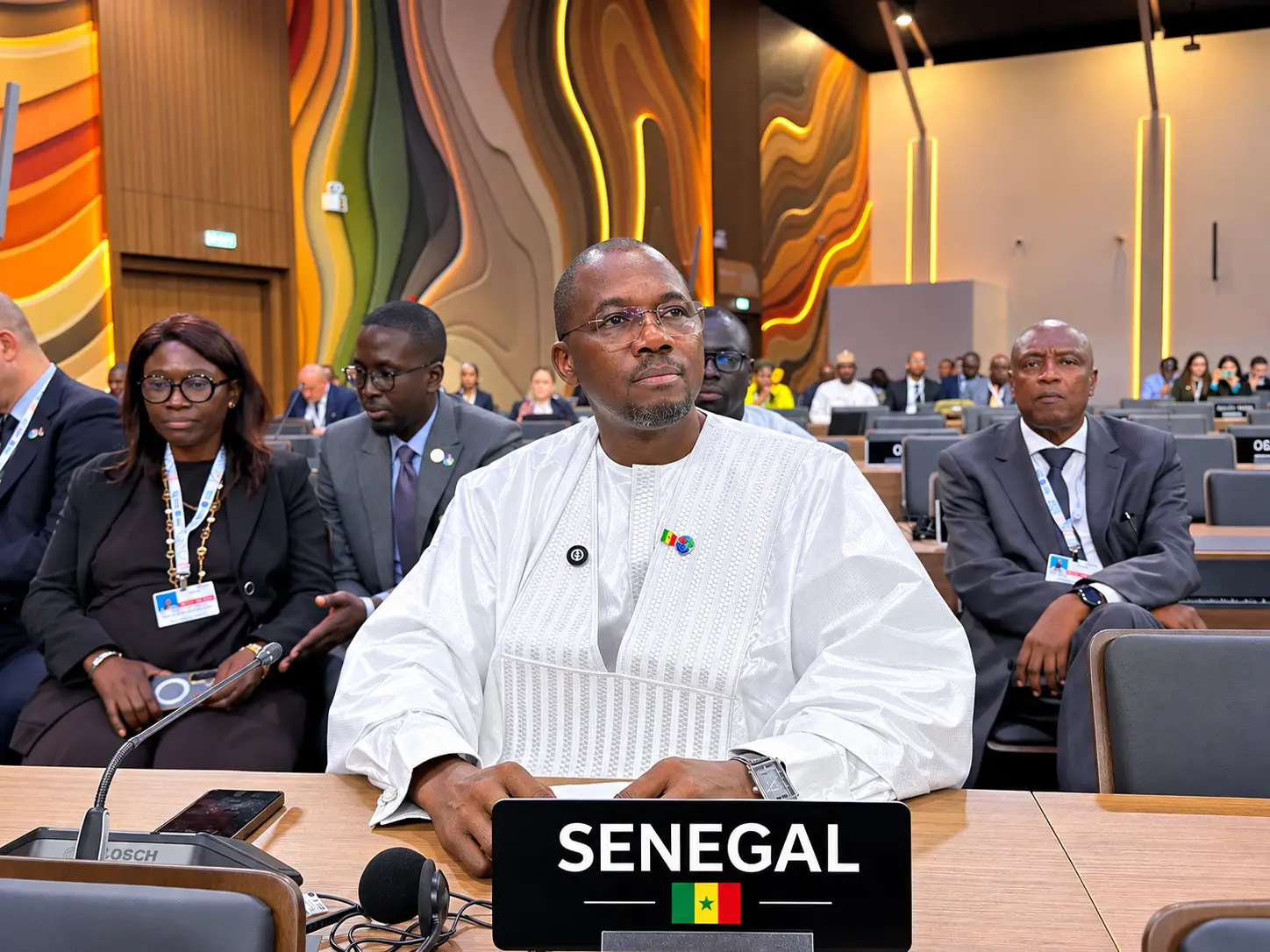
Antalya Manifesto: For an Africa in control of its choices and its destiny (Dr Aliou Gori Diouf) November 22, 2026
COP31 in Antalya marks a moment of truth for global environmental governance. Beyond negotiations and diplomatic compromises, it invites us to fundamentally reflect on Africa’s place in the definition of international environmental policies, but above all on its capacity to enforce its priorities, its interests and its legitimate right to development.
For several decades, our continent has taken full part in international efforts to combat climate change, preserve biodiversity and protect natural resources. However, a paradox remains: Africa, which contributes little to global greenhouse gas emissions, is among the regions hardest hit by the consequences of climate change. Recurring droughts, floods, coastal erosion, desertification and land degradation are weakening our economies, our ecosystems and the living conditions of our populations. This situation calls for a demand for climate justice. International solidarity cannot be limited to declarations of principle. It must result in predictable, accessible and effectively mobilized financial commitments, appropriate technology transfers and sustainable strengthening of the institutional and scientific capacities of African countries.
Africa is not asking for preferential treatment. It demands recognition of its rights, respect for historical responsibilities and the necessary means to lead its own ecological transition.
In this regard, the lessons of COP31 must lead us to move beyond an essentially defensive diplomacy, often centered on the search for compromise, to build a true African diplomacy of initiative. It is neither a question of calling into question multilateralism nor of isolating itself from international dynamics, but of ensuring that Africa participates fully in the definition of the rules and orientations which engage its future.
The ecological transition cannot be considered as a new constraint imposed on African economies. It must become a powerful lever for structural transformation, economic sovereignty, innovation and job creation. Our natural resources, our renewable energy potential, our biodiversity and our human capacities constitute major assets which must be better exploited for the benefit of our populations.
For Senegal, this ambition is part of the transformation dynamic carried by Vision Senegal 2050, which places sovereignty, sustainability and the valorization of natural capital at the heart of the national development project. Our country intends to make the ecological transition a pillar of its economic and social transformation, reconciling environmental protection, energy security, industrial development and improvement of the living conditions of populations.
It is therefore essential that international climate policies take full account of the economic and social realities of developing countries. The requirements for reducing emissions, energy transition and protecting ecosystems must be accompanied by fair and appropriate financing mechanisms. The excessive use of loans, particularly when they aggravate the debt of the beneficiary countries, cannot constitute a lasting response to a crisis whose responsibilities are historically unequal.
We must also pay particular attention to new international trade and environmental rules. Carbon regulation mechanisms, production standards and traceability requirements must not become additional obstacles to the competitiveness of our economies. The global ecological transition must open up perspectives for African producers, promote the local transformation of our resources and allow the continent to capture a greater share of the value created.
This is why I share the need to carry out an independent, rigorous and documented assessment of more than thirty years of international environmental negotiations. Such an approach, supported by the African Union and the African Ministerial Conference on the Environment (AMCEN), would make it possible to measure the commitments kept, the financing actually mobilized, the technological transfers carried out, but also the economic costs borne by our countries and the development opportunities lost.
This work must lead to a common African doctrine, based on clearly defined priorities, shared red lines and a collective capacity for negotiation. African unity must no longer be just a convergence of diplomatic positions; it must become a true instrument of power, supported by the scientific, legal, economic and financial expertise of the continent.
I would particularly like to emphasize three fundamental demands: climate justice, ecological sovereignty and the creation of value on the African continent.
Climate justice requires respect for the principle of common but differentiated responsibilities and respective capacities. Ecological sovereignty requires that African states retain control of their development choices, their natural resources and their transition trajectories. Finally, value creation requires that the protection of our natural heritage is accompanied by productive investments, skills transfers, technological innovations and decent jobs for our youth.
Africa must therefore move from the status of a vulnerable continent, too often presented as a beneficiary of international assistance, to that of an essential strategic partner in the construction of global environmental solutions.
Senegal reaffirms its commitment to international cooperation and environmental multilateralism. But this cooperation must be based on fairness, transparency, accountability and reciprocity. We must be able to assess the quality of an agreement not only in terms of its adoption, but above all in terms of the funding actually available, the technologies transferred, the ecosystems restored, the jobs created and the populations effectively protected.
Antalya must be the starting point for an African strategic awakening. A moment when our continent decides to better evaluate its achievements, to defend its interests and to take its full place in the redefinition of global environmental governance.
The climate emergency no longer leaves us the luxury of wait-and-see. It requires us to combine environmental ambition and the need for development, international responsibility and national sovereignty, protection of the planet and prosperity of people.
Because, ultimately, there cannot be a just ecological transition if it condemns a part of humanity to give up on its development.
Africa must no longer just take part in decisions that affect the future of the planet. It must help to design, guide and shape them.
The ecological future of the world cannot be built sustainably without a strong, sovereign Africa that is fully involved in its destiny.
Dr Aliou Gori Diouf, Minister of the Environment and Ecological Transition
