
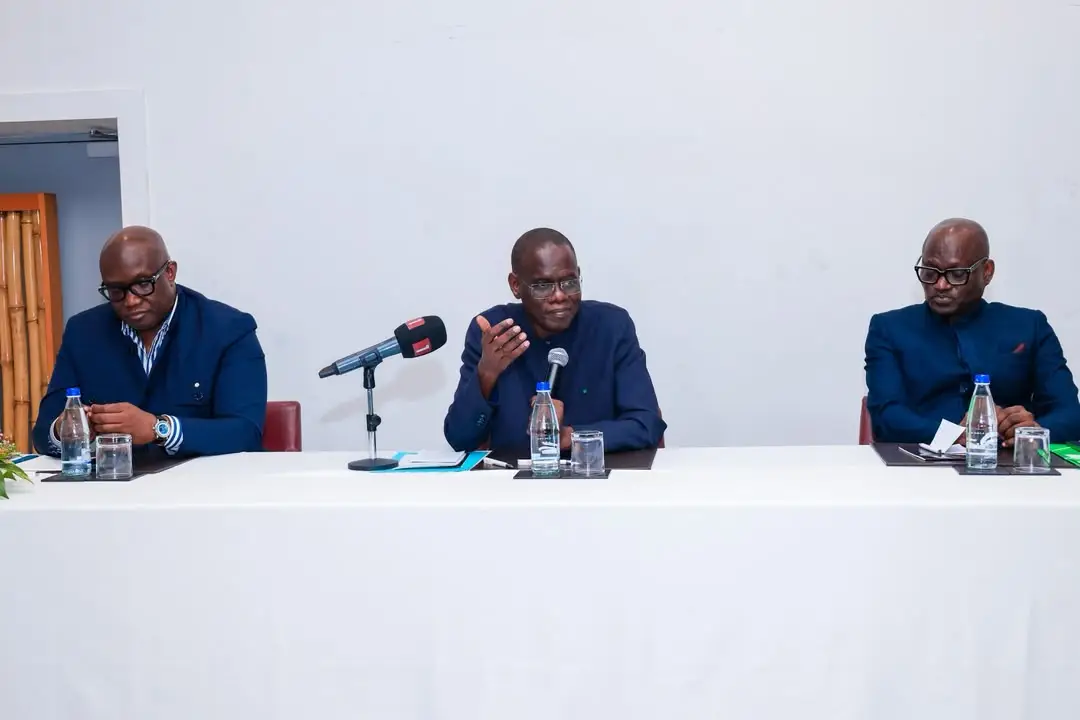
Agenda Senegal 2050: the Prime Minister mobilizes the diaspora in Ivory Coast
During a meeting with Senegalese established in Ivory Coast, Prime Minister Ahmadou Alhaminou Mohamed Lo called on the community to contribute more to the implementation of the Senegal 2050 Agenda. Financing of women and young people, social housing, support for entrepreneurs and development of skills were among the main concerns addressed.
The diaspora at the heart of national transformation
The Senegalese diaspora in Côte d’Ivoire is called upon to play an increased role in the economic and social transformation of Senegal. This is the message conveyed by the Prime Minister during his meeting with Senegalese nationals, in the presence of the Senegalese ambassador, the consul general, executives, entrepreneurs, investors and representatives of community organizations.
The discussions made it possible to address the difficulties encountered by Senegalese established in this country, but also the means to better mobilize their skills, their financial resources and their professional networks in the service of national development.
The Prime Minister invited his interlocutors to come together around the essential: providing concrete responses to people’s concerns and contributing to the construction of a common future. He recalled that the Senegal 2050 National Transformation Agenda places a central place on improving living conditions, social equity and the structural transformation of the economy.
This framework is based in particular on a results-oriented approach, with around sixty indicators intended to measure the progress of public policies. It is also based on the principles of Jub, Jubal, Jubanti, which emphasize rigor, transparency and accountability in the management of public affairs.
For the Head of Government, the contribution of the diaspora should not be limited to money transfers. The professional experience, skills, investments and economic relations of Senegalese people abroad constitute all resources to be exploited. The challenge is to make this community an active partner in the transformation of the country.
Women and young people: strengthening access to financing
Financing the economic activities of women and young people occupied an important place in the discussions. The participants particularly mentioned the difficulties of women with limited means to develop their commercial activities.
An envelope of 35 million CFA francs intended to support women’s economic initiatives was mentioned. The question of its re-examination was also raised in view of the scale of the needs.
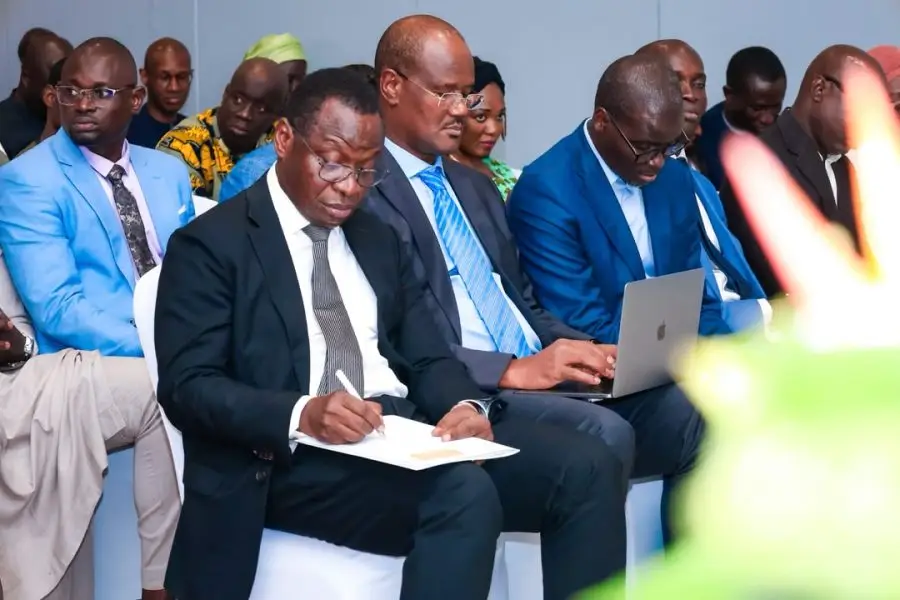
The discussions also focused on supporting young people wishing to launch income-generating activities. The Prime Minister recalled the existence of support systems, in particular those of the General Delegation for Rapid Entrepreneurship of Women and Young People (DER/FJ). He invited community representatives to contact the relevant officials to study the possibilities of supporting the identified projects.
Beyond funding, the structuring of initiatives appears decisive. The preparation of solid files, technical supervision, monitoring of activities and accountability are all conditions likely to facilitate access to credit and improve the viability of projects.
The gradual formalization of the informal sector is also an issue. It could help secure income, strengthen small businesses and encourage their development.
Social housing, an expectation of the diaspora
Access to housing is among the concerns expressed by Senegalese established in Côte d’Ivoire. The Prime Minister recalled the importance of housing in the national transformation policy, particularly through social housing programs and the development of urban centers in the fourteen regions of Senegal.
To better meet the community’s expectations, it is necessary to identify needs and organize them in order to allow the authorities and competent structures to study appropriate support mechanisms.
Transparency in the selection of beneficiaries, the clarification of access conditions and the monitoring of files were presented as important elements to guarantee fairness and strengthen confidence in the envisaged systems.
Executives and entrepreneurs, relays for investment
The Senegalese community in Côte d’Ivoire also has economic potential that the Government wishes to further mobilize. Several companies created or managed by Senegalese are developing their activities there while maintaining links with their country of origin.
Strengthening these relationships could encourage cross-investment, business partnerships and the creation of new opportunities, particularly for women and young people. The objective is also to support the emergence of Senegalese companies capable of developing regionally and internationally.
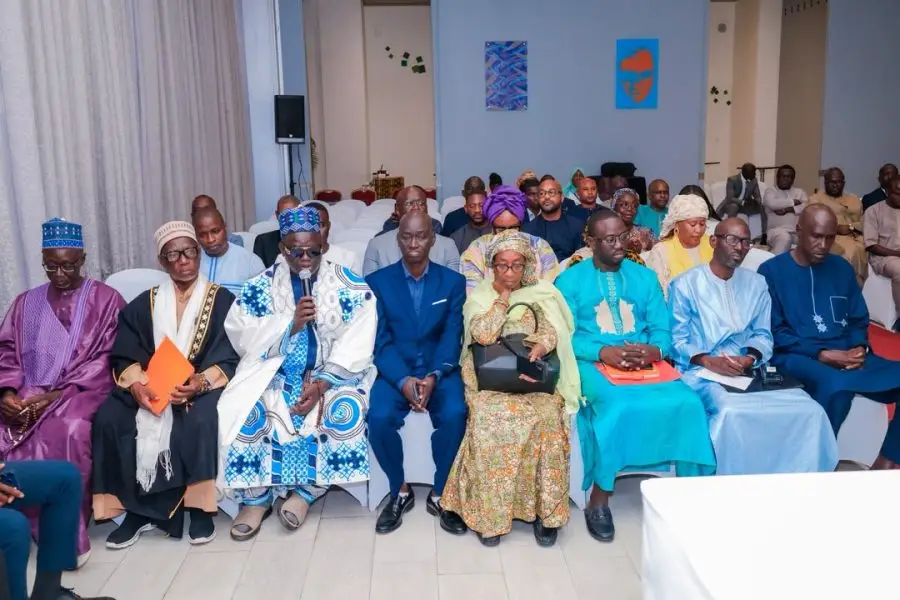
In this perspective, the Network of Senegalese Executives in Côte d’Ivoire, represented in particular by Nabou Fall, was highlighted. This network brings together around 300 executives established in the country. It could facilitate the sharing of experiences, bring together skills and transform professional relationships into concrete projects.
The creation of a Senegal House in Ivory Coast was also discussed. Funded by members of the community with the support of partners, this structure could serve as a place for meeting, networking and professional exchanges, while strengthening the visibility of Senegalese established in the country.
A consultation framework to move on to results
The meeting highlighted the need to better organize the community in order to respond concretely to the concerns raised. The Prime Minister encouraged the establishment, with the support of the embassy and diaspora executives, of a relay system responsible for translating the orientations of the Senegal 2050 Agenda into actions adapted to the realities of Senegalese living in Côte d’Ivoire.
The creation of a National Transformation Agenda relay cell, linked to the embassy, could contribute to this coordination. Its main purpose would be to identify needs, direct project leaders towards the competent structures and monitor files related to the financing of economic activities, social housing and support for young people and women.
Better organization of professional and socio-economic groups, as well as a regular information feedback mechanism, should also ensure the continuity of dialogue between the authorities and the community.
Through this approach, the Government intends to strengthen the place of Senegalese abroad in the dynamic of national development. The challenge now is to transform the skills, networks and investment capacities of the diaspora into projects that create wealth and jobs.
The stated ambition is to move from the expression of needs to the structuring of initiatives, then to measurable results for the benefit of Senegal.
CGD
