
African Charter on Human Rights: Senegal calls for moving from text to action
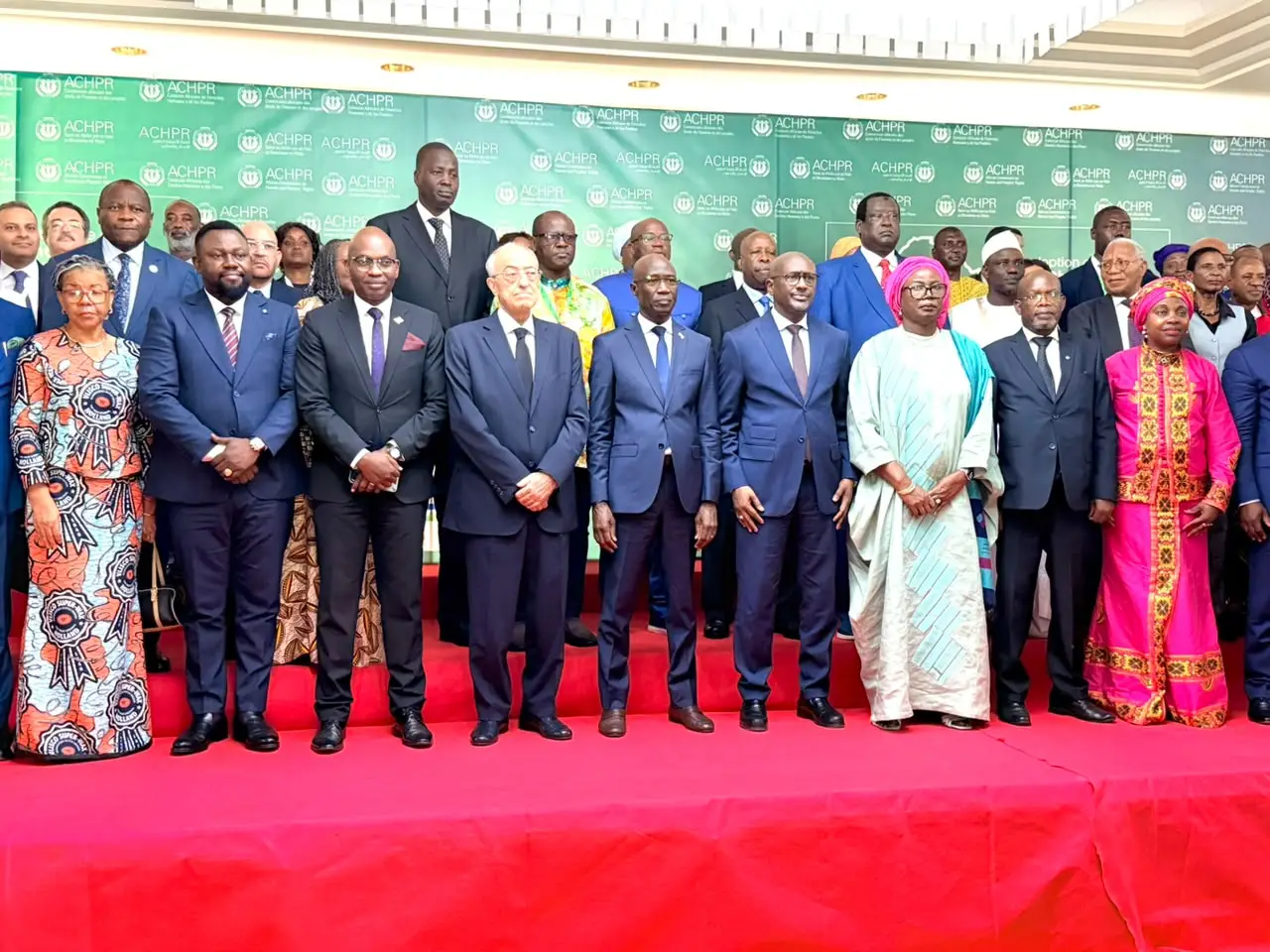
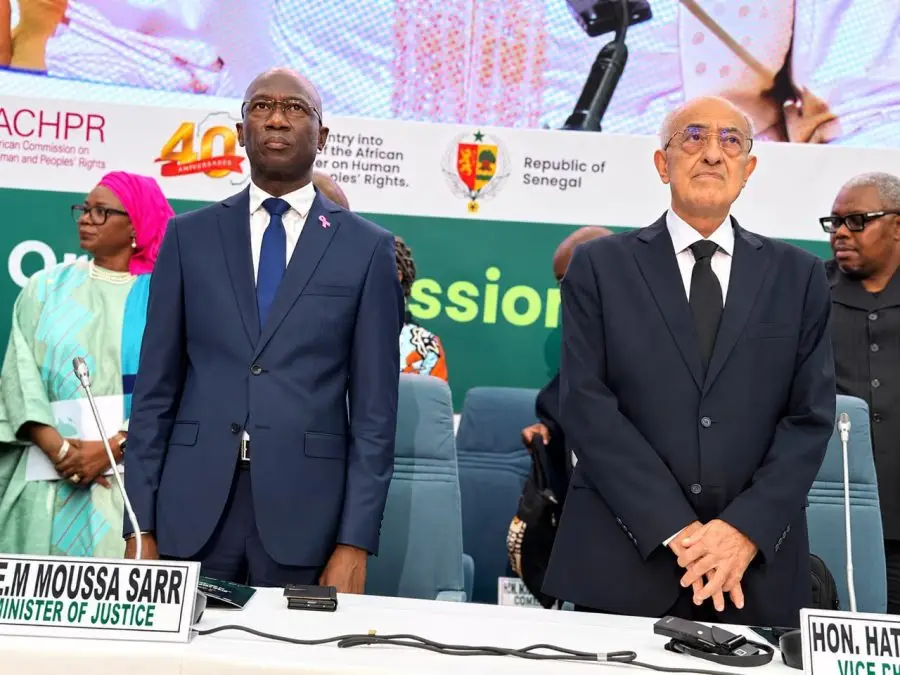
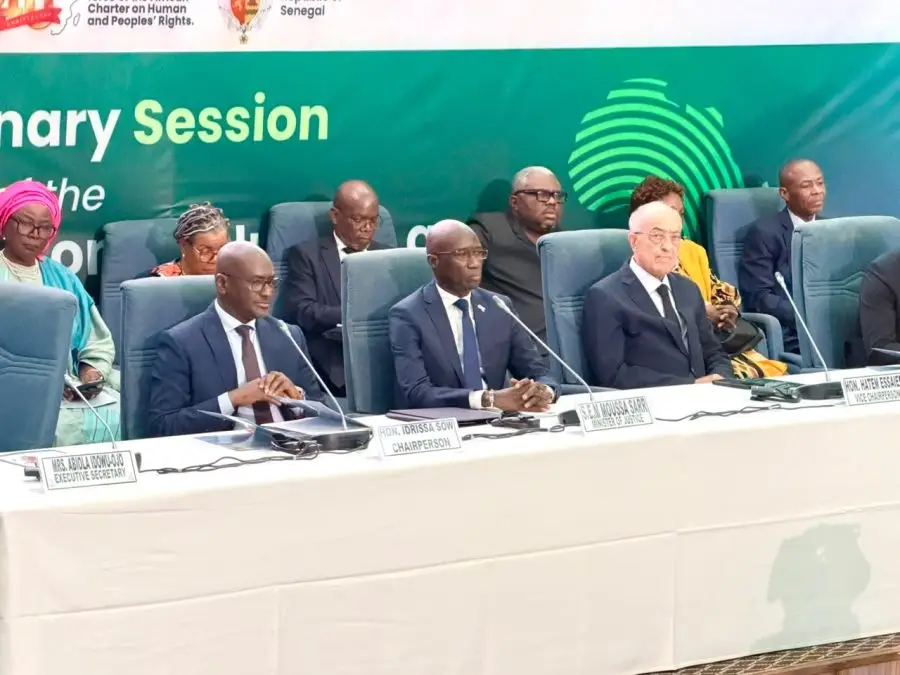
At the opening of the 89th ordinary session of the African Commission on Human and Peoples’ Rights (ACHPR), Monday October 12 in Dakar, the Minister of Justice, Keeper of the Seals, Maître Moussa Sarr, called for strengthening the effective application of States’ commitments in the area of human rights. He particularly emphasized the independence of justice, the protection of civic space and social justice.
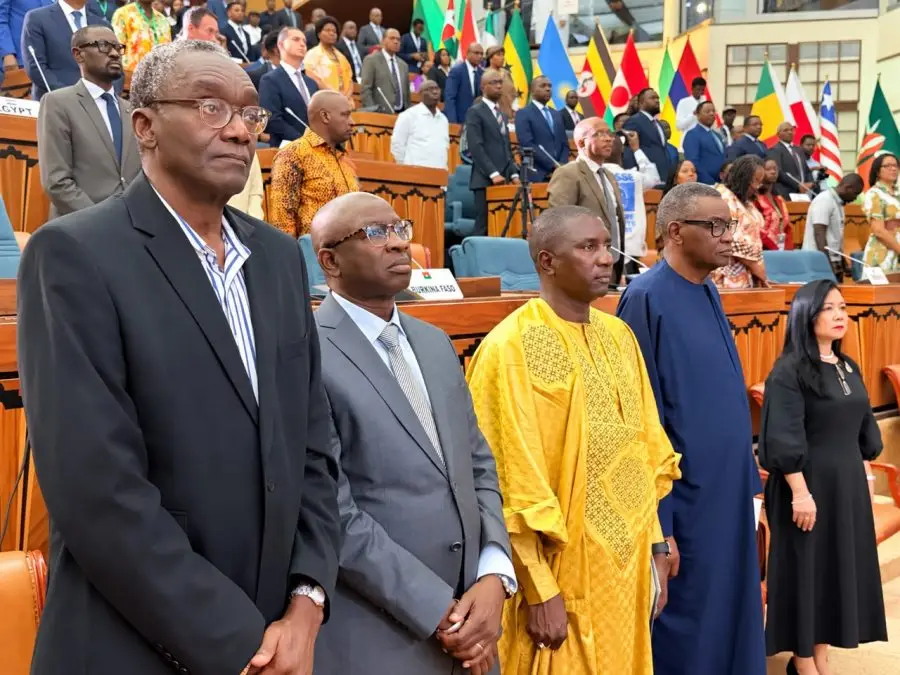
Senegal intends to contribute to strengthening the African system for protecting human and peoples’ rights. This is the message carried by the Minister of Justice, Keeper of the Seals, Maître Moussa Sarr, during the opening ceremony of the 89th ordinary session of the African Commission on Human and Peoples’ Rights, held at the King Fahd Palace hotel, in Dakar.
Speaking on behalf of the President of the Republic, Bassirou Diomaye Diakhar Faye, the minister underlined the historic significance of this meeting, which comes as the fortieth anniversary of the entry into force of the African Charter on Human and Peoples’ Rights approaches, on October 21, 1986. It also coincides with the 45 years of the adoption of this founding text, on June 27, 1981, in Nairobi.
For Senegal, this session constitutes an opportunity to recall the role played by Dakar in the development of the Charter. Between November 28 and December 8, 1979, African experts met there to prepare its preliminary draft, under the chairmanship of Judge Kéba Mbaye, then First President of the Supreme Court of Senegal.
The minister paid tribute to this jurist, who had defended the idea of development as a human right since 1972. He also mentioned the contribution of other Senegalese magistrates, notably Youssoupha Ndiaye and El Hadji Guissé, to the construction of the African system for the protection of human rights.
The effectiveness of rights, the main challenge
Beyond this heritage, Master Moussa Sarr insisted on the need to consolidate achievements and respond to contemporary challenges. He noted the pressures placed on multilateralism, the security crises in the Sahel and other regions, the conflicts in the Middle East and Ukraine as well as the consequences of climate change.
These factors, he stressed, affect economies and slow down the realization of human rights. Faced with these difficulties, Africa will not be able to achieve the ambitions of its Agenda 2063 without a firm attachment to the principles of the Charter.
The minister thus called for human rights to be considered not as constraints, but as an extension of African values of solidarity, respect for life and human dignity. He notably recalled the principles of the Mandé Charter, which enshrined the protection of the person and the defense of the oppressed, as well as the rules of governance promoted in the 18th century in Fouta Toro by Thierno Souleymane Baal, based on justice and the responsibility of those who govern.
For him, these historical references remind us that no lasting protection of human rights can exist without power subject to accountability.
The minister above all insisted on a central issue: the application of existing standards. “A protection system is not measured by the number of its texts or its sessions. It is measured by what it concretely changes in people’s lives,” he emphasized in substance.
A recommendation not implemented or a court decision not executed weakens, according to him, the protection of citizens and confidence in institutions.
Five priorities to strengthen protection
On behalf of the Head of State, Maître Moussa Sarr submitted five priorities for the participants’ consideration.
The first concerns the implementation of the decisions and recommendations of the African Commission. It presupposes a permanent and constructive dialogue between States and protection mechanisms, but also a better appropriation of African jurisprudence by national courts. As such, Senegal organized a regional workshop devoted to this issue in Dakar on July 9 and 10.
The second priority concerns the protection of civic space. The minister defended the need to guarantee an open and safe public debate, in which freedoms of expression and association are respected. He also underlined the role of national human rights institutions and civil society organizations, whose independence constitutes, according to him, an essential condition of credibility.
The third priority concerns social and economic justice. For the Minister of Justice, civil and political rights cannot be fully exercised when access to education, health and dignified employment remains insufficient. He particularly insisted on the place of young people, who must be able to express themselves and participate in public decisions.
In this perspective, he mentioned the Youth Olympic Games, scheduled for Dakar from October 31, emphasizing that this event goes beyond the sporting framework. It also represents an opportunity to promote the right of young people to leisure and sport, enshrined in the African Youth Charter.
The fourth priority is linked to the independence of justice, presented as an essential condition for the protection of rights and freedoms. Maître Moussa Sarr recalled that the President of the Republic had convened the Assizes of Justice upon his accession to power, with the ambition of consolidating trust between citizens and the judicial institution.
He also placed the fight against impunity at the heart of the protection of fundamental rights.
Finally, the fifth priority concerns new challenges linked in particular to artificial intelligence, social networks, climate change and statelessness. The minister considered that Africa must actively participate in the regulation of technological changes, ensuring that its own values are taken into account.
He also warned of the effects of climate change, which weakens the living conditions of populations, causes displacement and accentuates tensions around resources, particularly in the Sahel. Statelessness constitutes another source of vulnerability, depriving those affected of effective access to essential rights, including education, healthcare and justice.
Make the Charter known to populations
For the Minister of Justice, the consolidation of the African system of human rights protection also requires better knowledge of the Charter by the populations. He pleaded for its principles to be taught at school, explained in national languages and better known to defense and security forces.
“A right that we ignore is a right that we cannot claim,” he recalled, thus emphasizing the importance of human rights education.
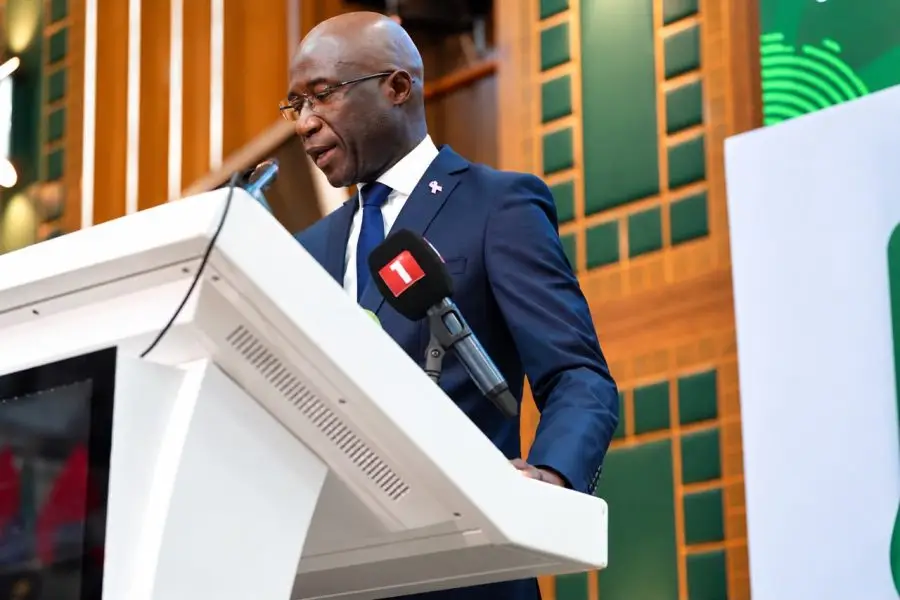
Closing his speech, Maître Moussa Sarr reaffirmed Senegal’s attachment to the universality and indivisibility of human rights, as well as human dignity and social justice. He renewed his country’s support for the African Commission and its commitment to transparent and constructive collaboration with its mechanisms.
While the African Union will dedicate the year 2028 to human rights, the minister called for consolidating the progress made on the continent. The challenge, he argued, is now to transform African legal heritage into concrete protections for populations.
Sheikh Gora DIOP
