
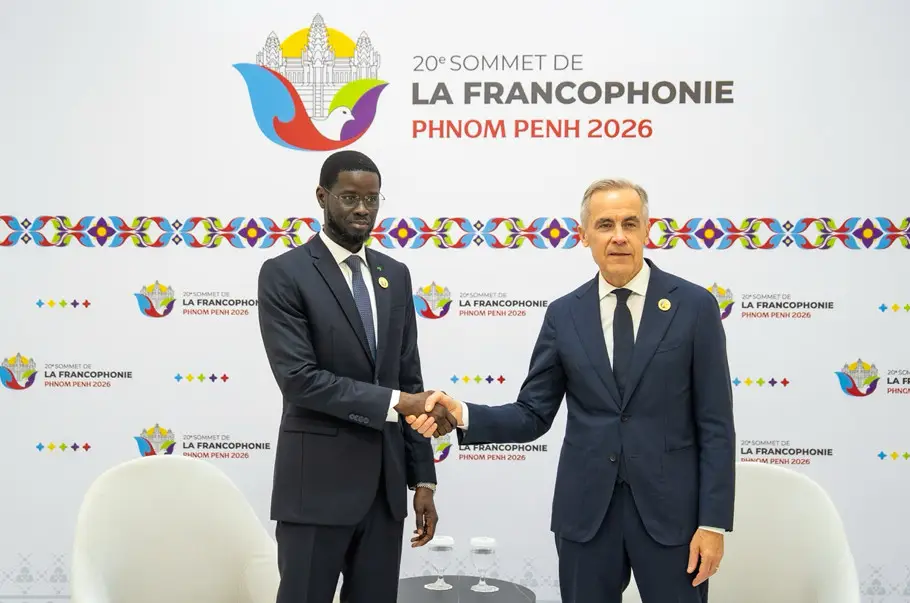
From Paris to Phnom Penh: President Bassirou Diomaye Faye consolidates Senegal’s diplomatic influence
From Paris to Phnom Penh, from November 9 to 16, 2026, the President of the Republic led a diplomatic sequence marked by exchanges with several leaders and economic officials. At the heart of this tour: the consolidation of bilateral relations, the promotion of Senegal’s interests and the search for consensus around the direction of the International Organization of La Francophonie (OIF).
The President of the Republic, Bassirou Diomaye Diakhar Faye, completed, on November 16, a diplomatic tour which successively took him to Paris, France, then to Phnom Penh, Cambodia. Between high-level meetings, economic exchanges and participation in the 20th Francophonie Summit, this trip was an opportunity for Senegal to reaffirm its position on several international issues and strengthen its relations with its partners.
The first stage, from November 9 to 12 in Paris, was marked by an interview with French President Emmanuel Macron on November 9 at the Élysée Palace. The two heads of state notably reviewed bilateral files, with particular emphasis on the preparation of the Intergovernmental Seminar and the development of economic and commercial exchanges, within the framework of the renewed partnership between Dakar and Paris. The discussions also focused on major international issues of common interest. On this occasion, Bassirou Diomaye Faye thanked France for its support for the organization of the Dakar 2026 Youth Olympic Games (YOG).
The next day, the Head of State took part, at the Palais de Chaillot, in the high-level session of the Paris Peace Forum devoted to child protection. In his speech, he pleaded for protection of children without distinction or selective treatment, particularly in conflict contexts. He also highlighted Senegal’s commitments in health, nutrition and education, as well as its national child protection strategy and the role of families.
The economic dimension constituted another important aspect of this Parisian stage. On November 11, the President of the Republic received leaders of industrial groups and financial institutions, notably Rothschild & Co and Vinci. The discussions focused on projects in the energy, health and airport infrastructure sectors, as well as their financing mechanisms. The Head of State presented Senegal’s priorities and the reforms undertaken to improve the country’s attractiveness and strengthen investment security.
The second stage of this tour took the Senegalese president to Phnom Penh, on November 15 and 16, for the 20th Francophonie Summit, organized around the theme “Reinvesting in peace for shared prosperity and lasting stability”. This meeting was especially marked by discussions around the designation of the next secretary general of the OIF. Faced with differences between member states and the proliferation of candidates, Senegal played a facilitating role to avoid a vote likely to further weaken the organization.
Ahead of the decisions, Bassirou Diomaye Faye brought together African heads of state and government. This consultation made it possible to reconcile positions and examine the consequences of a possible vote. The next day, in front of all his peers, the Senegalese president reaffirmed the neutrality of Dakar in the competition between the candidates, while pleading for a consensual outcome. The process resulted in a compromise: the outgoing Secretary General, Louise Mushikiwabo, will remain in office for an additional year, at the end of which she will not seek a new mandate. His country will not present a candidate either. A new election, open to candidates, will be organized at the end of this period.
Beyond this institutional episode, Senegal defended a Francophonie more focused on regional cooperation, dialogue with the Sahel States, economic investment and the regulation of ethical and responsible artificial intelligence. This orientation is particularly in the context of the current Senegalese presidency of the Economic Community of West African States (ECOWAS).
The work of the Summit also resulted in the adoption of the Phnom Penh Declaration, which sets the orientations of the organization for the coming years, a resolution on crisis situations and the consolidation of peace in the French-speaking area, as well as the Phnom Penh Appeal devoted to the protection of cultural heritage and diversity. The Declaration particularly welcomed the organization, in Dakar, of the first Youth Olympic Games on the African continent. Canada will host the next Summit in 2028.
On the sidelines of the work, the President of the Republic increased the number of bilateral meetings. With his Vietnamese counterpart, Tô Lâm, he discussed strengthening cooperation in agriculture, particularly rice growing, telecommunications, construction, the automobile industry, culture and sport. The two leaders also noted the convergences between Vision Senegal 2050 and the Vietnam 2045 strategy.
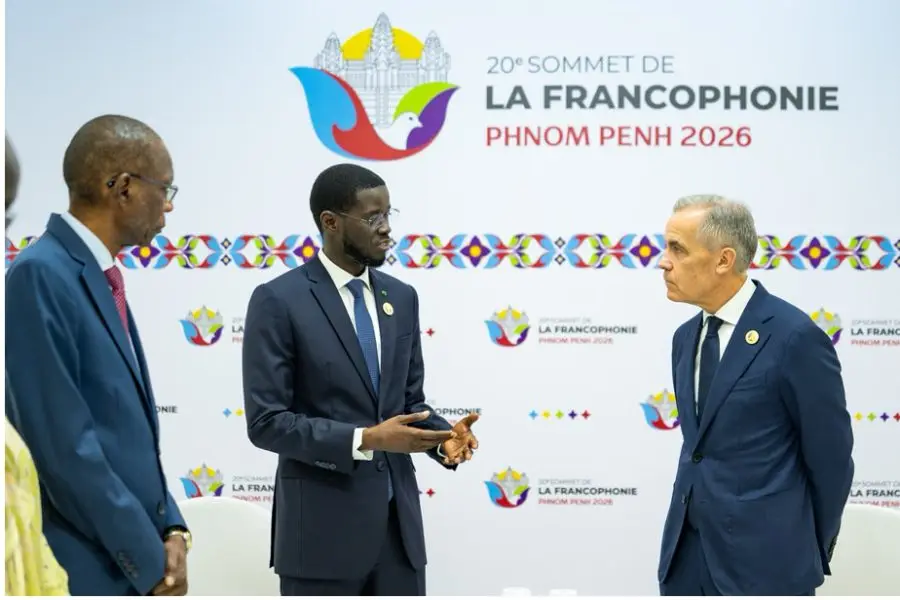
Discussions with the Prime Minister of Quebec, Paul St-Pierre Plamondon, focused on strengthening bilateral cooperation and increasing economic exchanges. The Quebec official particularly highlighted the stability of Senegal, the quality of its institutions and its workforce, as well as its geographical position, which he considers as assets to make it a gateway to the African market.
With the Vice-President of the Swiss Confederation, Ignazio Cassis, discussions concerned technical and professional training, scientific and medical cooperation, private investments, water management as well as questions of peace and security. Finally, the interview with the Canadian Prime Minister, Mark Carney, made it possible to discuss the prospects for cooperation in the areas of the economy, agriculture and investments, in addition to the future directions of the Francophonie.
Through this tour, Senegal has invested in several spaces for political, economic and multilateral dialogue. From Paris to Phnom Penh, the head of state’s trip combined the defense of diplomatic positions, the search for new partnerships and the promotion of national priorities, against the backdrop of the desire to consolidate Senegal’s place in international bodies.
CTN
