
YOG “DAKAR 2026”: “We must transform the world exhibition into attractiveness for our country”, recommends a specialist November 1, 2026
Beyond the sporting festival and international visibility, “the Youth Olympic Games offer Senegal a historic opportunity to reveal its territories, to promote its know-how”, estimates Souleymane Amar, specialist in territorial marketing. He proposes to transform this exhibition into attractiveness with sustainable economic opportunities.
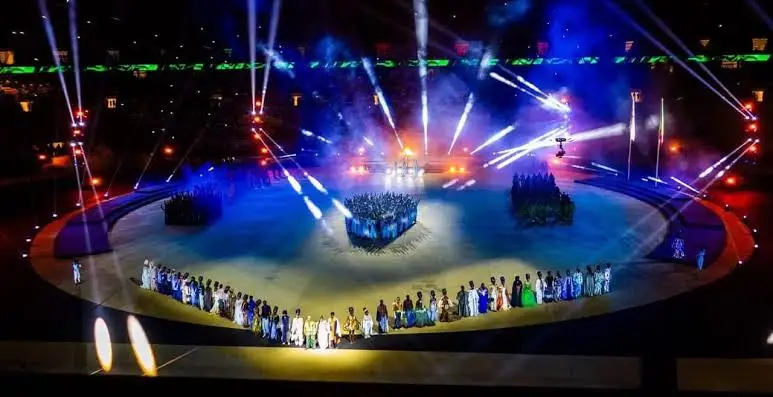
Senegal has just reached an important milestone in Olympic history. On Saturday October 31, 2026, the Abdoulaye Wade stadium in Diamniadio hosted the opening ceremony of the “Dakar 2026” Youth Olympic Games (YOG). Delegations from all over the world, artistic performances, flags and infectious popular fervor showed “a Senegal that is welcoming, creative and open to the world,” said Souleymane Amar, specialist in territorial marketing. For the first time, he underlines, an Olympic sporting event is being held on African soil. Beyond the sporting significance of this historic first, an entire country presents itself to the world. In his opinion, it will be necessary to see how to transform this international exhibition into lasting territorial attractiveness, “capable of generating economic activities, supporting employment and strengthening the pride of the populations”. Because the Joj, he admits, is not just a sporting competition. They constitute, according to him, “a fantastic territorial communication tool and a life-size opportunity to put the principles of territorial marketing into practice”.
From visibility to attractiveness…
The specialist recalled that territorial communication aims to raise awareness of a territory and strengthen its image, while territorial marketing goes further. The latter, explains Mr. Amar, consists of identifying your resources, building a coherent offer, promoting it to targeted audiences and creating the conditions for lasting benefits. The Joj, he notes, offer Senegal an exceptional world stage because it allows it to promote its infrastructure, its culture, its creativity, its hospitality and its talents. “The opening ceremony notably illustrated the capacity of Senegalese artistic expressions to carry a collective story and to promote the identity of the country beyond its borders,” underlined Souleymane Amar. The challenge, for him, is now to extend this story beyond the ceremonies and television broadcasts, because “visibility is a starting point, attractiveness is an objective and lasting repercussions must be the ambition”.
Collective action, the driving force of territorial marketing
One of the fundamental principles of place marketing is collective action. A territory is not built like a brand from a communications office. It is structured “with the actors who bring it to life: local authorities, the State, businesses, craftsmen, artists, athletes, professional organizations, associations and residents,” explains the expert. For him, the Joj shows this mobilization with the ambassadors of the territory, whether they are political actors, entrepreneurs, cultural figures, artists or athletes. He believes that “they each contribute to welcoming visitors and telling the world about Senegal”. The populations, underlines Mr. Amar, “must not remain simple spectators. They can take part in this dynamic by showcasing their heritage, their know-how, their cultural initiatives and their local products.”
Benefit the local economy from the event
A place marketing strategy cannot be considered successful if it improves the image of a place without creating opportunities for those who live and work there. The Joj can, in his opinion, open up new opportunities for artisans, restaurateurs, transporters, tourist operators and entrepreneurs. The challenge is to enable them to capture part of the value generated by the event thanks to better visibility, commercial opportunities and contacts likely to continue after the games. This ambition is consistent with a conviction defended during the second edition of the Territories Forum held in Brussels last June. During this meeting, “it was recalled that territorial development becomes more effective when communities and the private sector build concrete responses together”. “The discussions around the Notto Diobass smart city project, combining territorial vision and economic partnership, illustrate the interest of this complementarity. Attractiveness is not based only on the promotion of a place, but also on the ability of actors to bring out projects, services and opportunities,” stressed, for example, Souleymane Amar.
Build post-JoJ today
While the competitions continue, “the challenge now is to better promote the offers already available, to facilitate their access to visitors and to increase the opportunities for discovering Senegal,” he maintained. Public and private actors, continues the specialist, “can in particular relay local initiatives, direct visitors to cultural and tourist sites, highlight artisans and entrepreneurs and encourage meetings with economic actors”. At the same time, in his view, it is important to “document successful experiences, collect feedback from visitors and maintain contacts established during the Games in order to prepare for their continuation after the event”. The infrastructures mobilized, the skills acquired and the international relations established “must continue to serve the country after the event, because legacy cannot be decreed; it organizes itself, finances itself, manages itself and evaluates itself,” said Mr. Amar.
Make the world want to come back
The “Dakar 2026” Joj, assures the specialist in territorial marketing, constitute a historic moment for Senegal and for the African continent. Their reach, he continues, “will not be measured solely by the quality of the ceremonies, the progress of the competitions or the international media coverage”. The experience of territorial marketing teaches us that attractiveness is not built solely through promotion, but through the meeting between a strong identity, a quality offer and collective action. Senegal, concludes Souleymane Amar, “has opened its doors to the world. Now, it is up to it to transform this meeting into lasting relationships, this visibility into value and this historic event into a legacy for its territories.”
Amadou Maguette NDAW
