
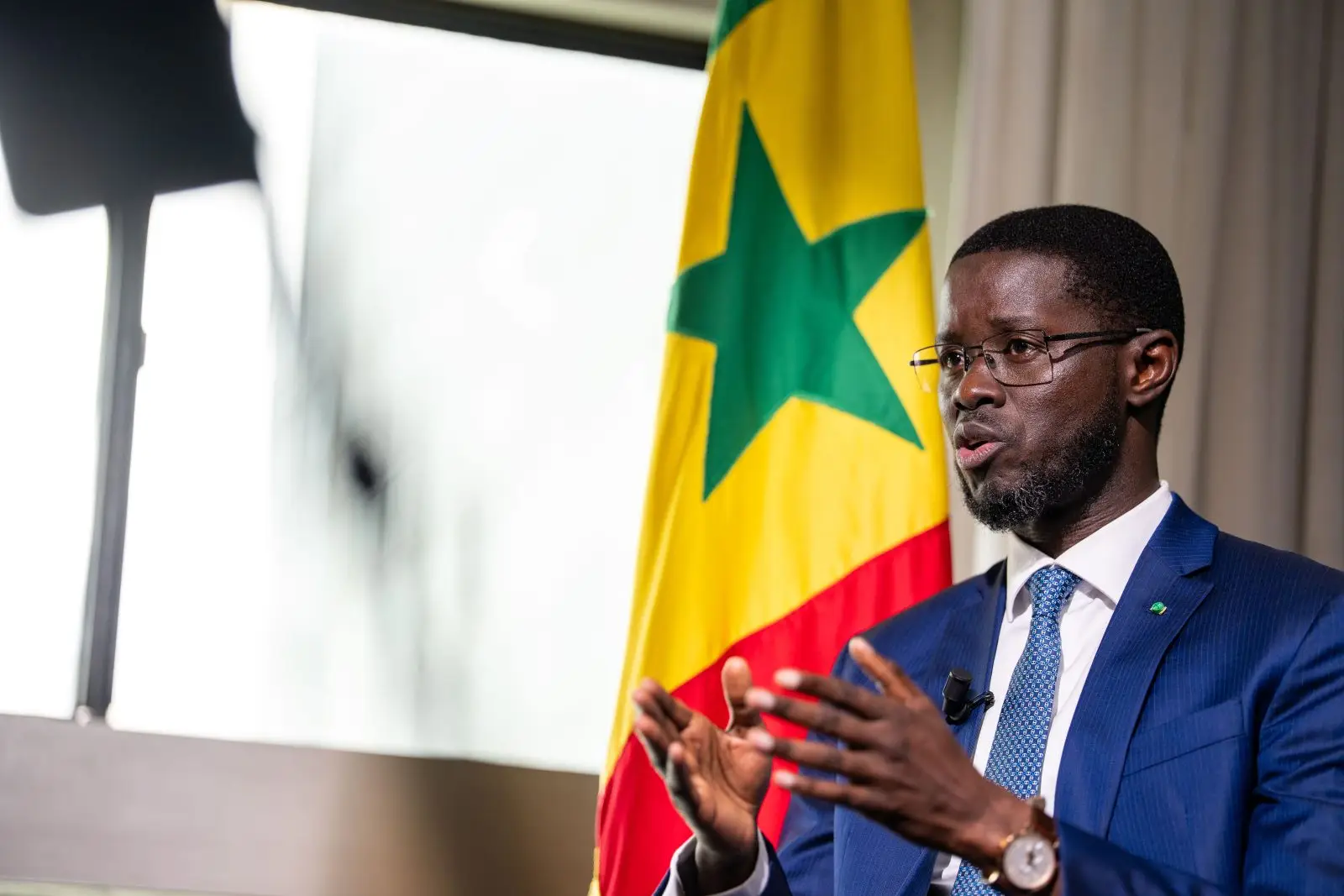
Council of Ministers: YOG, economic recovery, crafts, civil security: President Faye sets the course
Three days before the opening of the Youth Olympic Games, the Council of Ministers on Wednesday October 28, 2026 was above all an opportunity, for the Head of State, to deliver a long series of instructions to the government. Meeting at the Palais de la République under the presidency of Bassirou Diomaye Diakhar Faye, the executive heard a presidential communication in four stages: the YOG, economic recovery and social stability, crafts, then civil security.
YOG: a call for national unity
President Bassirou Diomaye Faye first welcomed the delegations. The opening ceremony is set for October 31, in the presence of “several Heads of State and Government, constituted bodies, the President and members of the IOC as well as the public”. The same day will be held the Dakar Summit on the theme “Sport for Development”, to which the Head of State says he attaches importance.
He called on the government, state services and the YOGC “to ensure the smooth running of the YOG sporting and cultural agenda”. He also asked the populations “to give a warm welcome to our hosts during these two intense weeks of competition and activities which place Africa and Senegal at the heart of international sports news”.
The President wished every success to “Team Senegal”, which received the national flag from his hands on October 26. He “reiterated his solemn call for national unity and collective popular mobilization around the resounding success of the YOG Dakar 2026”. He will himself preside over the official opening on October 31 at the Stade du Sénégal President Abdoulaye Wade.
Continuity of public powers: the Prime Minister requested
The most political passage in the communication is that devoted to the continuity of public action. The press release does not specify the context which motivates this recall. The President sets out a principle: “the continuity of public powers remains an imperative to establish the credibility of the institutions of the Republic”.
He therefore asks the Prime Minister “to take all appropriate legal provisions and adequate measures for the systematic implementation of public policies, programs and projects integrated in the draft amending finance laws for 2026 and the finance laws for the year 2027, tabled at the level of the National Assembly”.
The Head of State indicates to the Prime Minister “the urgency of initiating, among other things” a series of projects:
– “the comprehensive evaluation of the implementation of the Economic and Social Recovery Plan (PRES)”;
– “evaluation of the deployment of projects in priority sectors and sectors of the National Transformation Agenda Senegal 2050”;
– “the concerted actions necessary to relaunch economic activities and stopped construction sites”;
– “the intensification of the execution of projects for the construction and equipment of public health establishments, universities, public higher education structures (ISEP) and modern schools, staffed by qualified personnel”;
– “the acceleration of rural electrification and hydraulic projects, in particular the Large Water Transfer (GTE) towards the Touba-Mbacké agglomeration and the new multi-village drilling program”;
– “rapid clearance of the domestic debt, in conjunction with umbrella organizations in the private sector”;
-“financing processes for marketing campaigns for agricultural and horticultural products”.
The President further instructed the Prime Minister “to take stock of the progress of the New Technological Deal and to accelerate the rationalization of the public and parapublic sectors”.
Social stability: dialogue with unions
The head of state makes social peace a condition of recovery. It places social stability “at the heart of government action” and asks “all the driving forces of the Nation to support the State’s desire to intensify the relaunch of economic activities, in a serene social climate, marked by mutual trust and the permanent culture of a sense of responsibility”.
He invites the government “to continue responsible social dialogue with the trade union centers in order to establish lasting and sustainable consensuses”. The Prime Minister will have to ensure “close supervision in the letter and spirit of the Social Stability Pact for inclusive and sustainable growth, signed on May 1, 2025”.
Crafts: towards a special financing fund
The President returned to the audience granted to the presidents of the Chambers of Trades and their National Union. He praised the work of artisans and reiterated “his desire to make Crafts a pillar of national entrepreneurship, in terms of valorization of know-how, professional training and apprenticeship, integration, job creation as well as promotion of “Made in Senegal” and “Local consumption””.
He instructed the government to take “all necessary measures to reposition the Crafts and Chambers of Trades in the National Transformation Agenda Senegal 2050, through the pragmatic deployment of innovative projects and concerted reforms across the country”. Two points are highlighted:
– “the need to carry out a general census of artisans and their adequate enrollment, in order to better facilitate the professionalization of players in the sector and their support through existing supervision and financing systems”;
– “the requirement to improve access for craftsmen to public procurement, paying particular attention to the complementary restructuring of the activities of the Agency for the Promotion and Development of Crafts (APDA) and the National Furniture Project”.
On financing, the Head of State “insists on the need to consider the establishment, in the short term, of a Special Fund for Financing Crafts, integrating current initiatives of the State and the solidarity mobilization of direct contributions from artisans, with a view to facilitating their access to the financial system”. It also orders to “strengthen and modernize the infrastructures, equipment and logistics parks of the Chambers of Trades and to finalize the land regularization of the sites housing the Artisanal Villages”.
The Prime Minister must finally hold, “before the end of 2026, an interministerial Council devoted to the development of Crafts”.
Civil security: one fire company per department
The President recalled the inauguration, on October 24, of the 15th Fire Company at the Diamniadio urban center. He sees it as “a symbolic act, which illustrates his permanent commitment to strengthening civil protection and modernizing all disaster risk prevention and management systems”.
After congratulating the Minister of the Interior and the commander of the National Fire Brigade (BNSP), he asked them to “intensify the execution of the BNSP Transformation Plan, in conjunction with the Civil Protection Modernization Strategy, in order to establish quality local civil security”. He also notes “the urgency of providing each department with an operational fire and rescue company”.
He asked the Prime Minister to propose two reforms: “the revision of the legal and institutional framework for the prevention and management of road accidents”; “updating the organizational mechanisms for crisis management and relief, in liaison with the Minister of the Interior, the Minister responsible for Local Authorities and the Minister responsible for Solidarity”.
