
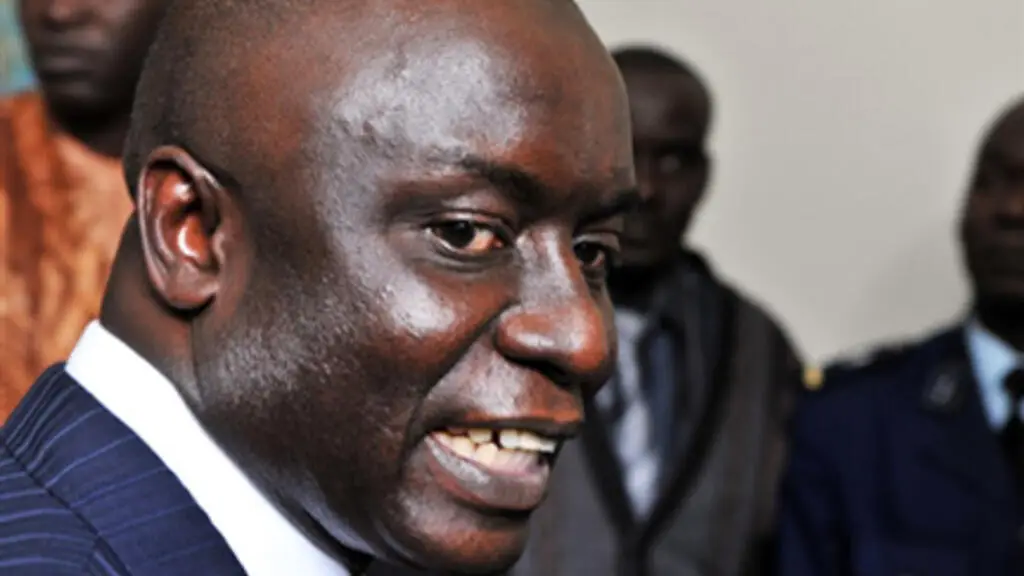
Speaking by Idrissa Seck: The return of a voice in the political debate?
After a long media withdrawal, since the presidential election of March 2024, Idrissa Seck, president of the Rewmi party, was announced to the press on October 27. A speech which does not fail to fuel several speculations. Deliberate strategy or simple continuity in his way of doing politics?
An ascent built in strategy
Idrissa Seck’s trajectory is closely linked to that of Abdoulaye Wade and the Senegalese Democratic Party (PDS). Following the change of power in 2000, he appeared as one of the main political heirs of the new President. But this proximity, which seemed to place him on a royal path, ended up fueling rivalries within the ruling party.
The break with Wade, followed by his departure from the PDS and the creation of Rewmi, opened a particularly trying period of confrontation. His imprisonment, then his release following a dismissal of the case, did not permanently distance him from political competition. On the contrary, Idrissa Seck returns to the arena with the ambition of establishing himself as a credible alternative to liberal power.
Read also: SECOND ANNIVERSARY OF THE ELECTION OF PRESIDENT BASSIROU DIOMAYE FAYE
Return to the long road to Pastef’s victory
In the 2007 presidential election, he obtained 510,922 votes, or 14.92% of the votes cast, and ranked second behind Abdoulaye Wade, re-elected in the first round with 55.90%. This result then confirms his weight in the opposition and fuels the idea that he could, in the long term, access the supreme office. At this time, Idy did not just observe the political scene. He occupies the media space, notably through the recordings known under the title “He and I”, broadcast in sequences and extensively commented on. His words become a positioning instrument, allowing him to maintain his presence in the public debate and consolidate his image as a leading adversary.
2012, the silence broken by protest
As the 2012 presidential election approaches, Idrissa Seck once again adopts a more discreet posture. His return to the political debate accelerated when Abdoulaye Wade’s proposed third candidacy aroused strong opposition. He then joined the ranks of opponents mobilized against this perspective and participated in the political sequence which preceded the end of the liberal regime.
But, unlike in 2007, its electoral influence is eroding. In the first round of the 2012 ballot, Idrissa Seck received 212,853 votes, or 7.86% of the votes cast, ranking behind several opposition figures. Macky Sall, who came second with 26.58%, managed to unite the forces opposed to Wade and won the second round with 65.80% of the votes. In 2012, if Idrissa Seck contributed to the challenge to the outgoing regime, it was Macky Sall who was able to transform the political dynamic into a presidential majority.
2019 between alliance and opposition, an influence preserved
When Macky Sall came to power, Idrissa Seck chose companionship with the new President. This alliance allows several of his relatives to join spheres of responsibility, in government as well as at the head of public structures. But the agreement does not sustainably resist political differences. After about a year of rapprochement, the two men distanced themselves and the president of Rewmi returned to the ranks of the opposition.
His public interventions, sometimes incisive, were however not enough to make him the main leader of the protest. Idrissa Seck then seems to favor an intermittent presence, intervening at selected moments rather than maintaining constant media exposure.
Read also: Secretary General of the United Nations: Macky Sall withdraws his candidacy
This posture takes on a new dimension as the 2019 presidential election approaches. The absence of Karim Wade, excluded from the electoral race in a controversial legal context, and that of Khalifa Sall, also prevented from competing after his conviction, contribute to reshaping the balance of power in the opposition.
Idrissa Seck then manages to unite several sensitivities around her candidacy, in particular with the support of Khalifa Sall. The bet pays off electorally. He obtained 899,556 votes, or 20.51% of the vote, and finished second behind Macky Sall, re-elected in the first round with 58.26%. This score constitutes his best performance in a presidential election in terms of number of votes and percentage since his entry into the national competition.
2024, victim of political polarization
The presidential election of March 2024, on the other hand, marks a major turning point. After having worked with Macky Sall and holding the presidency of the Economic, Social and Environmental Council, Idrissa Seck finally presents himself under the colors of Rewmi.
The vote gave him a particularly weak result. He only received 40,286 votes, or 0.90% of the votes cast. Bassirou Diomaye Faye won the election in the first round with 54.28%, ahead of Amadou Ba, credited with 35.79%. Between them, the first two in this election account for just over 90% of the votes cast. For Idrissa Seck, the contrast is striking. In the space of fifteen years, its score has gone from 20.51% in 2019 to less than 1% in 2024. Certainly, the election is part of a particular configuration, marked by the strong polarization between the two main candidates. But the extent of the decline inevitably raises the question of its electoral roots, its capacity for mobilization and the clarity of its political positioning.
Silence as a political strategy?
Idrissa Seck’s announced speech for October 27 takes place in a particular context. Since the 2024 presidential election, Idrissa Seck has been particularly discreet in public spaces. This withdrawal recalls other periods of his career, during which he alternated long phases of reserve and interventions intended to influence the national debate.
Should we see this as a carefully orchestrated strategy? It would be risky to assert this without knowing the intentions of the main person concerned. One thing remains, the rarity of his interventions maintains the wait around each of his appearances. But this media expectation cannot be confused with effective electoral influence.
O.BA
