
(Video) Amboura: giraffes and oryxes in the heart of Fouta
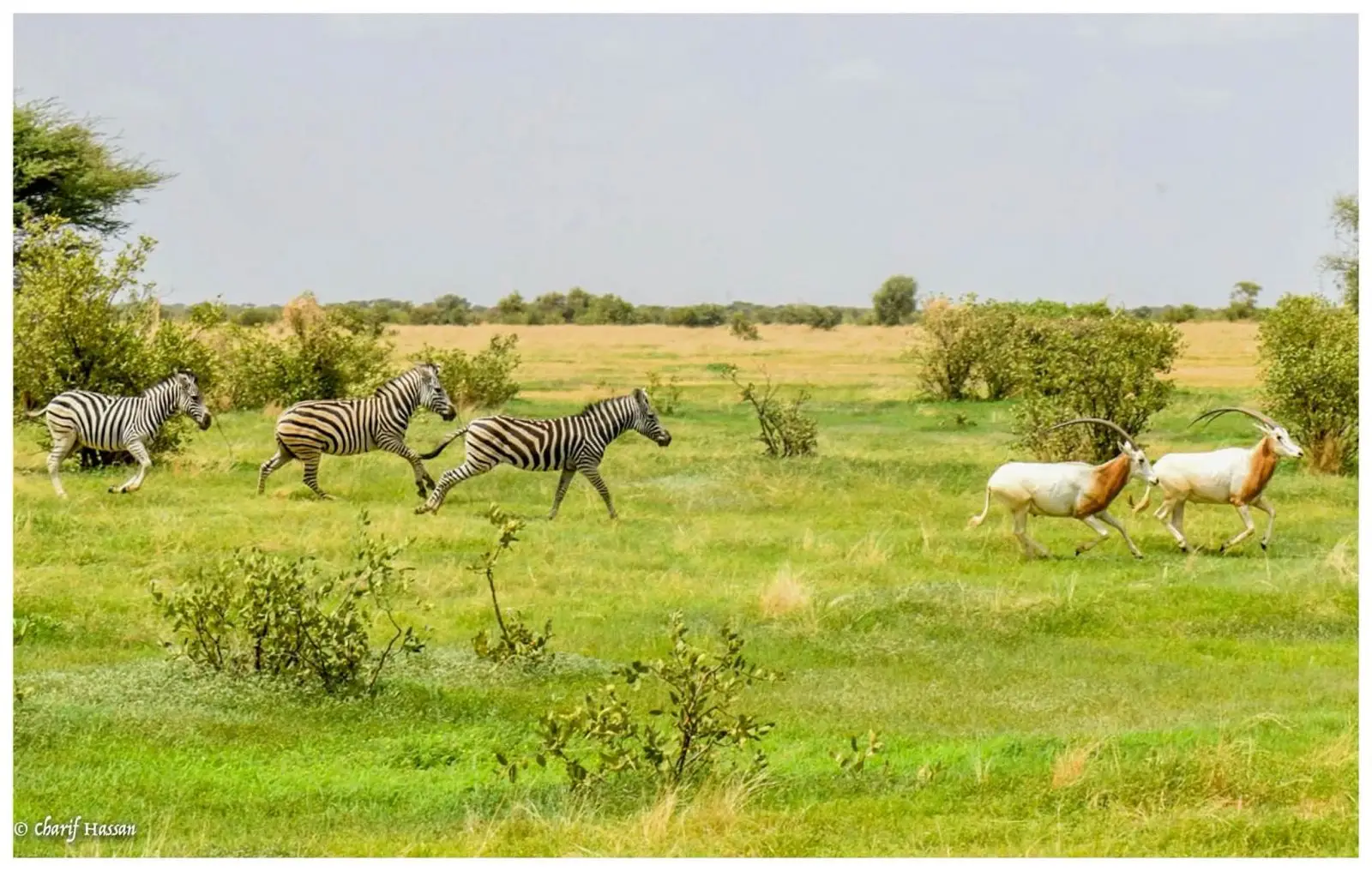
On 1,050 hectares, in the department of Podor, giraffes, zebras and oryx live freely, without food being distributed to them. Created in 2016 near Thillé Boubacar, the Amboura reserve saw its population of cervicapres increase from five to 122 individuals. It hopes to become a tourist destination by 2027, provided you cross the three kilometers that separate it from the national road.
In the north of Senegal, in the Podor department, you wouldn’t imagine coming across giraffes. However, this is what the Amboura animal reserve offers, a 1,050 hectare space created in 2016 within a classified forest.
During the winter, the reserve becomes covered with tall grass, and acacias and jujube trees green up again. The rest of the year, it finds drier shades, closer to the classic image of the Sahel. This vegetation is one of the achievements of the project: after years of protection, several species typical of the region, such as acacias and balanites, are regenerating and contributing to the solidity of the soil.
Free and diverse wildlife
The principle of Amboura is simple: animals are neither penned nor fed by man. They move around as they please, seek shade during hot hours and live at their own pace. The reserve is home to reintroduced species, notably the scimitar-horned oryx, which has become its emblem, but also giraffes, zebras, wildebeest, waterbucks, cervicapres, elands and ostriches. They coexist with the local fauna: warthogs, jackals, patas monkeys and small mammals of the region.
Birds also find refuge there, including certain threatened species, such as the great bustard. Amboura is therefore as much about the conservation of biodiversity as it is about the presentation of large animals.
Amboura is not a zoo, and there is no guarantee of sightings of a particular animal. The best time to visit is in the morning, when the heat has not yet pushed the wildlife into the shade. We must accept that nature decides the spectacle, and that is partly what gives the place its charm.
The reserve does not live in isolation. She employs guards from neighboring villages and makes her borehole available to residents to water their livestock. It also provides them with straw, a harvest which benefits the regeneration of the plant cover.
Plans for the future
The main obstacle remains accessibility: a few kilometers of track separate the reserve from the national road, and attendance remains very low. The improvement of this access is announced, as well as the study of wooden accommodation, discreet and integrated into the landscape, on the model of safari camps in East and Southern Africa. The ambition is to make Amboura an ecotourism destination which also offers jobs, particularly as guides, to young people in the area.
It remains to be seen whether the reserve will keep its promises in the long term. Its leaders speak of a first real assessment in ten to fifteen years.
Oumar Boubacar NDONGO (Video and text) and Assane SOW (Photo)
