
Green energy: Germany alongside Senegal
Faced with a constantly increasing demand for electricity, Senegal has significant solar and wind potential. Germany is supporting this transformation with its experience as well as its technical and financial resources, in order to better exploit local energy resources.
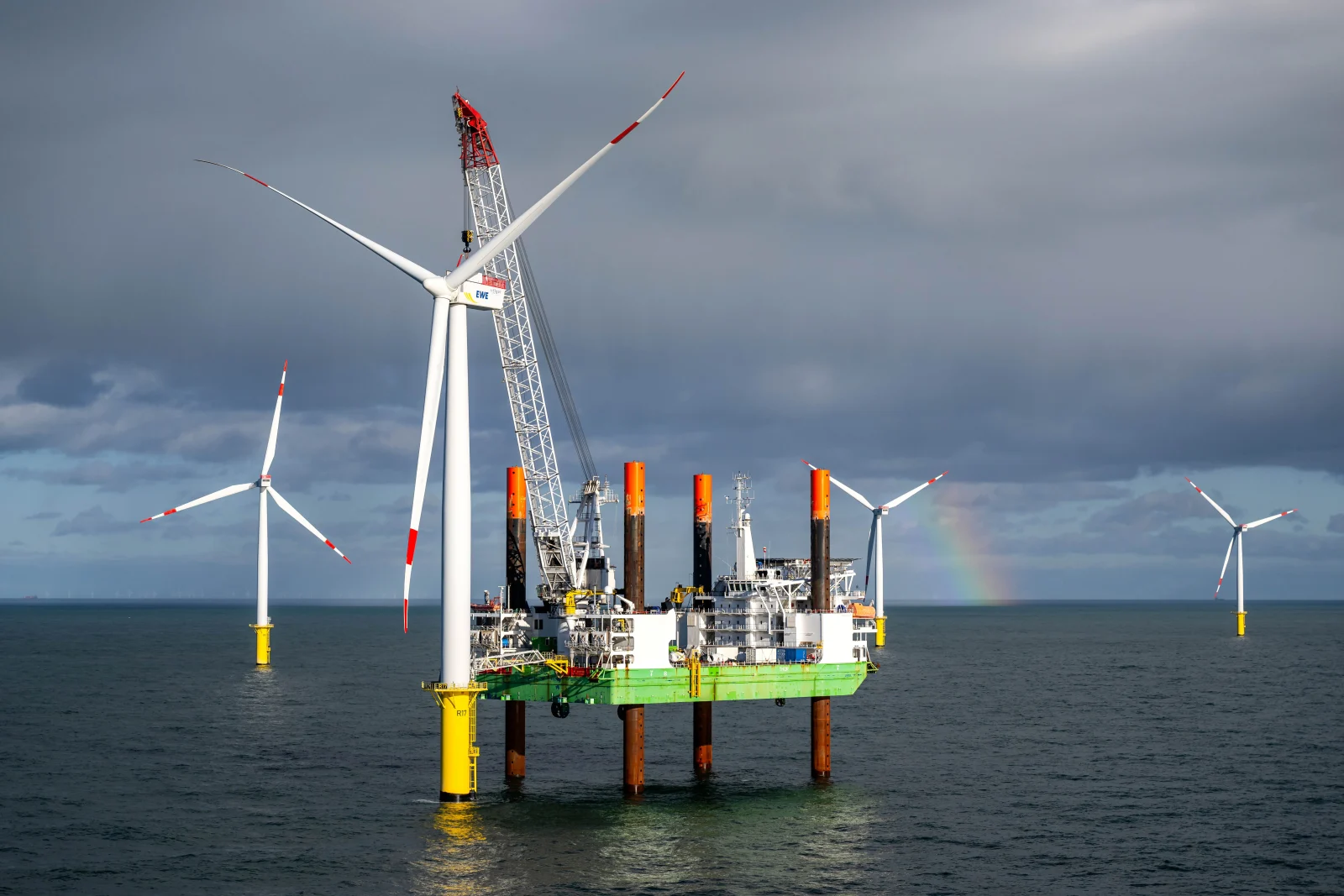
Germany has made renewable energies a pillar of its energy transformation. In the first half of 2026, they represented 57% of the country’s gross electricity consumption, with a target of at least 80% by 2030. In Senegal, there is plenty of sunshine, much more than in Germany, and wind is also an exploitable resource. This West African country can thus increase its production capacities to support the needs of households and industry. More renewable electricity can also reduce dependence on imported fuels, at an affordable price. The sun and wind are local and renewable resources, which makes them a lever for energy sovereignty.
But transforming this potential into electricity available on a large scale does not only consist of building power plants, which in the case of renewable energies are often numerous and decentralized. It is necessary to integrate production into the network, transport electricity, distribute it and manage variations linked to sunshine and wind. The transition therefore relies on an entire chain, from production to storage, from the network to uses. This is the logic behind the Just Energy Transition Partnership (JETP), concluded in June 2023 between Senegal, Germany, France, the United Kingdom, Canada and the European Union. The partners announced the mobilization of 2.5 billion euros, or approximately 1,640 billion FCFA, to support the transformation of the energy sector and help increase the share of renewable energies in the electricity mix to 40% by 2030. The term “fair” also refers to the social dimension: improving access to electricity, reducing costs and promoting local content and jobs. A major technical and financial partner of the project, Germany is involved in several links. GIZ provides technical assistance to institutions, while KfW, the German development bank, contributes in particular to financing infrastructure.
Produce and store
The Diass photovoltaic power plant illustrates this approach. Commissioned in 2022, it has a capacity of 23 MW over 40 hectares. Developed as part of cooperation between Germany and Senegal, it constitutes the first solar power plant built under project management by the National Electricity Company of Senegal (SENELEC). Its financing was supported by German cooperation through KfW. According to SENELEC, it should contribute to the electrification of 33,000 homes and allow savings estimated at 1.7 billion FCFA per year for the State, compared to fuel oil.
But above all, Diass shows that producing renewable electricity is not enough. The plant must be associated with a battery energy storage system (BESS), intended to store electricity and return it to the network when electricity demands must be covered. Presented as the first project implemented within the framework of the JETP, the Diass BESS should also constitute the first battery installation of this scale under the project management of SENELEC. With a total amount of 36 million euros, 23.6 billion FCFA, it benefits from German funding of 28 million euros, or 18.4 billion FCFA, through the KfW, in the form of a donation. France is providing 8 million euros, or 5.2 billion FCFA, via the French Development Agency (AFD), in the form of a sovereign loan.
The project is part of the Smartgrid program, intended to modernize SENELEC’s transmission and distribution network and facilitate the integration of renewable energies. The installation will have a capacity of 56 MW and can allow annual storage and restitution of up to 464,000 MWh. Storage responds to a constraint of solar and wind power: their production varies depending on the time and the weather. Batteries should help stabilize the grid and restore electricity when needed.
Electricity for the territories
However, the energy transition is not limited to large infrastructures. In rural areas, renewables can support economic activities and reduce certain costs. Thus, GAUFF Engineering in partnership with the Senegalese Rural Electrification Agency (ASER) carried out the electrification of more than 300 villages. In addition, the KfW “Green Energy for All” project will finance the electrification of the Saloum Islands through the construction of solar power plants with battery storage. These villages are often not connected to the national electricity grid due to their remoteness. Electricity is produced locally by solar panels, then distributed to households by a mini-grid. As for the 5 decentralized mini power plants supported by GIZ with a total power of 185 kWp which enabled the connection of more than 1,300 households, 10% of which carry out income-generating activities.
These interventions respond to the same need: to evolve the energy system as a whole. Production, network, storage and territorial solutions must progress together. For Senegal, the challenge is to transform its natural advantage into a sustainable energy advantage at lower cost. Solar and wind potential can help to rapidly increase production. The German experience shows that this development also requires investments in networks, storage and skills.
Solar and wind electricity can be produced in all regions, not just in a limited number of power plants. Each territory can thus benefit. German cooperation supports decentralized electricity production, the deployment of storage systems as well as the extension and strengthening of electricity networks. The aim is to enable Senegal to better exploit its resources, respond to increased demand and strengthen its energy sovereignty. However, it is not a question of abandoning fossil fuels straight away – Senegal will need its gas and oil for a while – but the future lies more than ever with renewable energies.
By Babacar Guèye DIOP
