
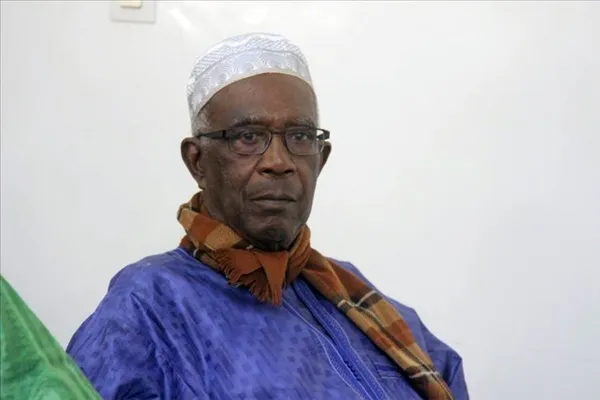
Amady Aly Dieng and Oumar Sankharé: Two ways of inhabiting the world
They had the bad taste of taking books seriously, of working on their sentences, of discussing ideas to the point of tiring the most patient and of considering that an intellectual should have other things to do than chase applause. Amady Aly Dieng and Oumar Sankharé devoted their lives to reading, writing, teaching, contesting, transmitting and sometimes even antagonizing those who would have preferred that scholars remained quietly in their libraries. Economist, historian of student movements and tireless essayist for one, Hellenist, grammarian, professor and man of letters for the other, they nevertheless shared the same illness, which has become rare in an era that would like to explain everything in a few seconds, that of thinking at length about Senegal, its letters, its heritage, its contradictions and its future.
We must imagine what a society becomes when those who had made thought their way of being in the world disappear. Not the occasional holders of specialized knowledge, nor the men whose academic titles end up taking the place of work, but those for whom reading, studying, writing, teaching and discussing constituted one and the same requirement, an internal discipline which was interrupted neither with the end of a course nor with retirement from an institution. Amady Aly Dieng and Oumar Sankharé belong to this intellectual family whose disappearance questions a certain conception of the African intellectual, his function in the city and his relationship to knowledge. The rapprochement between them could be surprising. Dieng was an economist, essayist, historian of the African student movement, Marxist activist and tireless columnist. Sankharé was a Hellenist, grammarian, classics specialist, academic and writer. The first had chosen to examine the economic mechanisms, the structures of domination, the political trajectories and the struggles which had accompanied the birth of independent African states. The second devoted a large part of his existence to objects which appear, at first glance, more distant from the political emergencies of the continent: ancient Greek, Homer, grammar, rhetoric, literature and classical civilizations. However, the two trajectories meet on an essential point, because they refused to reduce knowledge to a professional specialty. This resistance is their most important legacy. Amady Aly Dieng belonged to this generation for whom the African university could not be thought of independently of the history of decolonization. His journey is inseparable from the intellectual and political ferment of the 1950s and 1960s, when African students in France were no longer willing to consider their training as simple preparation for administrative functions in future independent states. Knowledge had to accompany emancipation.
The university had to produce executives, certainly, but also consciences capable of understanding the historical structures in which their societies had been confined. His commitment to the Federation of Black African Students in France takes place in this story. The Feanf constituted one of the spaces where competing conceptions of the Africa of the future were developed, where nationalists, Marxists, pan-Africanists and anti-colonial activists met. Dieng was one of the actors and became president of the Federation at the beginning of the 1960s. Later, he undertook to preserve the memory of it in several works, with the awareness that intellectual movements often disappear twice, first with those who animated them, then with the oblivion which erases their debates. For him, writing therefore has a memorial function. It serves to save experiences from disappearance. It is a constant in his work. When he writes about Feanf, about Lamine Guèye, about Cheikh Anta Diop or about African ideological debates, he attempts to restore an intellectual genealogy to generations who risk believing that the ideas they inherit were born with them. This undertaking is all the more important as African intellectual history has long suffered from double confiscation. A first, colonial, which had placed African societies in a position of object rather than subject of knowledge. A second, postcolonial, produced by the fragility of institutions, the disappearance of archives, the insufficiency of conservation policies and the tendency to reduce the history of ideas to a few great consecrated figures.
Epistemic deconstruction
Dieng refused this simplification. He wanted to find the men behind the institutions, the students behind the organizations and the debates behind the events. His work is thus, in places, a true social history of African thought. This explains the unique place it occupies in Senegalese letters. He was not a writer in the classic sense of the term, but he fully belonged to this Republic of letters in which the essay, the chronicle, the testimony, the polemic and the intellectual story also participate in the literature of an era. His books constitute an archive of Senegalese and African intellectual life, an archive often personal, sometimes polemical, but always animated by the desire to understand.
For Oumar Sankharé, the relationship with knowledge starts from another place. We must appreciate what the choice to devote one’s life to ancient languages and literature represented, in a newly independent country. Reading Homer from Dakar, teaching the Greek language to Senegalese students, studying rhetoric and ancient literary forms, was also showing that Africa could become a subject of knowledge in areas that colonial history had presented to it as belonging to Europe. His academic career takes on symbolic significance. Graduated in classics in 1983, then aggregated in grammar in 2011, Sankharé became the second African, after Léopold Sédar Senghor, to obtain this latter aggregation. The comparison with Senghor is not accidental. It refers to a long history of the relationships between language, literature, teaching and African intellectual affirmation. Senghor had made the French language an instrument of poetic creation and dialogue between civilizations. Sankharé, in another register, worked to explore their structures, traditions and legacies, while constantly returning to the ancient languages which have shaped a considerable part of Western thought. This circulation between domains constitutes one of the most fruitful features of his career. Dieng and Sankharé will thus have occupied two different slopes of the same mountain. Dieng looked at history from politics, economics and social struggles. Sankharé approached it from languages, texts and literary forms. One questioned the structures of domination. The other questioned the structures of language.
Domination
But both knew that a society which does not produce its own categories of interpretation remains dependent on categories created elsewhere. They helped to make the intellectual something other than an administrative assistant or a producer of diplomas. They have rehabilitated, each in their own field, the figure of the public scholar. Dieng did it with particular vigor. His journalistic writing, his positions and his public interventions testify to an intellectual who had not accepted the comfortable separation between the library and the city. He could talk about economics, then political history, then the university, then African intellectuals, without considering that these passages constituted disciplinary transgressions. Sankharé, too, refused this closure. His scholarly works, his literary works and his interventions on language testify to an expansive conception of the humanities. We must also be careful not to transform this opening into a golden legend. Their work involves debates, disagreements, contestable positions, and sometimes violent controversies. But this dimension does not detract from their importance. It even strengthens it. An intellectual life worthy of the name is not measured by the number of times it obtains general approval. Sankharé experienced this with “The Koran and Greek Culture”, a work which caused significant controversy in Senegal. The affair went far beyond academic circles and placed at the center of the debate questions of language, cultural transmission, relationships between civilizations and interpretation of religious texts. Dieng, for his part, had never made prudence the cardinal principle of his intellectual activity. His Marxism, his anti-colonial commitment, his critical view of the elites and his taste for controversy were part of the same conception which is that of thinking presupposes taking a position when circumstances require it. Amady Aly Dieng will have devoted her life to making history speak. Oumar Sankharé will have devoted his time to making the texts speak. The first wanted to prevent the militant and intellectual generations of independence from being swallowed up in oblivion. The second wanted to keep open the great doors of language and the humanities.
By Amadou KéBé
