
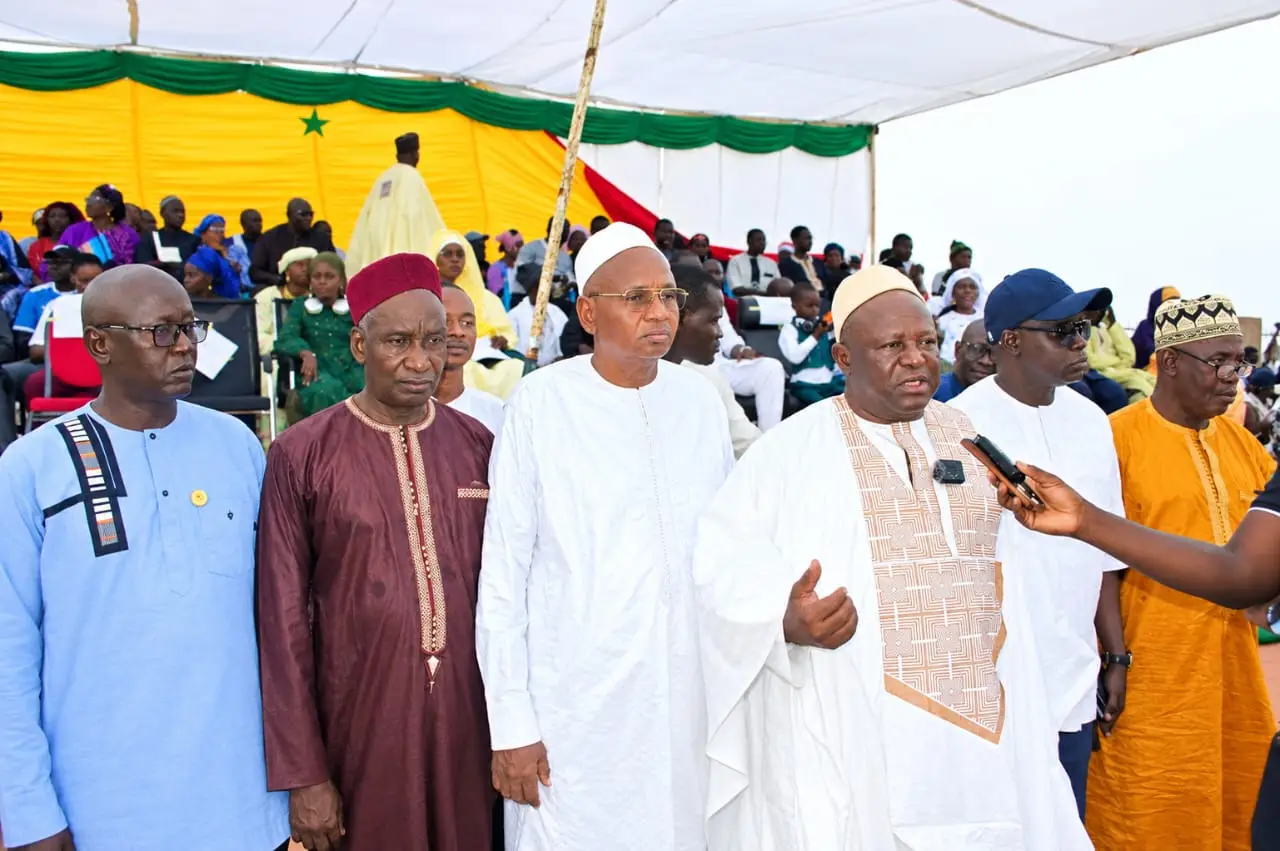
Opening up of Koumpentoum: elected officials from Kiiray plead for the asphalting of secondary roads
On the sidelines of the final of the Koumpentoum Mayor’s Cup, local elected officials affiliated with the Kiiray-Les Patriotes Républicains coalition called on the State to accelerate the opening up of the department. In particular, they request the asphalting of the main roads connecting the municipalities to National Road 1 (Rn1), in order to facilitate the mobility of populations and the evacuation of agricultural production.
TAMBACOUNDA: Gathered around the mayor of Koumpentoum, Sidy Traoré, local elected officials insisted on the urgency of strengthening the departmental road network. According to the mayor of Kouthiaba Wolof, Abdoulaye Ndao, isolation constitutes a major obstacle to the development of several municipalities. He invites the authorities to find a solution to this question. “We ask the government to spare no effort to resolve this issue of opening up. From north to south, the department is landlocked. Almost all municipalities have practically no passable roads,” he lamented.
This situation particularly affects access to health services and economic activity. The municipalities of Kahène, Payar and Kouthiaba are having difficulty transporting their patients referred to Koumpentoum. In these areas with a strong agricultural vocation, the state of the roads also makes it difficult to transport produce to markets.
Also read: Mamacounda, mirror of Tambacounda
For Sidy Traoré, the department nevertheless occupies a strategic position, in the heart of Senegal and on the RN1 corridor, an international road linking the country to several states in the sub-region. He therefore considers it abnormal that this national road is practically the only paved road in the department.
The mayor of Koumpentoum is therefore pleading for the management of the 144-kilometer line linking Koussanar, Méréto and Payar as part of the second phase of the Connectivity Program for the North and Center production zones.
According to elected officials, the construction of this axis would bring the production areas closer to the RN1 and facilitate the delivery of crops. They also recommend the installation of storage warehouses and processing units along the corridor. These infrastructures could, according to them, promote the promotion of local production, create jobs for young people and help reduce emigration.
