
Love on the edge of its truths September 16, 2026
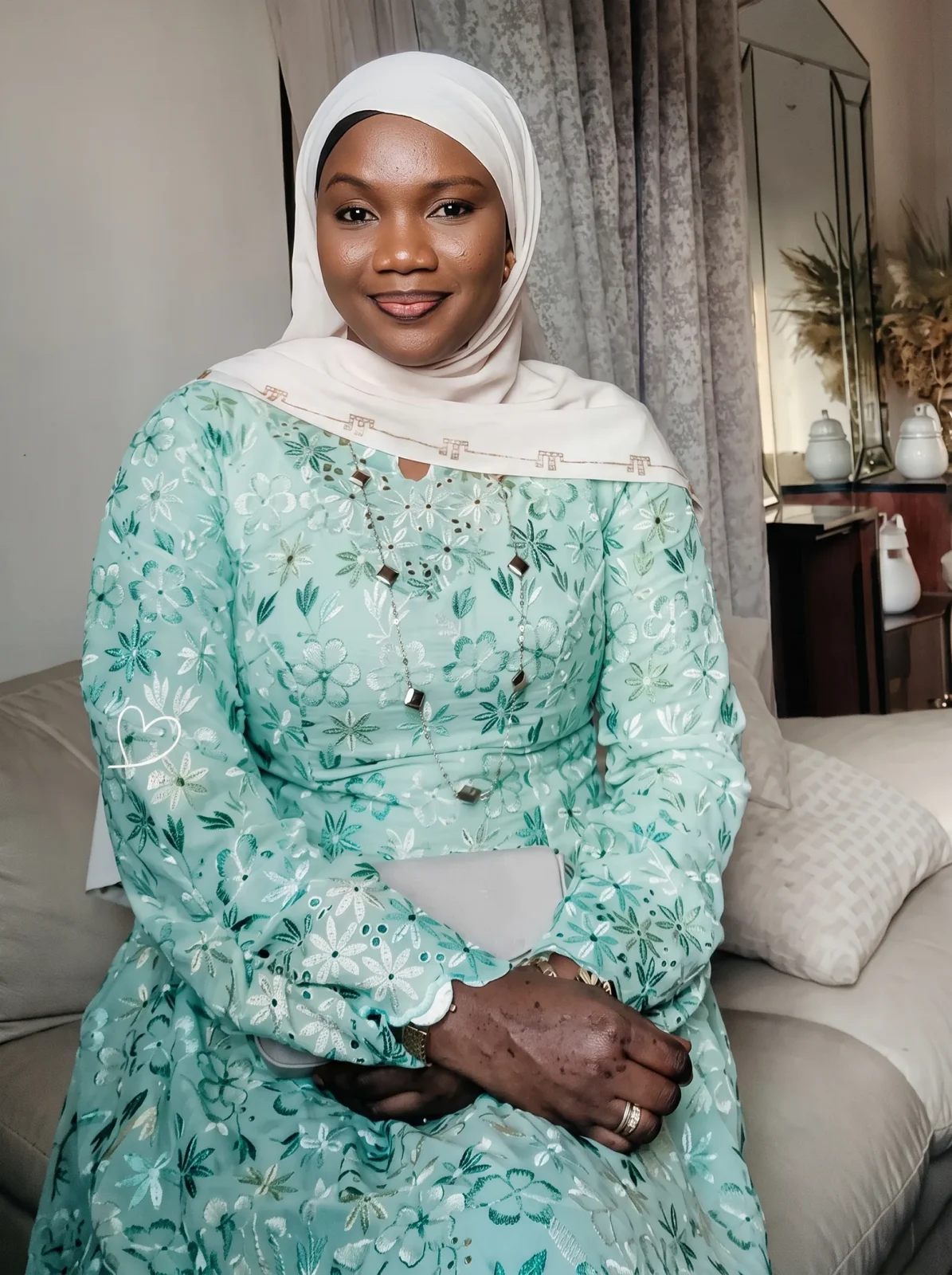
In “Between sighs and smiles”, his first novel published by Éditions Le Fil d’Ariane, Rokhy Ndiaye establishes love in a territory where nothing is simple, neither the heart, nor the family, nor the belongings. Through Mamy Aissata and Mariama Karène, her mother, she examines the dizziness of choice, the loyalties that bind us, the legacies that shape us and this strange freedom that never exists completely without compensation. A novel where we learn that certain questions do not require an answer, but a lifetime to be tested.
“I live, I die…suddenly I laugh and I cry…” Louise Labé, in her famous sonnet, had already understood that the human heart is a land without clear borders. We go from delight to dismay as if from one bank to the other, without a bridge always visible. We laugh there with tears still warm in our eyelids. Human beings are made like this. He carries within him a quarrelsome little republic where feelings rarely vote unanimously. Molière made everyone laugh. “Between Sighs and Smiles” by Rokhy Ndiaye comes to this long family. Not to teach man a lesson, thank God, but to observe him with his tiny greatness and his magnificent weaknesses.
His novel does not claim to resolve the romantic mystery. He does better by watching him live. Here, joy never completely expels sorrow. This is because the human heart has never been a very serious accountant. He adds incorrectly, subtracts incorrectly and preserves bad memories with the precision of an archivist. The novel advances in this strange “Republic” of feelings where everyone has their own constitution, generally written in a hurry and violated the next day. “There are questions that a daughter asks her mother already knowing that no short answer will be able to contain them,” says the back cover of the opus. When Mamy Aissata admits her hesitations about marrying Ababacar, she is not simply seeking maternal advice. Worry. Deep. What should we do when a man seems to bring together all the qualities we hoped to find, when reason acquiesces, when convenience seems satisfied, but the heart remains obstinately in the background? Marriage then seems obvious. Because the heart does not always sign the contracts that reason presents to it.
Mariama Karène understands this. To respond to her daughter, she distributes neither sentences nor maxims. Rather, she opens a door to her own past. And behind this door, there is a young medical student, a professor named Monsieur Sène. Ah, love! These five tiny letters which, in families, sometimes take on the size of a continent. There is the religious difference. There is the special relationship between a professor and his student. Above all, there is the father’s refusal, with all the loyalty this opposition carries.
The most beautiful movement of the novel is there. Mamy Aissata initially seems to carry the story. She is the one who doubts, the one who questions, the one who seeks to understand what a promise is worth when it must be confronted with reality. Yet his question acts as a key. She opens the memory of her mother. The girl becomes the threshold through which the reader enters a story that precedes her. Two women, two generations, two experiences of love look at each other without confusing each other. One wants to know how to choose. The other knows that every decision carries with it an element of the unknown. This is how family stories are passed down. Mariama Karène does not only transmit answers.
She also leaves behind her hesitations, her errors, her renunciations, her tiny victories, her crookedly healed wounds. Mamy Aissata therefore receives more than a story. She receives an emotional inheritance. Mariama Karène is a mother, doctor, confidante, living memory. She is also this woman who, long after experiencing her own tumult, must find the words to shed light on that of her daughter. Around her, other female figures compose a sort of constellation. Each brings their light, their way of looking at the world, their share of experience. Rokhy Ndiaye does not hide this intention. “Even if the story is based on a love story, my fundamental intention was to promote each woman who composes this work,” she explains.
When a girl asks for more than advice
The novelist also claims affiliation with women whose journeys have been anchor points for her, including Ken Bugul, Rose Dieng, Aminata Sow Fall and Mame Younousse. Above all, the novel contains a border that feelings cannot cross without causing turmoil. Religion. Mr. Sène and the heroine belong to different faiths. Rokhy Ndiaye sees it above all as revealing. “Through the story of Mr. Sène and the heroine, I wanted to celebrate above all the absolute strength and the power of love,” she says. Then she specifies: “Love has this unique capacity to defy all barriers, to resist prejudice and to unite worlds that society sometimes tends to oppose. »
The subject is very consistent with the architecture of the novel. Love becomes a force that tests boundaries. But the novelist happily avoids transforming marriage into a trophy intended to reward sincere feelings. Loving and living together are not the same alchemy. The feeling can arise in the moment, like a flame in dry grass. Common life requires time, patience, accommodations, sometimes renunciations, always loyalty. Love begins with the heart. Marriage involves the entire existence. Another idea runs through the novel with a gentleness that is never entirely innocent: that of a family larger than just consanguinity. The family, here, is woven of loyalties, memories, values, obligations, presences which acquire over time an almost carnal density. Aunt Karène, a character full of stories, is the perfect illustration of this. Two hundred and three pages, with accessible writing, to contain almost a life. The novel does not seek to multiply catastrophes, thunderous twists and turns or extraordinary situations. We enter the book through the story of Mamy Aissata. We stay there because his hesitations end up resembling ours. Because everyone, at one time or another, has experienced this indecisive territory where we know what we should do without knowing what we really want to do. At Rokhy Ndiaye, the title is not an item of clothing placed on the manuscript once it is completed. Rather, it seems to be its compass. “I first let a title emerge which becomes my guiding principle, I put together the overall architecture then the writing imposes itself on me,” she says. Between Sighs and Smiles is also the last of his manuscripts written, but the first to have found its way to publication.
The title before the book
The formula sheds light on its relationship to writing. The title is a promise. A constraint too. Each character carries, according to her, “a part” of their person, “a sliver” of their convictions, their doubts and their sensitivity. However, the novel is not autobiographical. The “sighs”, explains Rokhy Ndiaye, refer to social constraints, family expectations, hesitations, doubts and the oppression that we feel when faced with difficult choices or complex loves. The “smiles” embody “the victory of resilience, newfound light, dignity and gratitude. “I wanted to precisely capture this interstice, this space of life suspended between doubt and hope,” confides the novelist.
Adama NDIAYE
