
Report: The ingenious introduction of fish into rice fields against bilharzia September 15, 2026
With sparkling eyes and a smile on his lips, Moussa Ndiaye, an octogenarian rice farmer, contemplates with satisfaction his harvest in his rice field in northern Senegal: the yield is good, but not only in rice grains…
His field is part of a pilot study with promising results. It aims to fight against schistosomiasis, one of the main parasitic diseases in the world, while increasing rice yields, thanks to the astonishing introduction of fish into the rice fields, then caught and sold: a rare opportunity for local farmers. More than 40 farmers from different villages are involved in this research project. These ecosystem-based solutions represent a growing trend in science.
The village of Moussa Ndiaye, Lampsar, is located in the lower valley of the Senegal River, near the border with Mauritania, a region where residents have long lived from river-related activities, but where fish are not usually caught in the rice fields. “Since we were young, since our grandparents, we have been fishing. We are +Waalo-Waalo+,” Mr. Ndiaye, 80, told AFP, referring to an ancient kingdom in northern Senegal.
However, in addition to fish, the region is unfortunately renowned for the presence of bilharzia (or schistosomiasis), an acute and chronic parasitic disease caused by worms, schistosomes. This disease, the transmission of which has, according to the WHO, been recorded in 79 countries in mainly tropical and subtropical regions, is spread by contact with fresh water contaminated by these parasites, hosted by infected fresh water snails.
Increased yield
The World Health Organization (WHO) estimated in 2024 that at least 253.7 million people would need preventive treatment against schistosomiasis. The WHO estimates that at least 93.6% of people who need such treatment today live in Africa. The presence of these infected freshwater snails is common in rice fields. Moussa has already contracted bilharzia three times in his life, and his sons have also suffered from it.
This disease is easily treated, but the infection often goes unnoticed initially, and intestinal or urogenital complications often do not appear until several years later, leading to damage to certain organs, or even in some cases, to death. Infected children – particularly vulnerable to infection – can frequently miss school, or adults find themselves unable to work for long periods, worsening the cycle of poverty.
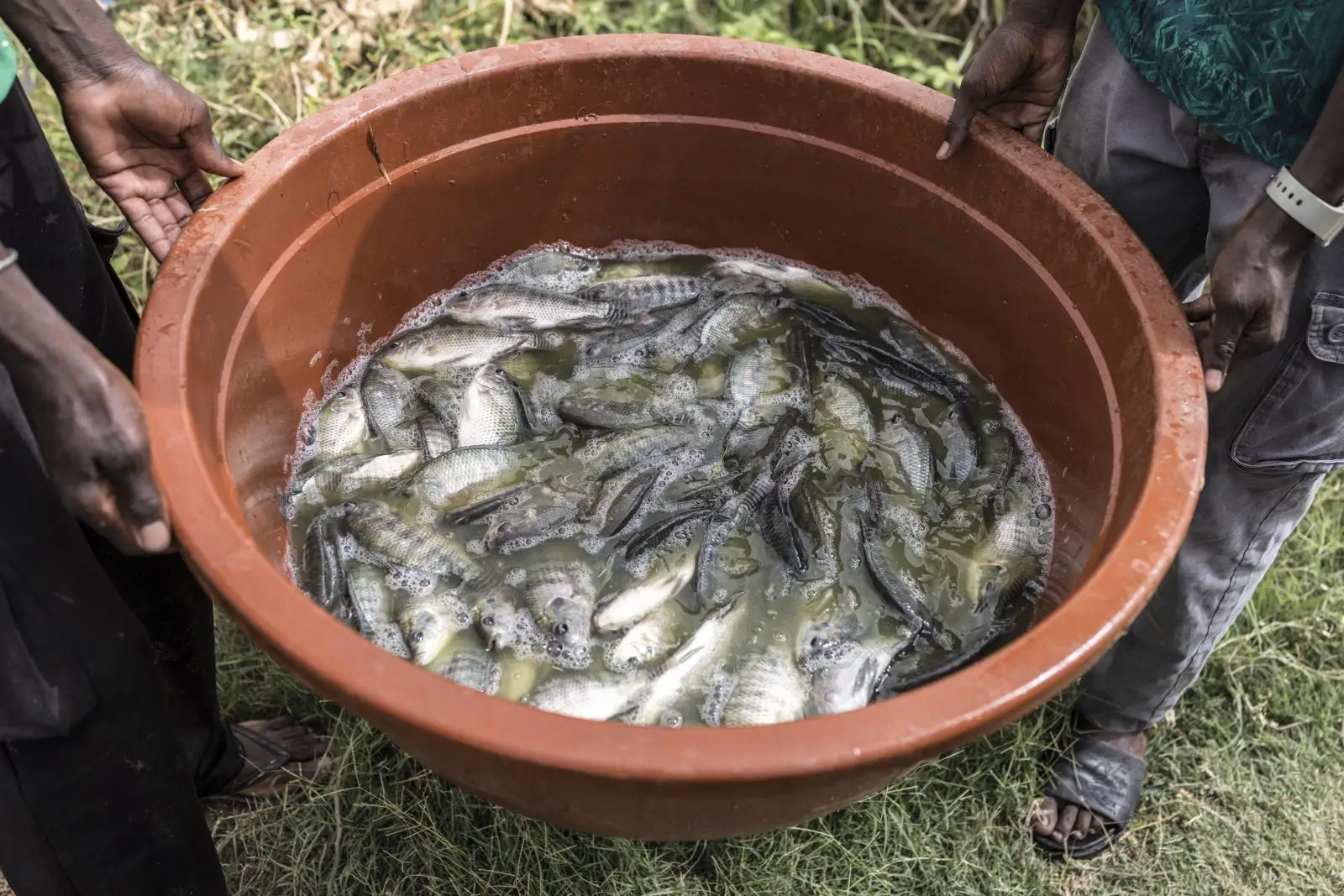
Scientists therefore decided to experiment with the introduction into the rice fields of Nile tilapia, which fertilizes the rice with its excrement, and of another fish called “ndiegel” in the Wolof language (Heterotis niloticus), which eats the snails responsible for bilharzia. “We are really tackling many challenges,” underlines to AFP Emily Selland, from the University of Notre Dame in the United States, lead author of an article on this pilot study published this year in Nature Sustainability. “We initially approached the situation from the point of view of the disease,” she explains, but there was also “the nutritional, economic, ecological aspect”.
His study found that the introduction of fish increased crop yields by 25%, a net benefit to each household of at least $380 per year. The presence of predatory fish in the rice fields has also reduced the number of snails there.
Gathered in a house in Lampsar on a scorching afternoon, several rice farmers recount the experience. “I noticed that the fields which also have fish are always greener than those which do not have them thanks to the fish’s defecation,” Abdoulaye Diop, 62, told AFP. “The fish waste serves as organic fertilizer and increases the yield of rice,” he rejoices. He explains that since his first harvest he has been able to invest in sheep and poultry farming.
Earlier that day, interviewed in his green rice field, Mr. Ndiaye, research project referent for the Lampsar community, added: “Really, it’s profitable! People are interested in it.”
To other African countries
The day the AFP team met him, he harvested 20 bags of rice of 80 kilos each, and a few days later, more than 350 Nile tilapia, on his farm.
Maï Diop, from a family of rice farmers spanning several generations, states unequivocally that her objective in participating in this project is to “have much more income” which will allow her to support her family.
“At home, we eat rice at least one meal out of three. Thiéboudiène is my favorite dish! », she says, referring to this traditional dish made from rice and fish, emblem of Senegalese cuisine.
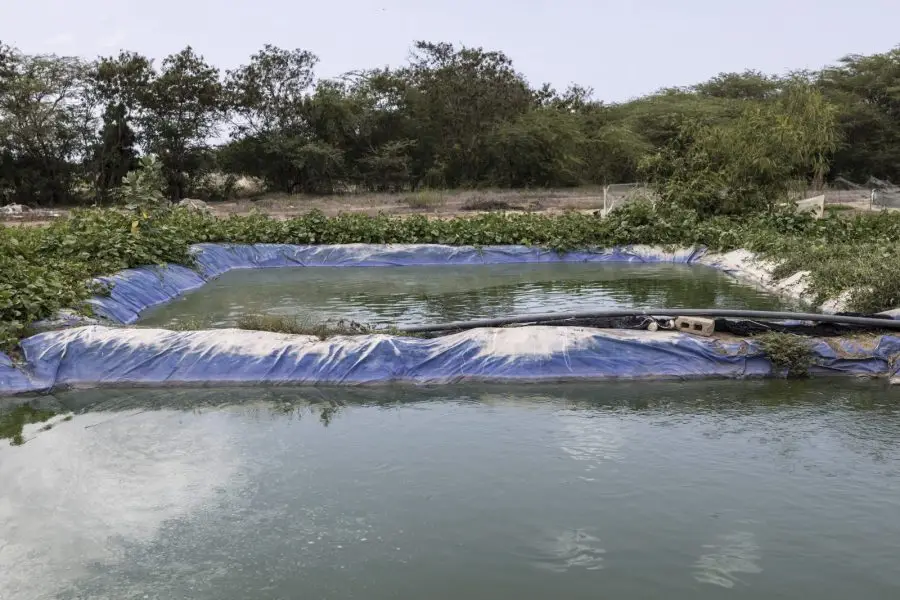
In an aquaculture facility located at Gaston Berger University in the city of Saint-Louis, not far from Lampsar, Nile tilapia and snails wait to be transferred to experimental rice fields belonging to “AfricaRice”, a pan-African rice research center.
The objective is to carry out the same research, but in a controlled environment, and if necessary to develop the project in other African countries.
“The idea is not to simply stay in Senegal, it is that once we have the expected results, that this will be implemented in many African countries,” hopes Ali Ibrahim, representative of the AfricaRice Regional Station for the Sahel.
AFP
