
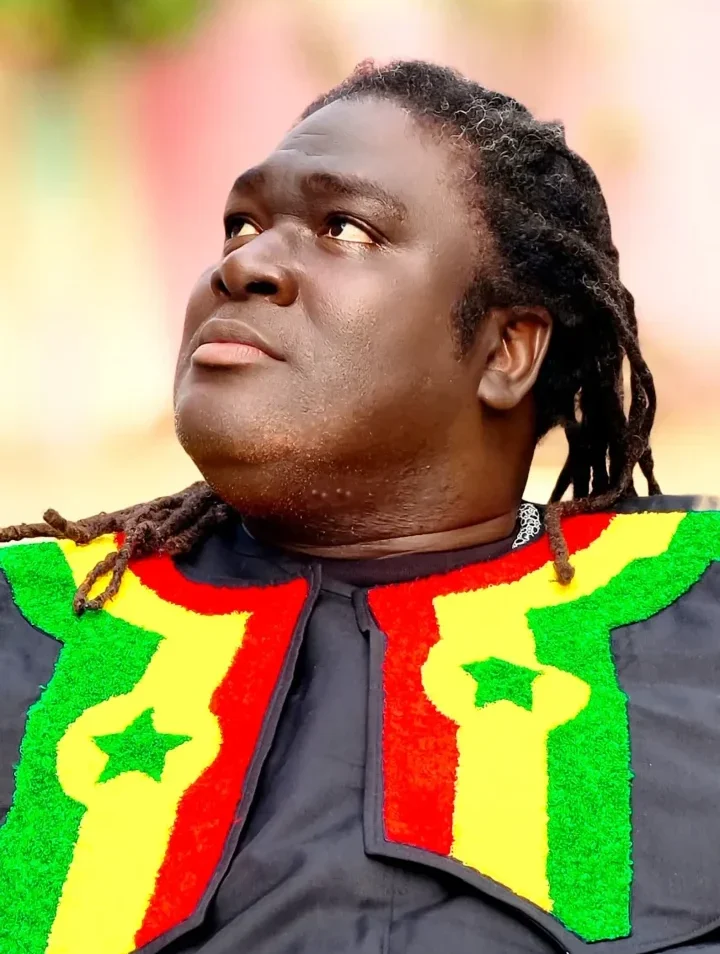
Alexandre Damas alias Big D: An imposed life of private silences
After illness, cinema, silences and the loss of his eldest son, the former member of “Yatfu” returned to the stage of the Grand theater in May 2026. Big D is no longer just the rapper who marked the early years of Senegalese hip-hop; he has become a man shaped by hardship, whose return to the light now carries the weight of a life spent far from the spotlight.
The stage had known his face before knowing his wounds, especially with “Souma Nékhé Ngandé”, the hit which truly propelled his musical career. In May 2026, when Armand Alexandre Damas, aka Big D, returned to the stages of the Grand Théâtre de Dakar, the applause undoubtedly not only greeted a rapper who returned among his own people. They welcomed a man whom time had taken far from the microphones, far even from the image that the public had kept of him. Between the young artist who occupied the Dakar stages of the 1990s, with a physical presence, and the one who reappeared, something was undone, something was also rebuilt. The voice remains. Man now carries in his silence everything that light never shows.
Big D has reluctantly become a survivor of the ages. Illness, cinema, personal difficulties and a loss of intimate violence have shifted his trajectory. In October 2024, he lost his eldest son aged 17. A tragedy whose pain no vocabulary can exhaust. Since then, Big D has chosen a form of withdrawal. “I no longer prefer to talk about my personal life and my projects. I live better this way,” he simply says. He now prefers accomplished works. But, above all, this return to the stage gave him immense pleasure.
“Rap is a way of looking at society…”
“It’s wonderful to reconnect with the stage and the public. Above all, I was very happy to have kept the promise made to my late son, Erwin Georges, to take over the microphone. From up there, he must have been super happy, because his dream was to see me on stage again,” confides the artist, his voice full of emotion.
Its story begins well before this period of withdrawal, at a time when Senegalese hip-hop did not yet have the symbolic and popular power that it would conquer. In 1989, Armand Damas joined the movement. Rap is then a music that is still young under the Dakar sky, a transplant from elsewhere which is already seeking to take root in a society which will give it its own language, consciousness and identity. The codes are American, but the material is Senegalese. In the neighborhoods, a young person discovers that a microphone can be something other than a sound object. It can become a peaceful weapon. Big D understood this power of words very early on: “Rap is not just about performance. It is a way of looking at society in its contradictions, its violence, its faults, then of restoring them with the brutality necessary in an era which is not keen on overly polite truths.”
In 1994, his meeting with Jojo on the show “Rap Attak” opened a new stage. With Gofu, they founded “Yatfu”. The group establishes itself with a resolutely hardcore aesthetic and unvarnished lyrics. At a time when songs still circulate through cassettes, radios and word of mouth, reputation is earned by the strength of the performances. “Yatfu” thus advances in a landscape where rap is still searching for itself. The group does not seek to soften its words. He chooses roughness, frontality, denunciation. “Stop aggressor” becomes one of his notable titles. The piece is part of a society affected by the rise of urban violence and reflects a conviction that will remain attached to Big D’s journey. “I use words to denounce the ills of society,” he says.
This posture helps to inscribe Big D in the memory of the pioneers. In 1998, “Yatfu” published “Fenku Yatfu”. The group then participates in a collective adventure that goes beyond its own contours. Big D also takes part in the dynamic of “Aura”, alongside figures like Awadi, Xuman and Keyti. The movement is growing. But, subsequently, the paths diverge. Big D leaves “Yatfu” and chooses solitary adventure. Sensitivities diversify, aesthetics intersect, artists seek new paths. The era is no longer exactly that of the beginnings. Big D nevertheless continues its transformation. “Jackpot” appeared in 2000, followed by “XXL” in 2002, “Jamm, peace” in 2004, then “Amine” in 2007. His music opened up to other influences. Reggae and ragga (Editor’s note: musical subgenre from dancehall and reggae) nourish his universe. The hardcore rapper refuses to become a prisoner of his own reputation. However, at a time when Senegalese rap continues its rise, new generations appear and technologies disrupt musical habits, he is gradually moving away from the spotlight.
Sad art
For the public, absence often has the brutality of a disappearance. An artist who is no longer seen seems to have ceased to exist. But a man’s life doesn’t end when his music leaves the airwaves. Big D then experiences another scene, much less striking. Cinema enters his journey. The disease too. Personal difficulties accumulate. In 2023, he returned publicly to this period and discussed the reasons for his absence. Today, if notoriety had given Big D a public voice, life has imposed private silences on him. It’s a strange lesson from fame. It can make a face known to thousands of people without allowing them to truly know the man who wears it. It enlarges the image, but does not protect anything. Nor time. Nor from illness. Nor accidents of fate. Even less of death. Big D learned it in the darkest part of his life. His return has a fruitful ambiguity. There is the pleasure of reunions, the memory of the early years of hip-hop, the joy of seeing a familiar figure take possession of a stage again. However, beneath this emotion something else emerges. The feeling that time has passed and left its mark. The public finds a familiar voice, but this voice returns loaded with a history that applause cannot erase.
Senegalese rap, too, is no longer the same. The one that Big D discovered at the end of the 1980s has become a cultural industry, a major space of expression, a territory where generations, influences and new economic models now meet. Cassettes have given way to platforms. Radio shows are no longer the only gateway to fame. Social networks have accelerated the creation of reputations. The piece that once had to travel from hand to hand can now cross borders in a matter of hours.
By Adama NDIAYE
