
Diw-nior: when curds turn into gold for the women of Ferlo
In Linguère, the Fulani women of Ferlo transform curdled milk butter into oil called “diw-nior”, an ancestral know-how that has become an economic pillar. Between drought, transhumance and lack of infrastructure, they strive to preserve this sector and diversify its uses, from cooking to cosmetics, to assert their autonomy and promote pastoral milk.
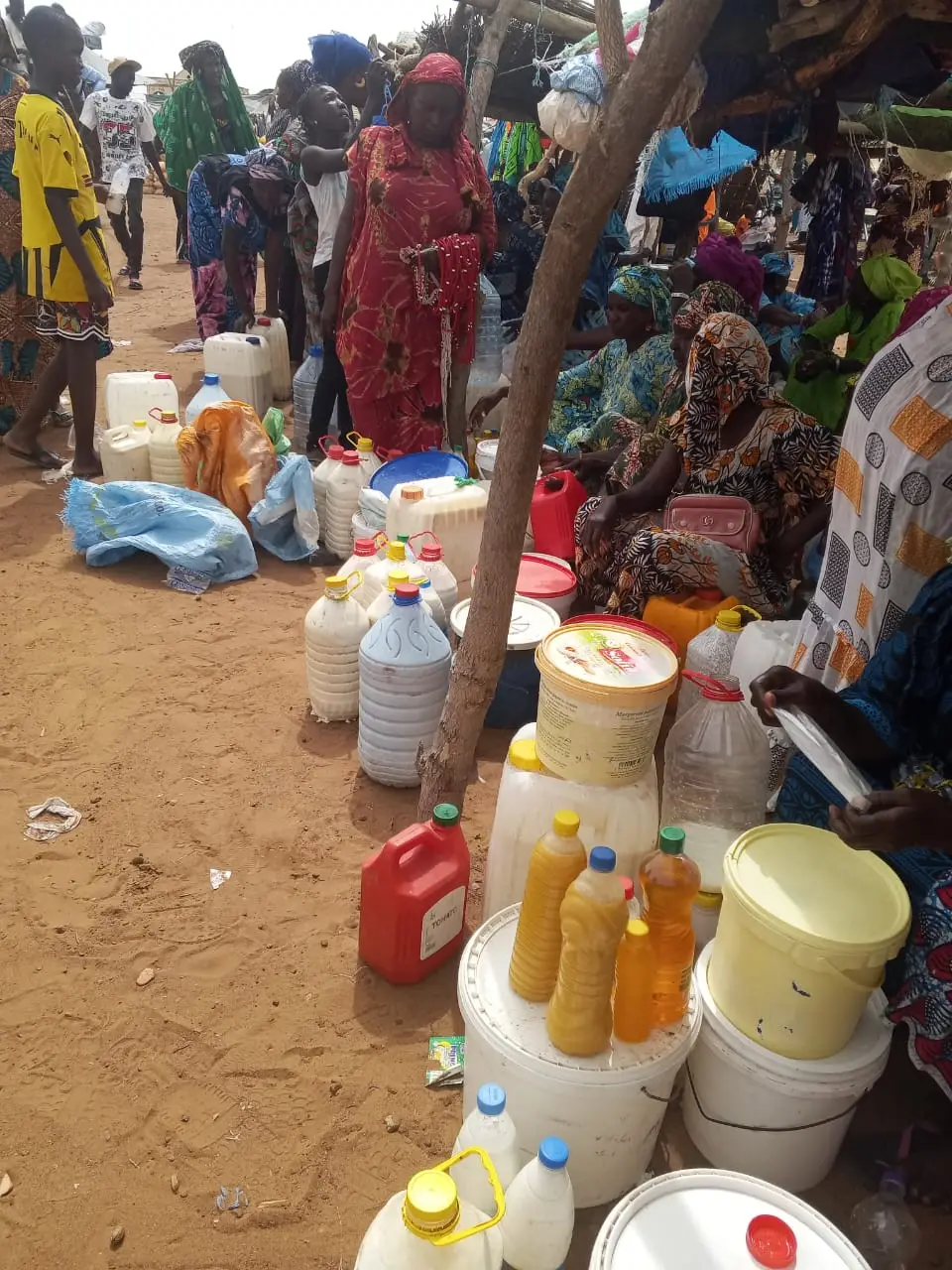
LINGUÈRE – Every Friday, “louma” day, the women leave their hamlets at dawn. They carry on their heads gourds or cans filled with curdled milk and butter, sometimes already transformed into “diw nior”. Some use carts pulled by donkeys, others walk miles on foot, often accompanied by their children.
Artisanal processing
Diw-nior became a simple but demanding process: churning the curds to extract the butter, gentle heating to clarify the fat, then filtration to obtain a pure and stable oil.
“Every gesture counts. If the fire is too strong, the oil loses its quality. It’s a science that we inherited from our mothers,” explains transformative Aïssatou Bâ in Barkédji. In fact, this oil, comparable to expensive Indian oil, can be kept for almost a year without refrigeration, a major advantage in rural areas lacking a cold chain.
Fulani women, guardians of know-how
In the Ferlo camps, it is women who carry out the milking, processing and sale. Invisible in agricultural reports, they are nevertheless the real players in the sector. “They say that it is men who produce milk, but without us it would never be transformed. Diw-nior is our wealth,” confides Mariama Sow, seller at the Linguère weekly market.
Marketing at the Linguère weekly market
The Linguère weekly market becomes the nerve center of the sector. A liter of diw-nior sells between 4000 and 6000 FCFA, sometimes more in Dakar. “These customers come from Thiès and even Mbour. They know that our oil is pure and that it has a unique taste,” says Fatoumata Kâ, processor in Dodji.
Other sellers estimate that they earn a lot of money during the days of the weekly market in Linguère or elsewhere. This is the case of Ramata Kâ.
“We receive customers who come to us from different countries. They pay 4000 per liter in winter, but at the time of curd shortage, we sell 6000 per liter of curd butter. I thank heaven because the curd butter business has allowed me to make a lot of achievements. I paid for two plots in Dahra Djolof and I help my husband with daily expenses. But also, I pay for my children’s education,” she declared.
Diversification of uses
Beyond cooking, diw-nior is used to make handmade soaps, cosmetic balms and even in traditional medicine.
“We make soaps with the oil and ashes of certain plants. The women of Dakar buy them for their children,” Khady Guèye, member of a women’s cooperative in Loumbi in the commune of Ouarkhokh. Curd butter produces several derivatives which are used as fertilizer in the fields.
“Our curd butter residues, sometimes mixed with ashes or other organic waste, are spread in the fields to enrich the soil. Thus, this waste contains fats and proteins which promote the regeneration of the poor soils of Ferlo. Their use helps limit dependence on imported chemical fertilizers, which are costly for small producers,” confirms Ms. Gueye.
Challenges to overcome
The sector remains fragile. Drought reduces the availability of milk, transhumance drives herds further away, and the absence of a cold chain leads to losses. “When the cows go south, we no longer have milk. The machines of the mini-dairy processing unit remain at a standstill,” laments Aminata Bâ, manager of an artisanal unit in Dodji.
The women processors of Ferlo are obviously demanding modern processing units so that the sector does not disappear. Aminata Bâ, saleswoman at the “Wendou Kossam’” dairy processing unit based in the commune of Linguère. “We need support from public authorities so that the sector remains,” she said.
