
DPG: behind the scenes of a carefully prepared institutional exercise August 26, 2026
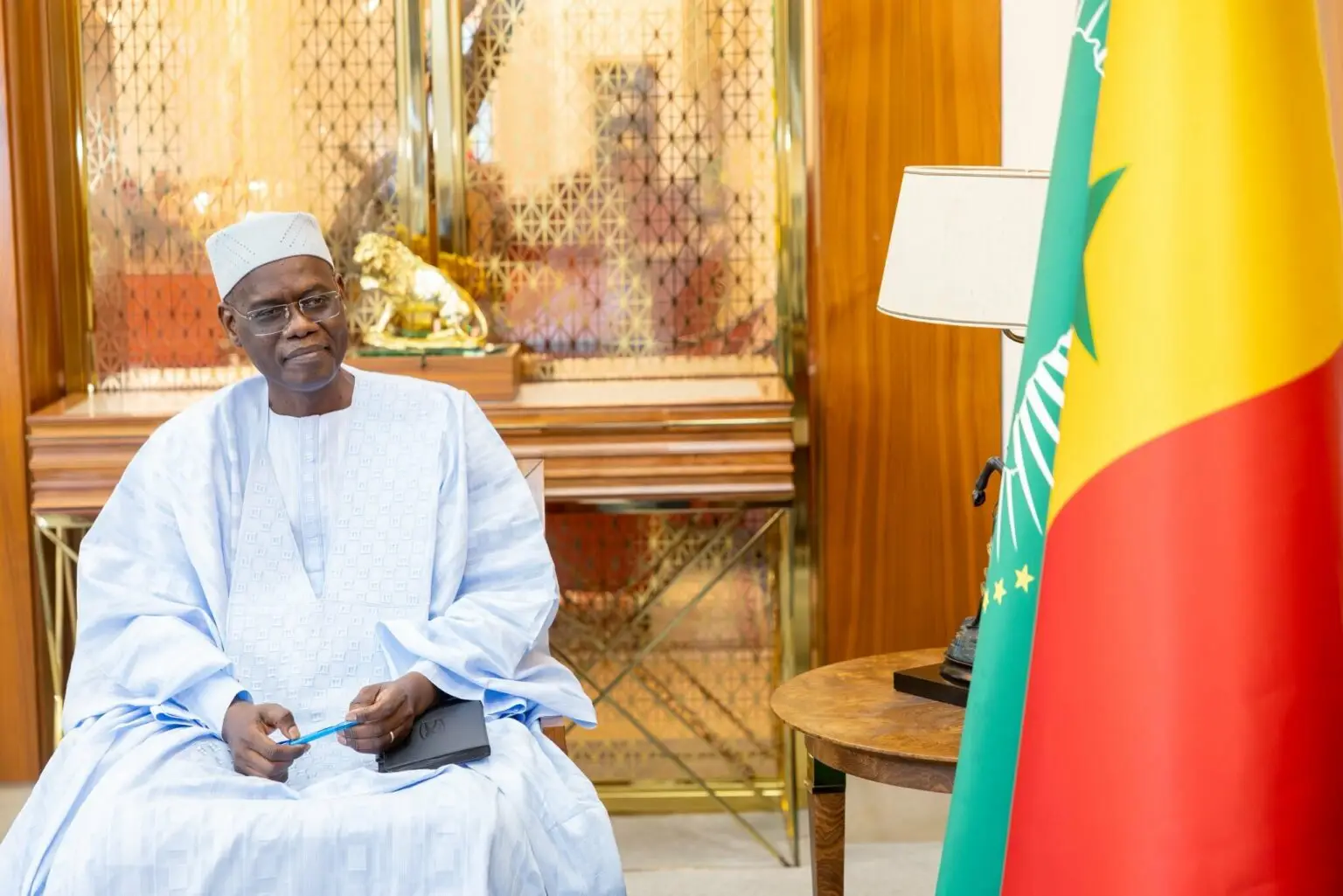
Appointed on May 25, Prime Minister Ahmadou Al Aminou Lô will make, on September 1, 2026, his first General Policy Declaration (DPG) before the deputies, during a plenary session at the National Assembly. But how is this institutional exercise prepared behind the scenes? Le Soleil Digital tried to find out a little more.
A roadmap…
From the outset, a major clarification is necessary: the General Policy Declaration is not an assessment of government action. It constitutes above all a road map, through which the Prime Minister sets out the orientations, priorities and main actions that his government intends to implement in the short and medium term.
Read also: DPG: PM Ahmadou Al Aminou Lo expected before the National Assembly on September 1
According to information collected by Le Soleil Digital, the exercise should notably be based on the four axes of the Senegal 2050 framework, with particular emphasis on the objectives set for 2029.
After his appointment, the Prime Minister presents his DPG before the National Assembly. This is followed by a debate and may, at the request of the head of government, give rise to a vote of confidence, in accordance with constitutional provisions.
The challenge will therefore be to translate the vision of the President of the Republic into concrete measures in the different sectors. The DPG must therefore make it possible to review the government’s main orientations, the priority reforms and the flagship measures that the government team intends to undertake.
As coordinator of government activity, the Prime Minister also has control of the administration, in accordance with the Constitution. It is up to him, as such, to mobilize the entire administrative chain to ensure the implementation of public policies.
But before the face-to-face meeting with the deputies, important preparation and coordination work takes place behind the scenes, under the leadership of the General Secretariat of the Government.
The Secretary General of the Government notably pilots the consolidation of contributions from the various ministerial departments, with the support of the Prime Minister’s Chief of Staff and sectoral technical advisors. The latter work in conjunction with the general secretaries of the ministries.
Administrative mechanics
A State civil servant belonging to the A1 hierarchy or equivalent and with at least ten years of effective service in the public administration, the secretary general of the ministry constitutes, in many respects, the memory of his department. He ensures the coordination of the work of the departments and ensures the continuity of the administration.
In the event of a change of minister, it is he who ensures this continuity and makes available to the new minister information relating to the achievements, current files and projects of his predecessor.
This is why, upon receipt of an information letter, generally accompanied by an outline, the minister contacts his technical arm, the secretary general, who in turn mobilizes the various services within his department.
Each ministry thus develops its contribution, based on its sectoral action plan, its priorities and its projections for the period concerned, before transmitting it to the General Secretariat of the Government.
It is then up to the Minister, Secretary General of the Government, Papa Assane Touré, to coordinate the work to finalize the DPG. When he took office, he announced that he was to coordinate the work to finalize the Prime Minister’s General Policy Declaration, to be presented to the National Assembly.
After receipt and examination of the various contributions, the General Secretariat of the Government proceeds to synthesize and harmonize them. These elements then serve as raw material for the drafting of the document and the Prime Minister’s speech.
The speech delivered to the deputies therefore only constitutes a summary of the main orientations contained in the DPG.
The Prime Minister will not say: “I don’t know»
However, the preparation does not stop with the speech. Other information is generally organized in the form of dashboards and sector sheets. Thus, when a specific question is asked to the Prime Minister during the debate, the ministry concerned can quickly provide him with the answers based on already consolidated data.
A deputy can, for example, ask the head of government for the exact number of temporary shelters recorded in Senegal or in a specific locality. The Ministry of National Education must then be able to quickly transmit the available and updated figures.
Even when a subject does not appear explicitly in the speech, the Prime Minister must therefore be able to have the necessary elements to respond to any questions from parliamentarians.
“He will not say: “I don’t know” or “I can’t”, because the State has the skills and services to provide the answers,” explains a civil administrator interviewed by Le Soleil Digital.
To harmonize language elements and avoid contradictions between the different departments, coordination meetings are regularly organized between the technical teams. They make it possible to compare contributions, update data and ensure the overall consistency of the document.
On D-day, the Prime Minister, who will have already received his document several days before, will be surrounded by members of his government for this first major exercise of presentation and confrontation of government policy before the national representation.
A republican meeting
For more than twenty years, the General Policy Declaration has constituted one of the most significant events in Senegalese institutional life. Beyond the oratory exercise, it is a moment of clarification of the government’s choices and of confrontation with national representation.
The timetable for this exercise has, however, been subject to varying interpretations and practices over the years.
The Constitution provides that, after his appointment, the Prime Minister makes his general policy declaration before the National Assembly. The regulatory framework of the National Assembly specifies the practical modalities of this exercise.
The September 1st meeting will therefore be particularly attended. It will allow Ahmadou Al Aminou Lô to officially present his roadmap, but also to specify, before deputies and public opinion, the way in which his government intends to translate the ambitions of Senegal 2050 into public policies and concrete results.
By Salla GUEYE
