
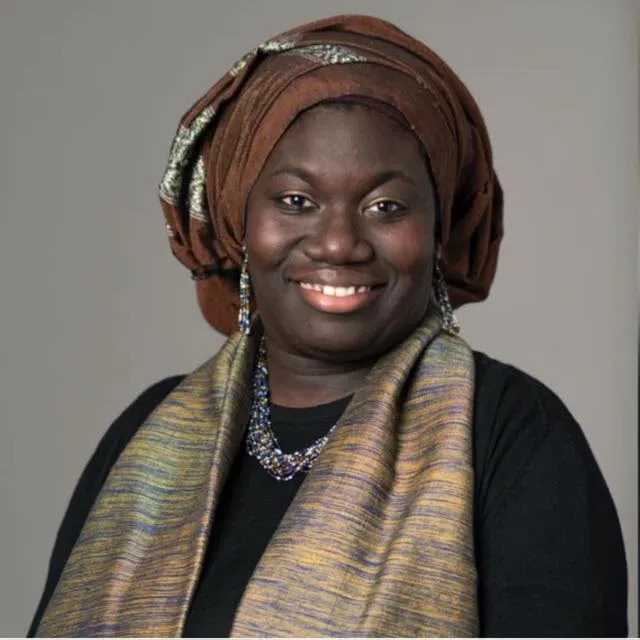
Dr Arame Tall, World Bank: from academic excellence to the climate fight
Responsible for preparing national reports on climate and development at the World Bank (Country Climate and Development Reports, Ccdr), Dr Arame Tall devotes her career to preparing Africa for the challenges of climate change. A renowned climatologist, she has never lost sight of her objective: to put science at the service of development and to convince that Africa can no longer wait to prepare for climatic upheavals.
At 17, she left Senegal for the United States on an excellence scholarship. Twenty-five years later, the best student in the 2002 General Competition has become one of the most recognized African voices on climate change adaptation policies. Dr Arame Tall has never lost sight of his objective: to put science at the service of development and to convince that Africa can no longer wait to prepare for climate change. From Columbia to Johns Hopkins, from the United Nations to the World Bank, where she now leads national reports on climate and development, Dr. Arame Tall has dedicated her career to preparing Africa for the challenges of climate change.
Listening to him tell his story, we quickly understand that nothing was left to chance. However, Dr. Arame Tall refuses the idea of a clear-cut destiny. Behind the internationally recognized climatologist hides a shy little girl, passionate about reading, raised in the cult of excellence by parents convinced that education is the surest passport to the future. “At every stage of my academic life, my mother was there. It was on his knees that I learned to read,” she confides. It was these early years, made of discipline, curiosity and an insatiable love of books, that shaped his career. A student at the Waca school, she belongs to the first Senegalese generation to prepare for the international baccalaureate. “School was our whole life. From morning to evening, weekends included, we did nothing but study,” she recalls with a touch of pride. This thirst for learning translates very early into exceptional performance. Barely a teenager, she took the Bfem as a free candidate, even before third grade. Then comes the year 2002. During the first general competition organized under the presidency of Abdoulaye Wade, she was crowned best student in Senegal and won several first prizes. “The General Competition was a real game changer. He made me see the stars and revealed to the shy young girl that I was that the summits were accessible. It was an early crowning achievement,” she says.
Interdisciplinarity
This national recognition marks a decisive turning point. She continues: “Beyond the rewards and honors, this national distinction has remained engraved in my heart forever, forging the conviction that one can succeed through studies, but also through the love of the Nation which has given me so much. » What followed was an excellence scholarship which took him to the United States, to Smith College, in Massachusetts. Here again, she refuses to lock herself into a single discipline. “I was interested in environmental sciences, which I chose as my main subject, with a specialization in international politics and anthropology. This interdisciplinarity solidly prepared me for an international career in the environment,” she says. Her real breakthrough came at Columbia University, where she specialized, as part of her master’s degree, in climate change. Under the direction of world-renowned researchers, she is discovering the extent of the upheavals that particularly await the African continent. “My teachers opened my eyes to the future impacts of climate change in Africa and to the fact that our States were in no way prepared for it. It was the chronicle of a predicted catastrophe. I made it my life mission. »
This mission became the subject of his thesis at Johns Hopkins University. At the time, however, climate change only occupied a marginal place in international debates. His own research director questions the relevance of the subject. “He asked me: ‘Why do you insist on studying the governance of climate change?’ » How would climate change be important for the development of Africa? » » She is holding on. Two years later, its director admitted having made a mistake and called his work “the most transformative subject in the department”. For Dr. Arame Tall, this experience remains a life lesson. “When you have well-founded convictions, you must not let anyone distract you from them,” she says.
Mobilization of financing
Since then, his career has been built at the intersection of science and public action. In 2013, she helped bring together the African scientific community around the first Pan-African Conference on Climate and Development, in order to bring researchers closer to political decision-makers. A few years later, at the World Bank, she participated in the development of the institution’s first master plan for adaptation to climate change. In Dr Arame Tall’s opinion, climate science is today an essential decision-making tool for any development planner, risk manager or business leader.
“Climatology is not a crystal ball, but it offers useful forecasts to decide, for example, to build a road, size a dam, protect a coastal town or prepare agricultural investments. So many choices which must now integrate climate projections,” she explains. It also proudly claims its role in mobilizing international funding for African countries. “I was able to support governments in mobilizing funding for the national climate agenda, dollars going directly into the pockets of breeders, farmers, women and young people who fight daily for better well-being in the face of an increasingly hostile climate. »
But despite the progress made, his observation remains lucid.
The effects of climate change are accelerating while answers are still slow. “The impacts of climate change, the demographic explosion and land pressure form a real explosive cocktail,” she warns. For her, African countries will need joint strategies to deal with these combined pressures, while continuing to offer opportunities and new green jobs to youth. Its commitment goes beyond laboratories and international institutions. Godmother of Miss Maths and Miss Sciences, 2025 edition, she has chosen to continue her fight for the education of girls in science in order to encourage vocations. Dr Arame Tall hopes to see the emergence of a new generation of African scientists, capable of combining exact sciences, social sciences and artificial intelligence to respond to the continent’s challenges.
By Maguette Guèye DIÉDHIOU
