
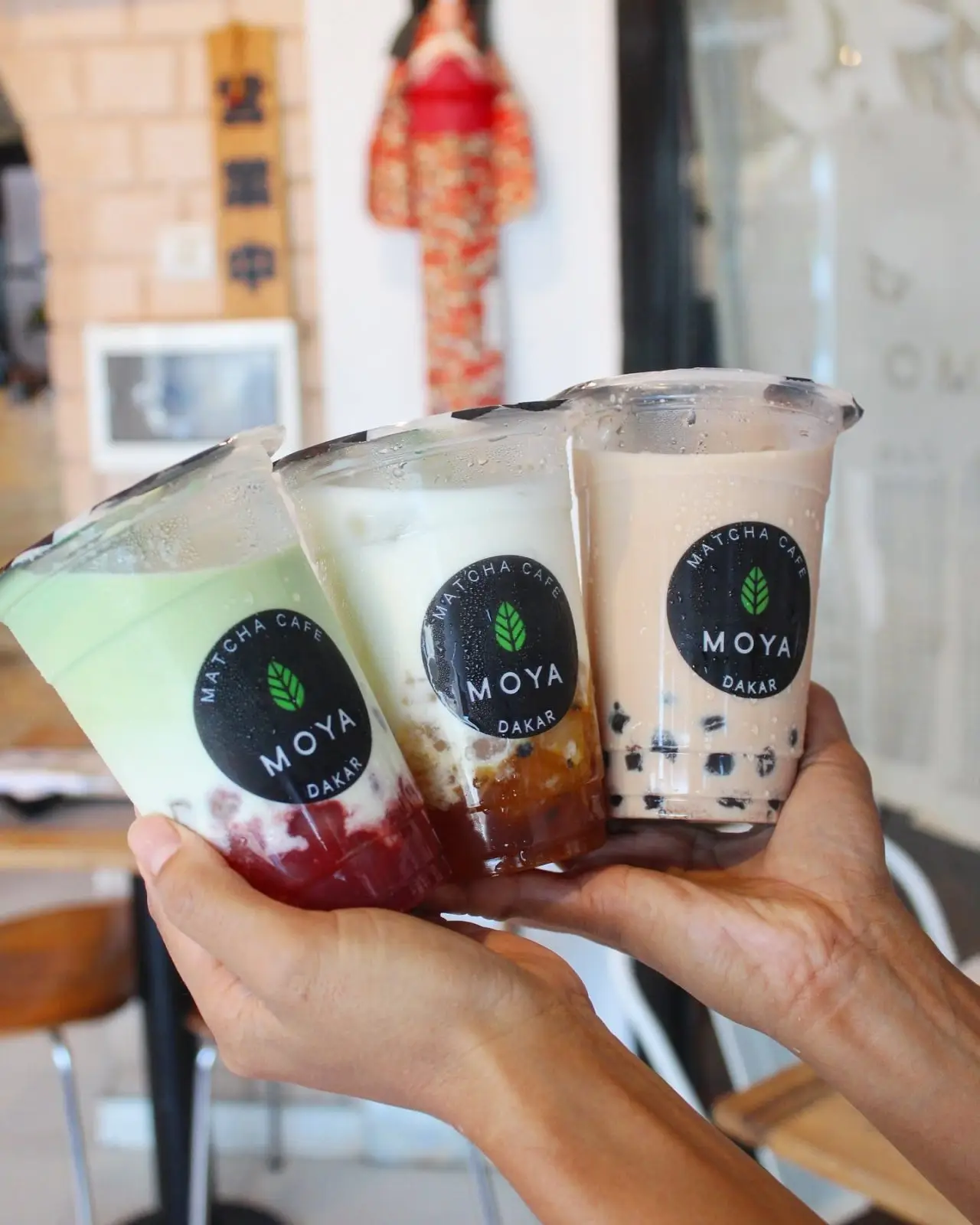
The Asian wave that refreshes Dakar July 21, 2026
Coming from Asia, bubble tea is attracting more and more consumers in Dakar, particularly during this period of intense heat. Between curiosity, original flavors and the influence of social networks, this colorful drink is gradually establishing itself in consumption habits.
Brewed black tea, already cooked tapioca pearls, all mixed with milk, a sweet syrup and a few ice cubes. These are the ingredients of boba milk tea, one of the many variations of bubble tea. This drink is this summer’s refreshing dose. Coming straight from Taiwan, it was invented in Taichung in the 1980s. It most often consists of tea mixed with milk or fruit and garnished with soft tapioca pearls. In the early 1990s, bubble tea spread to Japan and Hong Kong (China). And today, it has established itself in the daily lives of Senegalese people.
In Sacré-Cœur, not far from the BRT stop, Adèle, who came straight from China, runs her tea room with bubble tea as its flagship product. It is in this place with candy pink tones that the customer can come and taste this drink originating from Asia. The Touti Touti tea room is cozy and warm. Some ornamental flowers hang on the wall, giving a cheerful setting to the place. At the start of the weekend, customers stormed the place. This place, where the freshness immediately welcomes the visitor, contrasts with the heat outside. Here, it is not difficult to find something to refresh yourself with. The bubble tea is served iced, enough to soothe the heart.
Dose of freshness
Babacar Mbaye and his friend Dior Guèye came to drink after a day at university. These two classmates came to enjoy a little refreshment break. “This is the first time I discovered bubble tea. But I admit that it is a succulent and refreshing drink,” confides Babacar, sipping his strawberry bubble tea. “It’s very good. I don’t regret having tasted that,” adds Dior, a mango-apricot bubble tea in hand. The latter admits to consuming it often, particularly during this hot period.
If Babacar and Dior enjoy their bubble tea in the dining room, behind the counter, Adèle is on all fronts. At the start of the weekend, it’s a rush. Helped by her two employees, she tries to meet demand. The Chinese woman, who became “Senegalese by adoption”, is delighted to see the Senegalese consume more and more bubble tea. “It’s really nice, because my goal was to introduce people to this refreshing drink,” rejoiced the owner of Touti Touti.
At first, she continues, the drink was not convincing. “I had to change my strategy. I went down to the field to offer free tastings,” she recalls, all smiles. Today, a year later, she admits to receiving more customers, especially during this period. “At the moment, our orders have doubled and our teas come straight from China,” she says, cheerfully. Adèle is mainly banking on summer and its prices, varying between 1500 FCFA and 2500 FCFA, to make the difference. “The most important thing for us is to introduce people to bubble tea. And we are even considering testing fruits with local flavors,” says Adèle.
Drink that is becoming more and more popular
A little further away, in Zone B, Bintou manages Happy Bubble Tea. This place with green and candy pink tones is warm and friendly. In this universe, the objective remains the same for Bintou: to raise awareness of this global trend that is still little exploited in Senegal. The Senegalese company has therefore specialized in the marketing of this drink for almost a year. The objective is also to offer consumers “an original taste experience”, while adapting the product to local preferences.
“We chose it for its innovative side. Unlike traditional drinks, bubble tea offers a wide diversity of flavors, textures and combinations, allowing everyone to create a drink tailored to their preferences,” explains Bintou.
“We are seeing a real rise in popularity of bubble tea in Dakar. Consumers, particularly young people, are increasingly curious to discover new culinary experiences,” adds the manager. According to her, customers are now looking for innovative, refreshing and customizable drinks. Bintou also attributes this craze to the determining role of social networks. “It is a very visual, colorful and customizable drink, which makes it a particularly popular product on social networks. This visibility arouses curiosity and makes you want to try it,” she observes. A dynamic which contributes to making this Asian specialty known to an ever-widening clientele.
Bridge between two cultures
At the head of Matcha Café Dakar, Hitomi Saito aims to make her establishment a true link between Japanese and Senegalese cultures. Open in Dakar since 2019, the café relies on the authenticity of Japanese matcha and bubble tea to discover the flavors of Japan while promoting local Senegalese products.
The choice of bubble tea is not a coincidence. According to Hitomi Saito, this drink has characteristics that will naturally appeal to local consumers. “Bubble tea pearls are made from cassava starch. As cassava is a well-known food in Senegal, I thought that this texture would naturally appeal to Senegalese consumers,” emphasizes the Japanese.
“At the beginning, very few people knew about bubble tea. When we explained that the pearls were made from cassava, the customers were reassured and willingly agreed to taste them. Many subsequently became loyal customers,” recalls Hitomi Saito. Seven years later, the situation has changed a lot. “When we started, to my knowledge, there were no other establishments offering bubble tea in Dakar. Today, several specialized shops have opened, which shows that this drink has become very popular,” she notes, seeing in this development proof of a real enthusiasm among Dakar residents.
For Hitomi Saito, the success of bubble tea goes far beyond simple taste pleasure. “Bubble tea is much more than just a drink: it is a real experience. We admire the pearls, we smell the aromas, we taste the flavors, we appreciate their texture and we take pleasure in sharing this moment. This is undoubtedly what explains why so many people come back,” she analyzes.
If certain ingredients come from Japan, China or France in order to guarantee their quality, Matcha Café Dakar favors local resources as much as possible. “Our mango and strawberry syrups are prepared in-house, we use Casamance honey, ginger and Senegalese lime, and we also handcraft our natural bubble tea pearls using cassava starch,” explains Hitomi Saito.
The establishment is also working on a new recipe combining Senegalese bissap with Japanese green tea, symbol of this meeting between two culinary traditions.
Arame NDIAYE
