
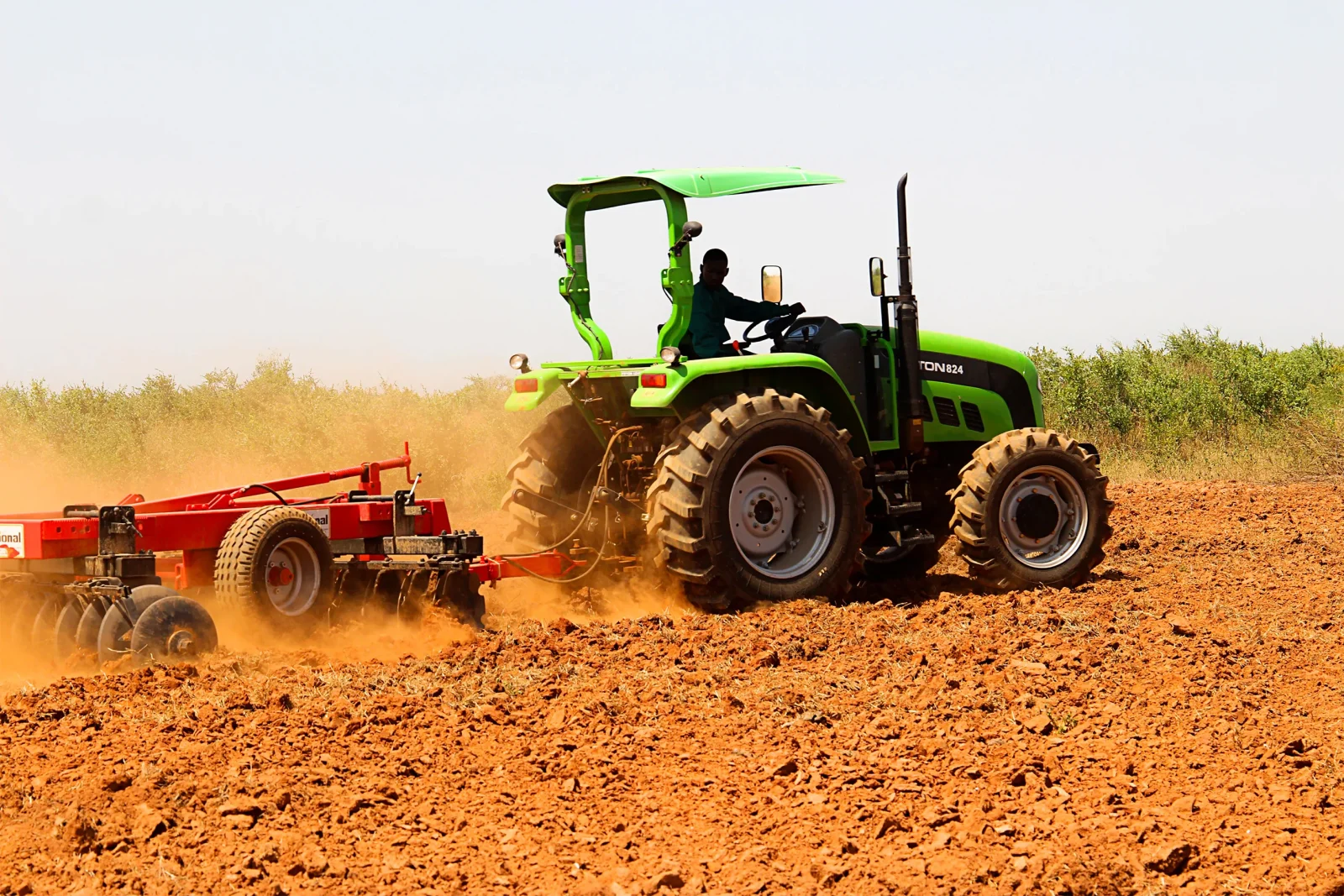
Modernization of agriculture: water and mechanization, the two priority projects
Beyond input subsidies, stakeholders are calling for a change of direction. They call on the State to invest more in water control, mechanization and infrastructure in order to build an agriculture that is more productive, more resilient and less dependent on climatic hazards.
If several billion CFA francs are injected into the agricultural sector, the question of water control remains unresolved. This is why Habib Thiam, president of the Confederation of Peanut Industry Operators (Copega), believes that Senegal will never be able to achieve food sovereignty without a massive policy of investment in hydraulic resources. “Effective, controlled and dynamic agriculture requires water control. We cannot build food sovereignty on random and rain-dependent agriculture. We must produce all year round, not just during an agricultural season,” he argues. Faced with climatic hazards, he also recommends favoring short-cycle varieties. “This year again, the forecasts predict long dry spells. If we do not favor short-cycle varieties, we will be in difficulty.”
For him, Senegal must stop operating at the rhythm of agricultural campaigns. “What we need is a real agricultural policy, and not a succession of programs. The programs respond to the situation, while the policies are structural and long-term.” He also recalls that the agricultural sector only receives around 2.5% of the national budget, far from the objective of 10% set by African commitments. “Mechanization must become a real service” In its desire to modernize agriculture, the State devotes a significant part of its subsidies to the acquisition of tractors. For Alla Sène Guèye, this policy would benefit from being reoriented.
According to him, it is enough for one part to break down for a tractor to be immobilized and for the producer to stop repaying his credit. “Senegal should develop specialized companies capable of offering plowing, sowing, harvesting or threshing services to farmers. This approach would ensure equipment maintenance while reducing costs for producers. Agriculture can only become competitive by relying on a real industrial base,” he maintains. According to him, this industrial base should make it possible to locally produce fertilizers, irrigation systems, agricultural drones, equipment, packaging as well as storage infrastructure.
Oumar FEDIOR
