
Project to support agricultural competitiveness and livestock breeding: Israel relies on seeds to consolidate food sovereignty
As part of the Project to Support Agricultural Competitiveness and Livestock (Pcae), the Senegalese Institute of Agricultural Research (Isra) is intensifying the production of pre-basic seeds of rice, wheat and sorghum. A strategic approach aimed at sustainably strengthening Senegal’s agricultural production capacities.
Through the PCAE, ISRA is deploying a major pre-basic seed production program in several research stations, notably in Ndiol and Fanaye in the Senegal River valley. The objective is to guarantee the availability of quality seeds, considered the basis of any food sovereignty policy.
For Dr Baboukar Bamba, researcher at the Saint-Louis Agricultural Research Center and focal point of the seeds program at ISRA, the stakes are high. “The aim of the program is to achieve self-sufficiency in seeds. Without pre-basic seeds, it is impossible to develop other levels of production and properly supply farmers,” he explains. Concerning wheat, two hectares were sown during the cold off-season in the Ndiol and Fanaye stations. The harvests have been completed and the teams are currently continuing post-harvest operations. For rice, nine hectares have been dedicated to the multiplication of several new varieties, including ISRI 2, ISRI 7, ISRI 12, ISRI 15 and ISRI 16. In Ndiol, where selection and multiplication activities are carried out, installation manager Moussa Kandé highlights the strategic importance of the program. “When we talk about agriculture, we must first talk about seeds. Producing and making quality varieties available allows us to hope for better yields and strengthen food security,” he says.
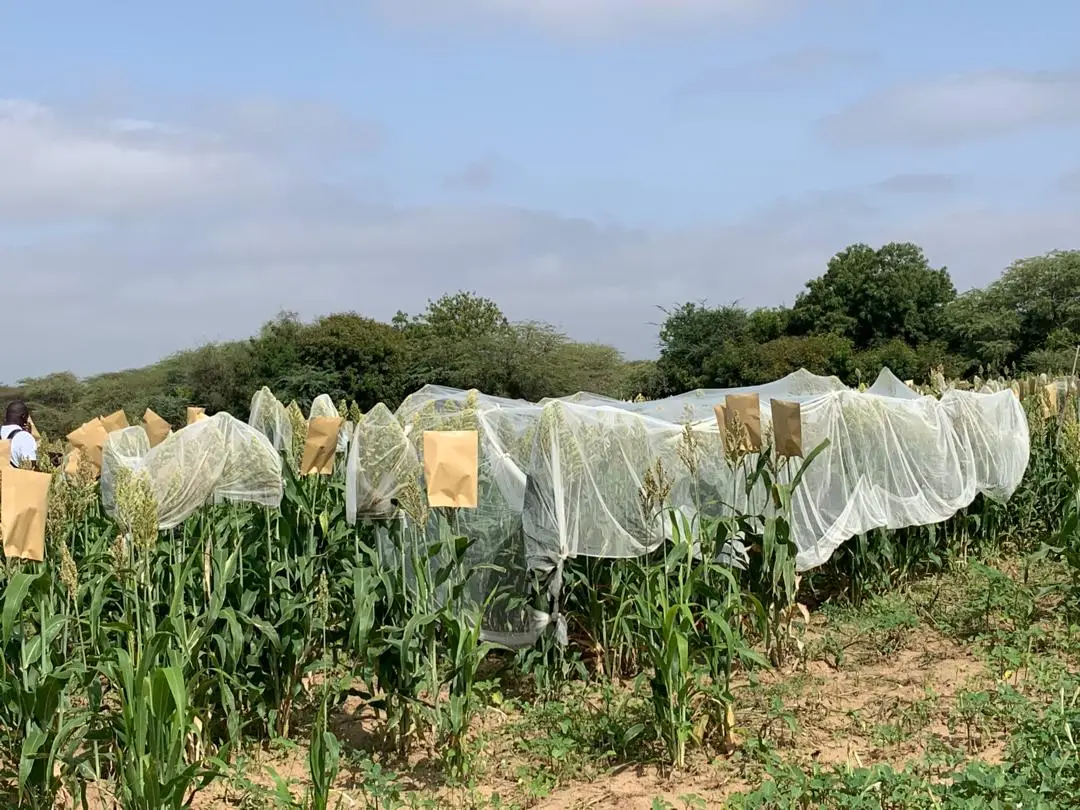
The PCAE also promotes partnerships between research and higher education. At Gaston Berger University (UGB) in Saint-Louis, seed production plots are used for both applied research and practical training of students. “Thanks to our collaboration with ISRA, students can apply the knowledge acquired in class in the field and prepare for the realities of the professional world,” says Justin Kanfany, teacher-researcher in the Plant Production and Agronomic Department. The university is currently involved in the production of sorghum seeds as part of the project. An activity which also contributes to research into varieties adapted to the needs of producers and breeders.
According to Abbdourahmane Tamba, operations manager of the UFR Agro educational farm, the variety of sorghum cultivated has strong potential. “It is a very productive variety whose residues can be used in livestock feed, thus contributing to the development of integrated agriculture-livestock systems,” he emphasizes. By focusing on research, innovation and the production of quality seeds, the PCAE and ISRA intend to lay the foundations for a more competitive and resilient agriculture in the service of Senegal’s food sovereignty.
