
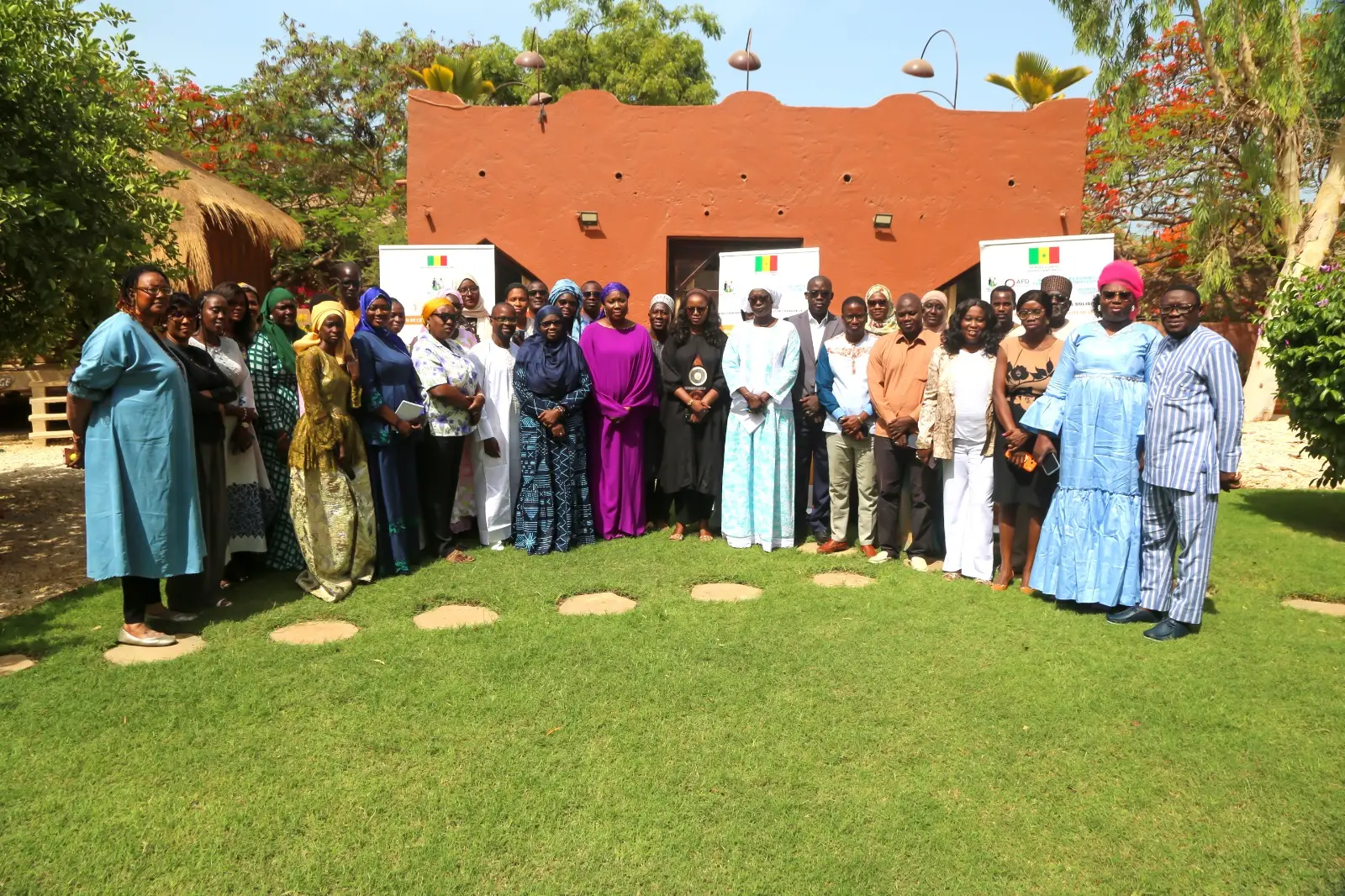
Journalists equipped for responsible treatment June 11, 2026
Enable journalists to better process information related to gender-based violence (GBV). This is the objective of the National Directorate of Gender Equity and Equality which is organizing a three-day training session (from June 10 to 12, 2026) for the benefit of the Association of Gender Information Professionals (Apig).
Despite the efforts of the State of Senegal, gender-based violence (GBV) persists. The media, key players in prevention, often face a lack of access to reliable data. To optimize the fight, the National Directorate for Equity and Gender Equality of the Ministry of Family, in partnership with UN Women, has chosen to train media professionals in “the analysis, interpretation and popularization of budgetary and statistical data”.
With this in mind, a three-day capacity building workshop opened yesterday in Saly, for the benefit of members of the Association of Gender Information Professionals (Apig).
According to its president, Adama Diouf Ly, “one of the main obstacles to quality genre journalism in Senegal remains the reluctance of the authorities, the lack of access to reliable statistics and the difficulty of dissecting the data”.
However, as Astou Diouf Guèye reminds us, the media are the engine of social transformation. “Well-processed information can change a perception, a transformed perception can cause a behavior to evolve, and behavior that evolves contributes to lastingly transforming a society,” she declared.
To show the urgency of the situation, she recalled that 36.9% of women have suffered at least one form of violence (physical, psychological, sexual or economic), citing a survey by the National Agency for Statistics and Demography (Ansd) published in 2023.
Faced with the persistence of gender inequalities, Ms. Guèye reaffirmed the importance of gender-sensitive budgeting. She defined this approach as a tool of governance and transparency, essential to ensure that each franc invested by the State contributes to reducing disparities and meeting the specific needs of each citizen (men, women, girls and boys).
Ms. Guèye encouraged media professionals to appropriate these technical concepts to popularize them, to closely follow public commitments and to analyze the state budget from a gender perspective.
“It is through your productions, your investigations and your reports, carried out in strict compliance with journalistic ethics and the protection of survivors, that we will succeed in changing mentalities and lastingly transforming our society,” she insisted.
For his part, Adama Diouf Ly recalled the urgency of responsible media treatment of gender-based violence, deploring that these situations are too often relegated to the status of news items while they hinder the development of communities.
Recalling the psychological and economic impact of this violence, she warned that casual journalistic treatment can traumatize victims for life.
Fatou SY
