
Advocacy for the training of competent and digitally-minded veterinarians March 29, 2026
The 29th formal start of the Interstate School of Veterinary Sciences and Medicine of Dakar (Eismv), held on Friday, highlighted the major challenges linked to global health. Authorities and experts took the opportunity to salute the structuring role of the establishment in the training of qualified human resources in animal health and production.
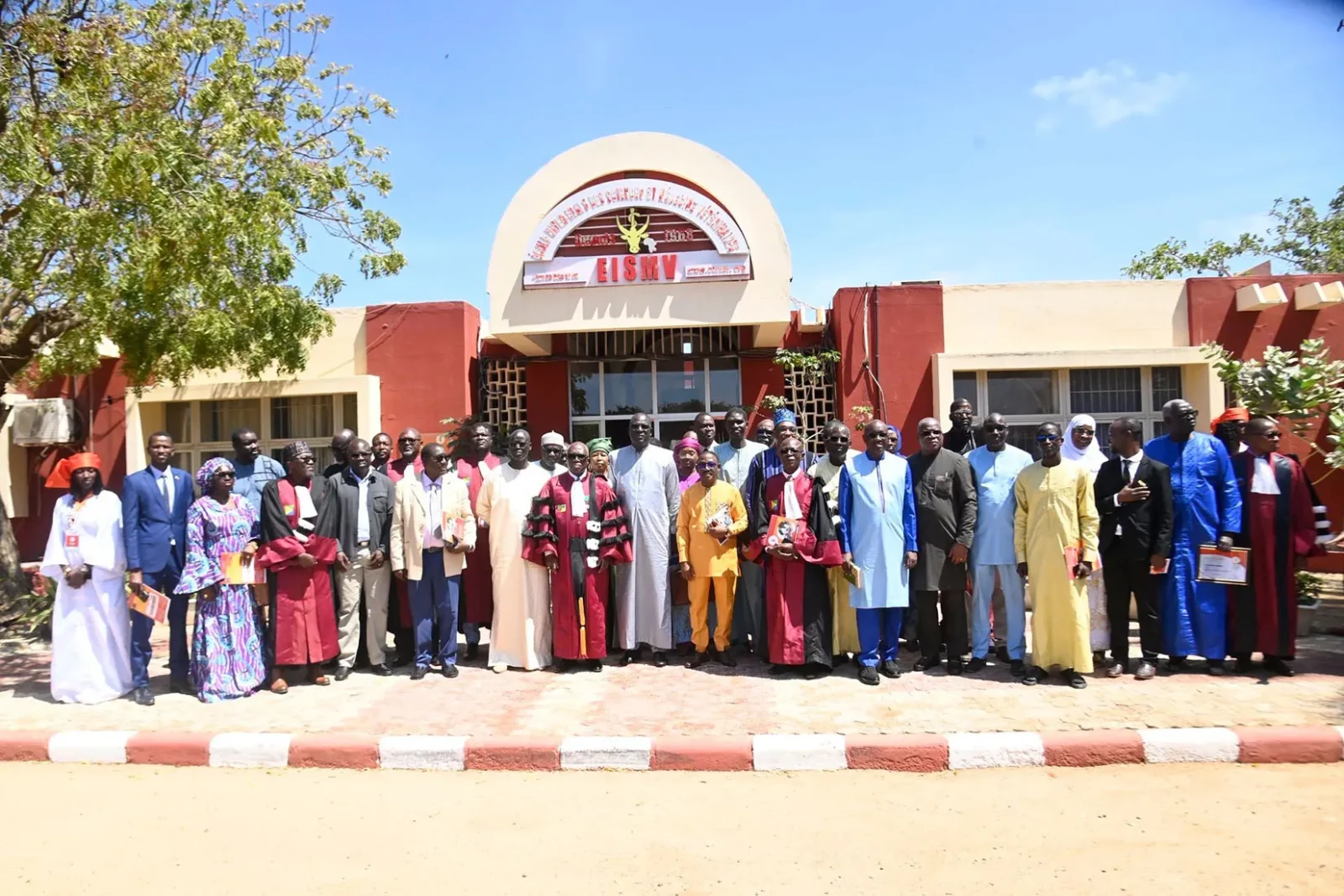
Veterinary capacities in Africa in the light of “Global Health”, this is the theme of the 29th formal start of the Interstate School of Veterinary Sciences and Medicine of Dakar (Eismv). The meeting held within the establishment, at Cheikh Anta Diop University (Ucad), brought together academic and institutional experts and managers around the Secretary General of the Ministry of Higher Education, Research and Innovation, Fary Sèye.
Representing the Minister, Mr. Sèye praised the structuring role of the Interstate School of Veterinary Sciences and Medicine. He recalled that the institution, created in 1968, has established itself as a pillar in the training of qualified human resources in animal health and production. He stressed that Eismv strongly contributes to the health security and economic development of Member States, believing that “the school constitutes an essential lever in the construction of high-level African expertise in animal health and food security”.
Addressing the theme of this solemn return to school, Fary Sèye insisted on its strategic nature, indicating that “human, animal and environmental health can no longer be considered in a sectoral manner”. According to him, “it is now global, interconnected and interdependent”, a reality confirmed, he said, by recent health crises. In this perspective, he affirmed that “veterinary capacities constitute a strategic lever for the prevention of zoonoses, food safety and resilience in the face of pandemics”. However, he recognized that “veterinary systems in Africa face significant structural challenges”, citing in particular “insufficient qualified human resources, weak infrastructure and limited access to advanced technologies”. The Secretary General of the Ministry of Higher Education also warned of “the persistence of cross-border animal diseases, the rise of antimicrobial resistance and the effects of climate change”. According to him, these challenges require “strong, coordinated and sustainable responses”.
In the same dynamic, Fary Sèye called for a transformation of training, maintaining that we must “train competent veterinarians, open to digital technology and artificial intelligence”. He added that “research must be adapted to African realities and oriented towards impact”. Addressing the students, he recalled the scope of their commitment and insisted on the fact that they are “sentinels of public health and actors of sustainable development”.
The Director General of Eismv, Professor Yalacet Yambat Kaboré, expressed his gratitude to the authorities and partners. He indicated that this solemn return to school takes place in “a global and African context marked by profound changes”. Mr. Kaboré notably mentioned “emerging health crises, environmental pressures and transformations in agri-food systems”. According to him, “these dynamics require a new reading of health issues”. To do this, the Director General of Eismv invites stakeholders to “take a lucid look at what has been achieved, but also at the persistent inadequacies in training and research systems”.
Making Eismv a center of excellence
The general director of Eismv took advantage of the solemn start of the school year to salute the “strategic, participatory and rigorous leadership of the establishment, based on a culture of quality and planning”. He indicated that this orientation allowed “the modernization of the institution, the strengthening of academic excellence and the broadening of institutional influence”. Like the various speakers, the boss of Eismv reaffirmed the ambition to make this school a center of excellence serving African integration. A call was also launched for increased mobilization of States and partners in the development of the institution.
Daouda DIOUF
