
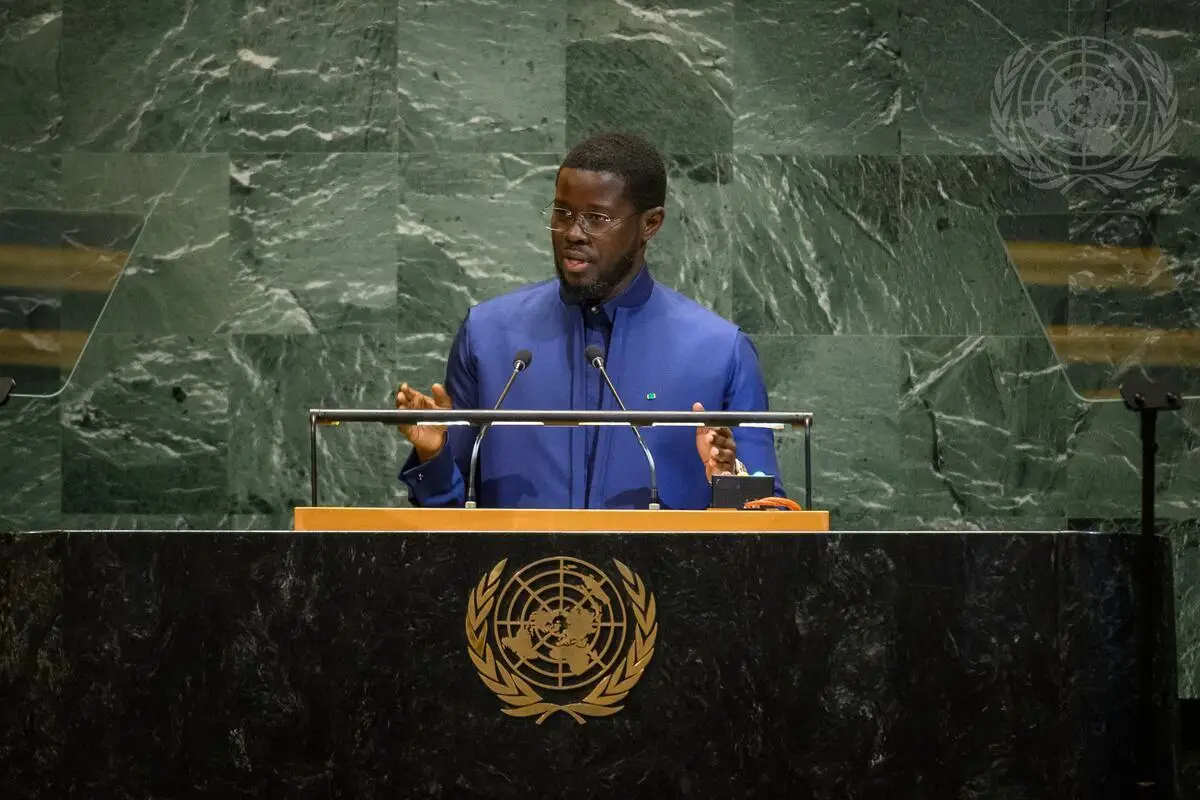
81st session of the United Nations General Assembly: Positions that Senegal could take
At this stage, it remains difficult to determine precisely the themes that the President of the Republic, Bassirou Diomaye Faye, will address during his speech at the 81st session of the United Nations General Assembly. However, given the main diplomatic and security issues facing Africa, it is possible that the question of the Sahel, among other strategic issues, will occupy an important place in his intervention.
The 81st session of the United Nations General Assembly opened on September 8, 2026, in New York. The general debate which brings together heads of state and government each year takes place from September 22 to 28, 2026. For this session, nearly 130 world leaders will give their position on the theme “restoring trust, managing transformation: a United Nations at the service of all”.
By protocol tradition, Brazil opens the general debate. This year, Morocco occupies the first seat in the Assembly hall and in the main committees. At this stage, the content of the intervention of the President of the Republic, Bassirou Diomaye Faye at the podium of the Assembly is not known.
In his speech at the 80th session, President Diomaye Faye called for an increased fight against armed conflicts, terrorism, cross-border crime and political instability to which Africa is a victim.
He also stressed the need for “reforms in global economic and financial governance”. President Faye was not aligned with “an approach based on public aid”, and was strongly in favor of the use of other means, such as “a fair global tax framework so that taxes are paid where wealth is produced”, but also “access to credit under sustainable conditions”.
However, given the geostrategic issues of the day, Africa remains without permanent representation on the Council. This “anomaly” is regularly denounced even though the majority of United Nations peacekeeping operations concern the continent. This issue can potentially be among the points that Senegal defends during this 81st session. Furthermore, managing security in the Sahel remains a constant concern.
On other occasions, the President of the Republic, Bassirou Diomaye Faye, has made the security crisis in the Sahel a strong focus of his intervention. In Berlin, received by German Chancellor Friedrich Merz, June 23, 2026, President Bassirou Diomaye Faye placed the security issues of the Sahel at the heart of his discussions. According to the Senegalese presidency, the head of state stressed the importance of continued commitment alongside Senegal and the countries of the region in the fight against terrorism, while reaffirming Dakar’s attachment to the peaceful resolution of disputes and dialogue.
In a context where the regional security situation has not significantly improved, this theme could once again occupy an important place in Senegalese discourse. This plea would be consistent with the stated commitment to a stabilized West Africa and strengthened security cooperation.
The climate summit convened on the sidelines of the session also offers Senegal a diplomatic showcase for advocacy. As a reminder, Senegal is a coastal country particularly exposed to coastal erosion and climate change. This framework can serve as an opportunity to advocate for increased support for “climate adaptation”.
O.BA
