
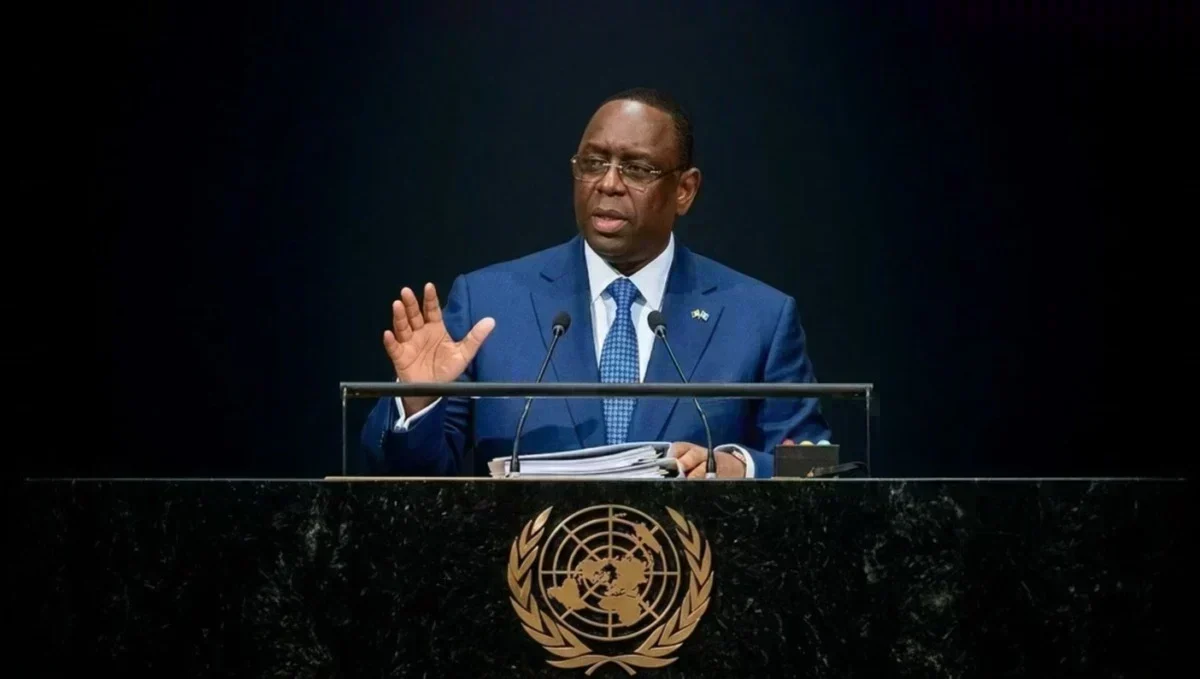
UN General Secretariat: These possible obstacles to the election of Macky Sall
The announcement, this Saturday, October 17, 2026, by Macky Sall of his withdrawal from the candidacy for the post of Secretary General of the United Nations (UN) ends a diplomatic sequence. The latter will have mobilized support, awakened fractures and exposed obstacles.
The former President of Senegal, Macky Sall legitimately sought to succeed António Guterres, whose mandate ends on December 31, 2026. Twelve years at the head of the Senegalese state, experience in international negotiations and a stint as current president of the African Union were assets.
Macky Sall therefore approached this sequence with a substantial career. Former minister several times, former Prime Minister, former President of the National Assembly, then President of the Republic from 2012 to 2024, he occupied the highest functions of the Senegalese state for more than a decade.
At the head of the African Union, Macky Sall was involved in discussions on the representation of the continent in international institutions. He has been heavily involved in issues relating to developing country debt, climate finance and the economic consequences of the war in Ukraine.
In his candidacy document, entitled “Refounding multilateralism for a better world”, Macky Sall pleads for a more efficient, more modern organization and better adapted to contemporary crises. In particular, it highlights persistent conflicts, the debt of developing countries and the weakening of confidence in international institutions.
However, a candidacy for the UN General Secretariat requires gathering sufficiently broad diplomatic support. In this order, the most crucial issue is undoubtedly to reassure the determining powers (USA, France, China, Russia, United Kingdoms).
An African candidate, without African consensus
One of the first obstacles was the difficulty in presenting Macky Sall’s candidacy as the expression of a unified African will. Burundi, then at the head of the rotating presidency of the African Union, sponsored the candidacy of the former Senegalese president. This support constituted an important point of support. But not all African governments have followed suit.
The succession of António Guterres also takes place in a context where Latin America and the Caribbean are expected to be favored in the logic of geographical rotation. This practice is not a binding legal rule, but it weighs on diplomatic balances. The prospect of seeing a woman access the general secretariat for the first time is also an important element. Macky Sall’s candidacy therefore had to overcome regional and symbolic considerations that go beyond his person.
The Security Council, final judge
On Friday October 16, 2026, during the indicative vote organized as part of the selection of António Guterres’ successor, Macky Sall obtained five favorable opinions against ten unfavorable. Three of the negative opinions came from permanent members of the Council, according to the results reported by the press. These informal consultations do not constitute an elimination vote. They nevertheless serve to measure the balance of power before the formal procedure. The mechanism for appointing the secretary general gives decisive weight to the five permanent members.
Withdrawal, a lucid decision
On Saturday October 17, Macky Sall announced his withdrawal after consultations with Burundian President Évariste Ndayishimiye, current President of the African Union, and the President of the Republic, Bassirou Diomaye Faye, also current President of ECOWAS.
In his statement, the former head of state explains that the various test votes reflected a preference for a candidate from Latin America and the Caribbean, possibly female. He indicated that he wanted to encourage the emergence of a consensual candidacy. For Macky Sall, the UN ambition is coming to an end. This sequence, however, highlights the limits of international ambition, when it fails to mobilize sufficiently solid support.
O.BA
