
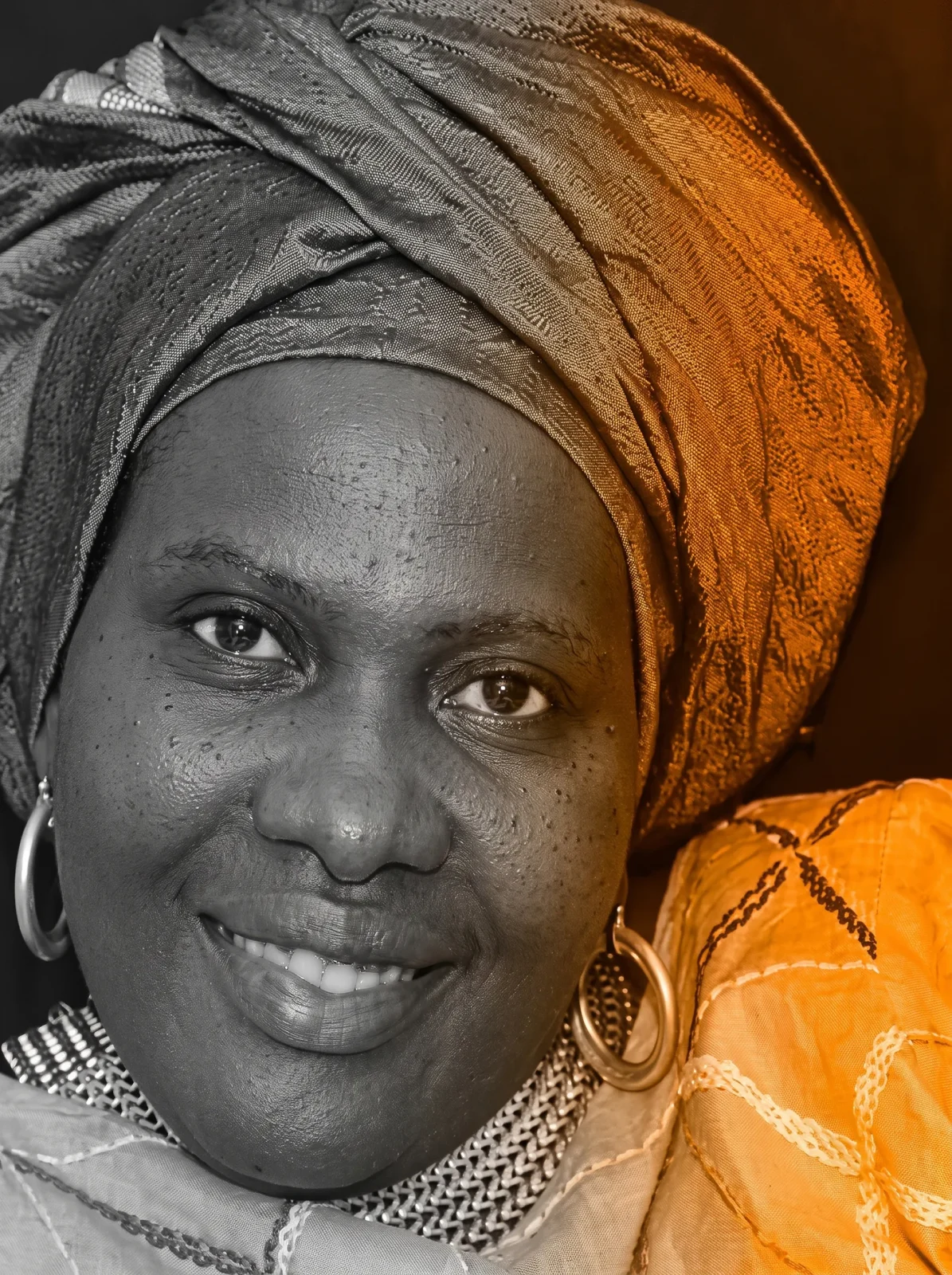
The eventful lives of Ndèye Takhawalou September 13, 2026
Between complicated men, love stories that rarely end as planned, reputations that run faster than those involved and a faith that always comes knocking at the door, Ndèye Takhawalou has definitely not chosen the quietest path. In “From the Slut to the Saint”, Aminata Sophie Dièye slips into the skin of a woman whom society would like to classify once and for all, but who takes great pleasure in changing boxes before we have even finished locking her there. Funny, insolent and sometimes disarming, she recounts her disorders so naturally that the reader ends up wondering if, in this story, true wisdom does not simply consist of taking responsibility for one’s stupidities.
Ndèye Takhawalou is forty years old, she is Senegalese and, as she says herself, she is “always in trouble”. Her stories rarely begin where decent women are supposed to begin them and even less end like the stories told to give a good image of the family.
She meets men, falls in love with them, gets tired of them, makes a mistake, starts again, hangs out with people that good society prefers to look at from afar, finds herself in embarrassing situations and recounts all of this with a freedom that disarms as much as it amuses.
In “From the drag to the saint”, published in 2013 by Baobab Édition, Aminata Sophie Dièye gives new life to her character as a columnist, who appeared in the pages of L’Observateur.
Ndèye Takhawalou recounts her daily life, her relationships, her encounters and her mistakes, but above all she tells of a Senegalese society where everyone knows the place that the other should occupy and where the slightest difference is enough to move you from one category to another.
Takhawalou
The word “drag” weighs heavily in this title. It designates the woman who does not conform, the one whose behavior fuels conversations, the one whose relationships become a public affair and whose choices are commented on with an assurance that no one thinks of applying to their own existence.
Ndèye Takhawalou knows this mechanics. Rather than defending herself from it, she seizes it and transforms the judgment into literary material.
Her character is an outsider, but an outsider who doesn’t ask for permission to exist.
She associates with bad people according to the criteria of good conscience, experiences love stories that have none of the idylls typical of sentimental novels, rubs shoulders with a girl who works in a bar, recounts her adventures with a stoner and walks her disordered existence in the middle of a society that observes, judges and classifies.
However, the most interesting thing is not so much what she does as how she transforms this life into literary material.
Aminata Sophie Dièye, who hid behind this pen name, explained it bluntly. She said that the core of her chronicles was lived reality, around which she built a “literary shell”, notably changing names to avoid trouble.
The border between the chronicle, the autobiographical story and fiction is deliberately blurred. We no longer know very well where Aminata Sophie Dièye ends and where Ndèye Takhawalou begins, and it is precisely this blurring that gives these texts their freedom.
The pseudonym itself says something. Takhawalou refers to the idea of a woman who wanders, but the writer specified that her wandering was less physical than spiritual.
This detail changes everything. We could read her stories as those of a woman who flutters from one adventure to another, from one man to another, from one situation to another, but that would remain on the surface of the book.
What really moves in her is something deeper, a consciousness that searches, that doubts, that makes mistakes, that starts again and that cannot be satisfied with ready-made answers.
She is therefore “dragged” as much by the gaze of others as by her own choices.
The word is violent because it locks a woman into her reputation, into her supposed sexuality, into the stories that are told about her.
But Ndèye Takhawalou turns the insult against the person who pronounces it. Since we want to put a label on her, she will wear it herself, to the point of making it comical.
His weapon is self-deprecation. She took full responsibility for it, explaining that she chose a first name that corresponded to a figure that Senegalese society knows but that no one wants to endorse.
This way of laughing at oneself, however, is never completely light. The chronicles carry a dull violence, that of a society where individuals are continually referred to their reputation, to their family, to their gender, to their religion, to their way of living.
Ndèye Takhawalou enjoys it because she also knows that behind the judgments often hide lives that are much less clean than those that are shown in public.
Laughter serves to shift the gaze. Instead of looking at the marginal woman from the comfortable place of the judge, the reader is forced to enter her head, to follow her reasonings, her contradictions, her wounds and her desires.
He discovers a woman who can be extravagant, funny, excessive, sometimes confusing, but above all who has a rare ability to look at others without granting them the privilege of moral superiority.
At home, men are not spared. They pass through his story with their promises, their weaknesses, their ridicule, their desires and their contradictions.
She prefers to show ordinary men, often entangled in the same contradictions as the women they claim to judge.
And when she talks about women, she also refuses to create a facade of sorority. Women can be victims, accomplices, cruel, funny, generous, interested, lost or simply human.
This crack remains more and more visible when we know the journey of Aminata Sophie Dièye.
Born in Thiès in 1973, a journalist, she had already published a novel, “La Nuit est fell sur Dakar”, under the pseudonym Aminata Zaaria, a work which earned her the Emmanuel Roblès prize.
She had also worked with cinema, notably alongside Djibril Diop Mambéty in “La Petite Vendeuse de Soleil”.
From cinema to writing
Behind the different pseudonyms, the same writer remains, attracted by the characters, the shifts in identity and the existences that cannot be told in a single voice.
Pseudonyms occupy a special place in his work. They allow us to change our voice, to move the boundaries of the intimate and to give birth to characters capable of saying differently what the author carries within her.
With Ndèye Takhawalou, this freedom becomes particularly visible. The character may be more insolent, more direct, more imprudent than ordinary social speech would allow.
Ndèye Takhawalou circulates in this universe with the curiosity of a journalist and the instinct of a novelist.
She watches behavior, listens to conversations, observes flaws and transforms small everyday scenes into stories.
His writing thus retains something of the journalistic chronicle, with its taste for detail and the moment, while allowing fiction, exaggeration and self-deprecation to enter.
The book also gains another tone when we know the rest of the life of its author.
Aminata Sophie Dièye died in Dakar on February 17, 2016, at the age of 42.
The early death of the writer retrospectively gives her texts a gravity that they did not necessarily claim at the time of their publication.
We then reread differently this woman who jokes about her misadventures, who transforms men into comedy characters, who recounts her own weaknesses and who has this casual way of never asking the reader for forgiveness.
Its real journey passes less from one moral state to another than from one way of looking at oneself to another.
She learns to turn her mistakes into words, her wounds into narrative material and the judgment of others into an opportunity to laugh.
Aminata Sophie Dièye understood that a woman could be told in a thousand ways, but that the freest was still to speak up herself.
Ndèye Takhawalou will remain this woman who refuses to choose between the image that others would like to impose on her and the one she would like to give them.
She lives with her contradictions, exposes them, ridicules them and ends up making this freedom contagious.
Amadou KEBE
