
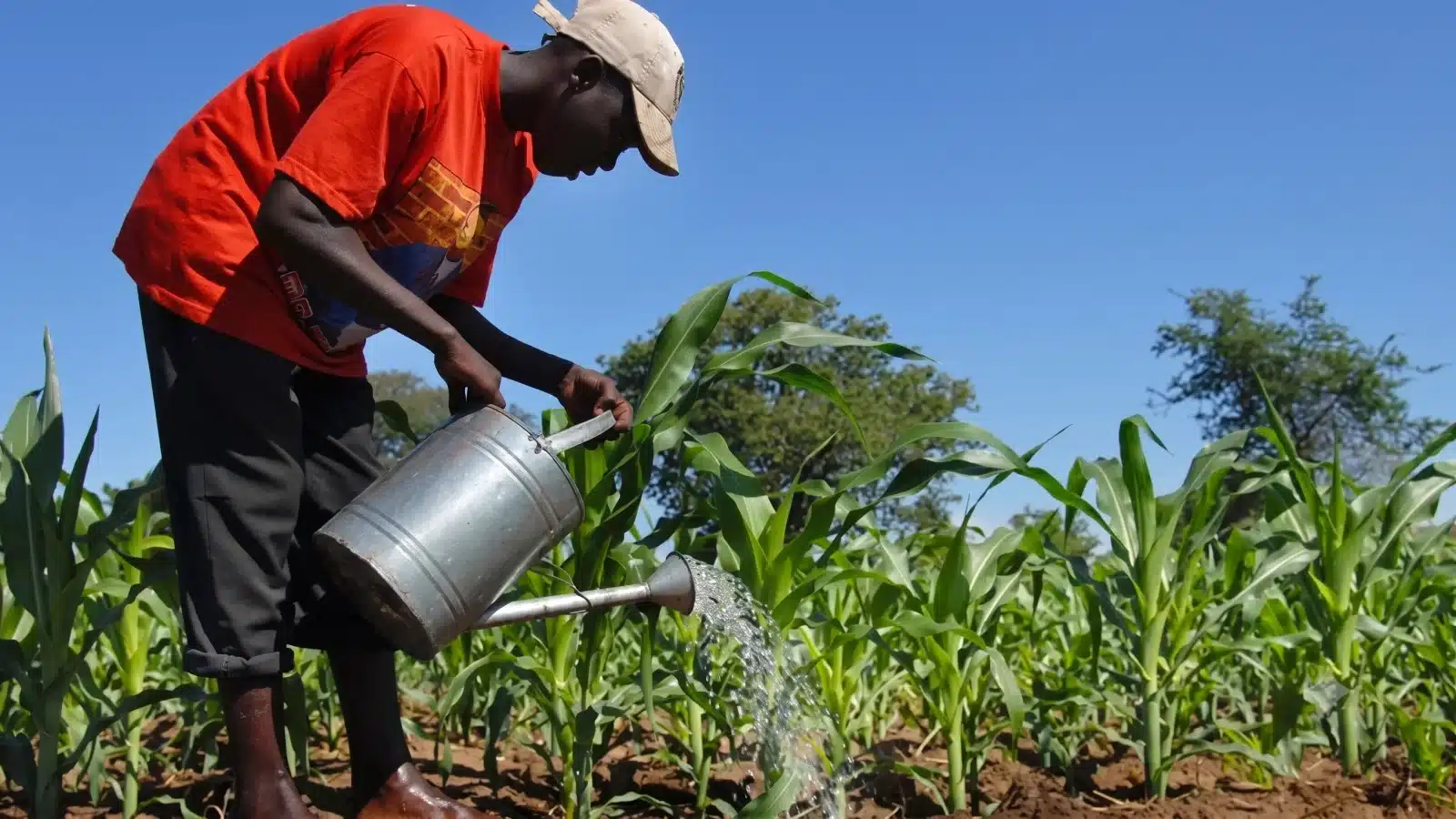
Regional financial market: a good seed for the agricultural sector
Faced with the constraints of traditional bank credit, stakeholders in Senegalese agriculture are turning to the regional financial market. Between debt securitization and green bond issues, these sustainable finance mechanisms open the way to an in-depth modernization of the agricultural sector in West Africa.
Agriculture is one of the key sectors of the “2050” Agenda. But financing remains a real challenge. Based on data from the Central Bank of West African States, bank loans allocated to the agricultural sector in Senegal reached on average 21.7 billion FCfa per year between 2021 and 2023, representing 1.53% of total bank loans, which averaged 1,417 billion FCfa per year in the country over this period. To direct portfolios towards this sector, the regional financial market seems to be the appropriate path for institutions specializing in agricultural financing.
One of the first organizations to explore these opportunities is La Banque Agricole (Lba). Two months ago, it carried out the first listing of the “Agricultural Growth” Common Debt Securitization Fund, with a budget of 80 billion FCfa. This operation is based on a senior tranche of 60 billion FCfa over seven years at a rate of 8%, combined with a mezzanine tranche of 20 billion FCfa over seven years, offering a yield of 9%. Through this mechanism, the Lba was able to transform loans into negotiable bonds in order to massively mobilize financing for the agricultural sector.
Finance production and processing
This innovative system consolidates loans granted to farmers and transforms them into financial securities listed on the Abidjan Regional Stock Exchange. This securitization allowed Lba to obtain liquidity in order to finance new agricultural projects. The objective is to sustainably finance the growth of agriculture in order to help farmers, modernize equipment and improve yields. After the Lba, Swami Agri approached the financial market to support his agricultural transformation project. The amount sought is 30 billion FCFA, for a maturity of five years, a gross annual coupon of 7.00%, a minimum ticket of 10,000 FCFA and a first-demand guarantee from Fagce covering capital and interest. Swami Agri thus intends to mobilize regional savings to finance structural agricultural and energy infrastructure in Senegal.
The “Green Bond Swami Agri” 7.00% 2026-2031 is among the rare green bond issues carried by an agricultural company on the Umoa regional financial market. Structured by Impaxis Securities as arranger and lead manager, the transaction aims to diversify the issuer’s sources of financing and support its productive investment program. “Recourse to the bond market complements traditional bank financing. The growth of Swami Agri and the Senegindia group has gradually increased their financing needs, while banking establishments remain subject to prudential risk concentration constraints,” explains Swami Agri in a note.
The funds raised should in particular contribute to the financing of five multifunctional solar cold rooms with a capacity of 12,500 tonnes each and a 16.7 Mw solar power plant. This equipment is intended to strengthen conservation capacities, reduce post-harvest losses and improve the availability of agricultural products on the national market. For specialist Thierry Tene, green bonds can finance projects directly linked to the needs of territories: renewable energies, food security, reduction of agricultural losses and job creation. According to him, this first initiative opens the way to a new generation of responsible investments in West Africa, where financial performance is accompanied by concrete impacts for producers, rural communities and the ecological transition. “Sustainable finance is no longer limited to commitments: it now finances infrastructure that sustainably transforms African agriculture,” he believes.
By Demba DIENG
