
Non-permanent member of the UN Security Council: The diplomatic weight of a strategic seat
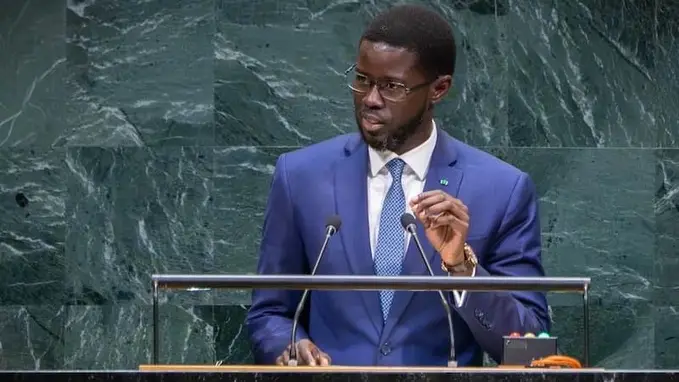
The President of the Republic, Bassirou Diomaye Faye, declared last Thursday in New York, as part of the general debate of the 81st session of the United Nations General Assembly, that Senegal was going to present its candidacy for a seat as a non-permanent member of the Security Council for the period 2032-2033.
A non-permanent member of the Security Council of the United Nations (UN) has real influence, but different from that of the five permanent members (United States, Russia, China, France and United Kingdom) who benefit from the right of veto. Senegal has already served three times on the United Nations Security Council as a non-permanent member: 1968-1969, 1988-1989 and in 2016-2017, underlines the UN website.
A place at the heart of international decisions
The Security Council has 15 members including 5 permanent and 10 non-permanent. Non-permanent members are elected by the General Assembly for two years. Following their election, they each have one vote.
For the adoption of decisions on substantive issues, the Security Council must gather at least nine votes in favor out of the fifteen members, without any of the five permanent members opposing their veto. The abstention of a permanent member does not constitute a veto. A resolution can therefore be adopted with an abstention from a permanent member, as long as it obtains at least nine votes in favor, we read on the UN website.
A non-permanent member can also use his position to raise an issue that is of particular interest to his region or continent. For example, an African country can seek to make the Council heard more: the financing of peace operations, the fight against terrorism in the Sahel among others.
An impactful diplomatic lever
The presidency of the Security Council rotates each month among its 15 members, according to the English alphabetical order of country names. When a non-permanent country becomes president, it gains additional visibility and influence during this month. He obviously cannot impose a decision alone, but benefits from a capacity for impulsion and facilitation greater than that of an ordinary member.
A non-permanent member state can also chair sanctions committees. The Council has numerous committees and subsidiary bodies, including committees responsible for different sanctions regimes. Non-permanent members can obtain the presidency of some of these bodies, specifies the same source.
The limit of the veto
A non-permanent member cannot block a substantive resolution alone. The five permanent members (United States, Russia, China, France and United Kingdom) are the only ones with the right of veto. In summary, the non-permanent seat does not give a veto, but offers a place in the center of international decisions.
The real strength of the mandate therefore lies in the ability to influence texts, bring forward files, chair the Council, direct certain work, negotiate with the P5 and make the priorities of your region heard.
Given all that it includes, this seat constitutes a leading diplomatic platform, offering the elected country an increased capacity to defend its positions and develop convergences with the other members of the Council.
For Senegal, a two-year mandate represents an opportunity to strengthen its diplomatic visibility and influence, in particular by bringing the continent’s priorities to the files on the Council’s agenda.
O.BA
