
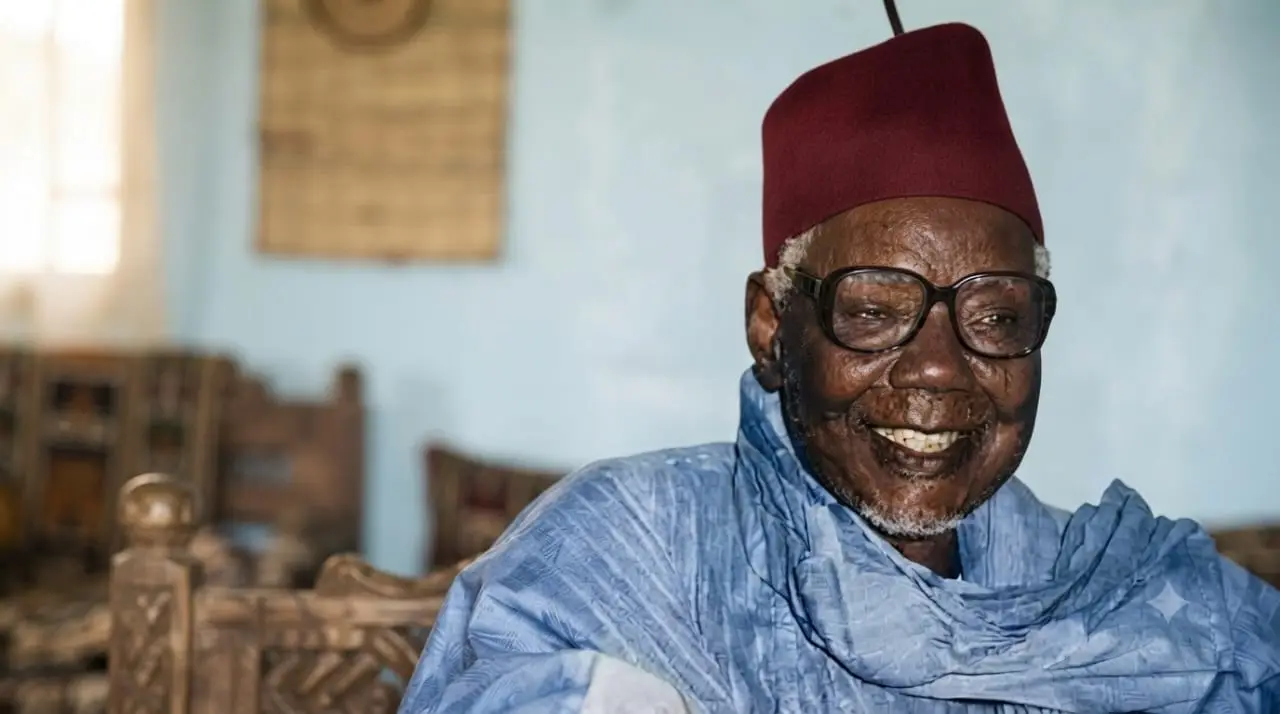
Mame Abdou Aziz Sy Dabakh: twenty-nine years later, the legacy of a word still alive
Twenty-nine years after her reminder to God, on September 14, 1997, the words of Mame Abdou Aziz Sy Dabakh continue to resonate in the Senegalese conscience.
For four decades, the third Caliph General of the Tidianes embodied a demanding conception of religious office: serving God, preserving the legacy of Seydil Hadji Malick Sy, educating the faithful, defending the weakest and intervening whenever social peace was threatened. His influence went far beyond the borders of Tivaouane and Tidjaniyya.
Senegal today remembers a voice. A deep, calm voice, sometimes firm, but rarely confrontational. A voice that knew how to speak to talibés as well as to those in power, to politicians as well as to religious leaders, to Muslims and to Christians. A voice which, above all, did not seem to belong to any camp, except that of peace, justice and the general interest.
On September 14, 1997, in Tivaouane, El Hadji Abdoul Aziz Sy Dabakh disappeared. Born in 1904, son of Seydil Hadji Malick Sy and Sokhna Safiétou Niang, he acceded to the caliphate in 1957, after the successive disappearances of his brothers Seydi Ababacar Sy and El Hadji Mouhamadou Mansour Sy. He would remain at the head of the Tidiane community for forty years.
Loyalty to Maodo’s legacy
To reduce his career to the duration of his caliphate would, however, miss the point. Mame Abdou was at the same time a scholar, an educator, a preacher, a man of culture, a farmer, a man of dialogue and a social regulator.
His first responsibility was to preserve his father’s work. Seydil Hadji Malick Sy had made Tivaouane a center of knowledge, education and the influence of Tidjaniyya. Mame Abdou was part of this continuity by ensuring that she transmitted to new generations the values of faith, discipline, work, solidarity and respect which founded Maodo’s teaching.
Trained in the Koran, its exegesis, Maliki law, the Arabic language, Asharite theology and Sufism, he possessed a solid Islamic culture. His erudition went beyond the borders of Senegal. He was particularly sought after in Morocco, Saudi Arabia, Mauritania, France and the United States. His participation in the Islamic Congress in Mecca in 1965 remains one of the notable episodes of his intellectual influence.
But loyalty to Maodo did not mean, for him, the simple preservation of the past. It was about keeping this heritage alive in a changing society. His magisterium was thus built around religious education, individual responsibility and the constant search for peace.
His nickname, “Dabakh”, associated with generosity in Wolof, also sums up part of his relationship with others. He gave his time, his knowledge and his attention. Close to modest populations, he was also interested in agricultural issues and the rural world, convinced that dignity also came through work.
The link between religious families
One of the great characteristics of his caliphate remains his refusal of rivalries between religious families. Through his mother, Sokhna Safiétou Niang, Mame Abdou was related to the descendants of Mame Maharame Mbacké, ancestor of the family of Cheikh Ahmadou Bamba. This family proximity helped to nourish in him an open conception of relations between the brotherhoods.
Tivaouane and Touba occupied a special place in this vision. Mame Abdou considered that the two great religious cities should not be locked into a logic of competition, but participate together in the cohesion of the Muslim community and the nation.
Its openness went beyond just the relationships between Tidianes and Mourides. He maintained relationships with other religious families and considered dialogue as a necessity in a country where brotherhoods play a major role in social life. This same disposition was found in his relations with Christian leaders. His friendship with Cardinal Hyacinthe Thiandoum remains emblematic of the Muslim-Christian dialogue which characterizes Senegal. This ability to overcome divisions largely explains why his words were listened to beyond his own community.
A conscience in the face of power
Mame Abdou was not a politician. He was no less attentive to the progress of the country. His conception of the caliphate required him to speak when national cohesion, justice or the general interest seemed threatened.
With power as with the opposition, he maintained a freedom of tone based on the same requirement: placing Senegal above particular interests. During periods of tension, he did not hesitate to play mediator. His intervention in certain political crises under the Abdou Diouf regime, notably around the “Sakho-Loum plan”, illustrates this regulatory function that he assumed without seeking an institutional role.
He also reminded religious leaders of their duty of truth and responsibility towards their disciples. From those in power, he asked for integrity, justice and respect for the populations. To young people, he advocated work, training and dignity. His words thus focused on religion as much as on social and civic questions.
This moral authority has survived its disappearance. During the political crises of June 23, 2011 and March 2021, his old sermons were widely rebroadcast. In these moments of tension, generations who had not known him discovered or rediscovered a word that called for calm, self-improvement and responsibility.
September 14 thus marks much more than the memory of his disappearance. It recalls the trajectory of a man whose authority rested less on power than on words, less on confrontation than on dialogue. Mame Abdou Aziz Sy Dabakh left us twenty-nine years ago. But in moments when Senegal is still looking for words of appeasement, its own continue to resonate.
By Cheikh Gora DIOP
