
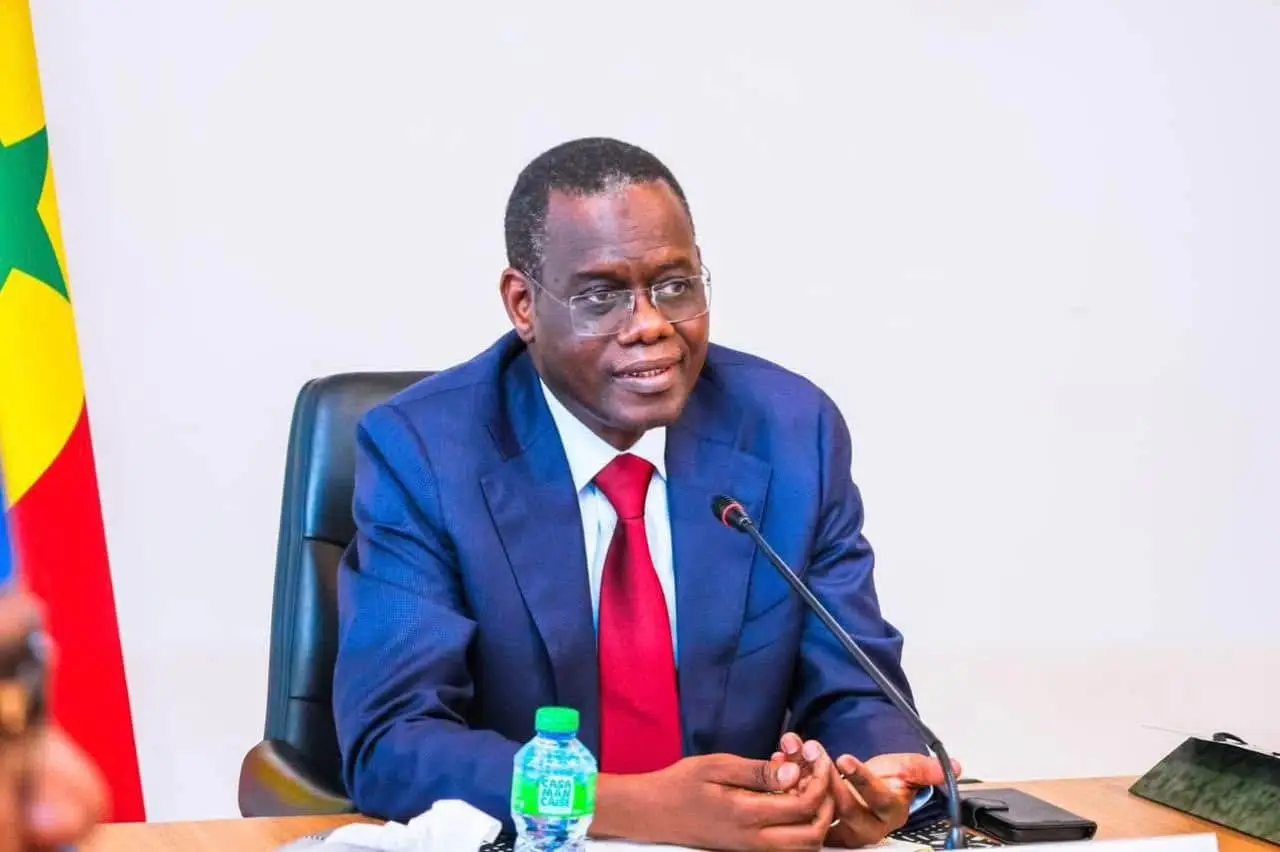
General policy declaration: the workings of an exercise at the heart of government action
Appointed Prime Minister on May 25, 2026, Ahmadou Al Aminou Lô must present, this Tuesday, September 8 in the hemicycle, his General Policy Declaration (DPG) before the National Assembly. Behind this institutional deadline lies an important preparation and administrative coordination system, mobilizing several levels of the state apparatus. Le Soleil Digital was interested in the mechanisms that govern the development of this document called to set the government’s road map.
The DPG is not designed as a stocktaking exercise. It constitutes above all an orientation and programming document, intended to present the government’s priorities as well as the actions envisaged in the short and medium term. According to information collected by our editorial team, the speech should fall within the four axes of the Senegal 2050 framework, with particular attention paid to the objectives to be achieved by 2029.
Provided for by the Constitution after the appointment of the Prime Minister, the General Policy Declaration opens a debate before the national representation. This may be followed, at the initiative of the head of government, by a vote of confidence, in accordance with articles 55 and 86 of the Constitution.
The exercise thus takes on both a political and institutional dimension. It is up to the Prime Minister to set out, in the different sectors, the orientations defined by the President of the Republic and to specify their operational translations. In his capacity as coordinator of government action, in accordance with article 57 of the Constitution, he can rely on the entire administration to prepare for this exercise.
Piloted preparation at the heart of administration
The preparation of the DPG is based on a chain of coordination which begins in the ministerial departments and goes up to the General Secretariat of the Government. At the center of this system is the Secretary General of the Government, in liaison with the Chief of Staff of the Prime Minister and the technical advisors responsible for the different sectors.
In each ministry, the secretary general is the main relay for this work. A civil servant in the A1 hierarchy with at least ten years of seniority in the public administration, he notably ensures the coordination of departments and the continuity of administrative action. His knowledge of the files also makes it possible to support the minister in handling the department’s policies and programs.
Concretely, upon receipt of the guidelines relating to the preparation of the DPG, the minister contacts his secretary general. This distributes the work between the departments and services concerned. The contributions are then consolidated at the level of the ministerial department, before being transmitted to the General Secretariat of the Government.
This method makes it possible to constitute, sector by sector, a database and proposals intended to feed into the drafting of the Declaration. The synthesis and harmonization work then makes it possible to construct a coherent document, articulating national priorities, government commitments and planned measures.
It is within this dynamic that the request made by Ousmane Sonko, then Prime Minister, during the Council of Ministers of December 3, 2024 was already part of this dynamic. He had instructed the minister, Secretary General of the government at the time, Ahmadou Al Aminou Lô, today himself head of government, to coordinate the finalization of the General Policy Declaration (DPG) intended to be presented to the new National Assembly. A few months later, it is the one who led the preparations of this document who will be called upon to defend it himself before the deputies.
The speech, but also a whole system of responses
However, preparation does not stop at the content of the speech. The administration is also working on possible issues that may be raised by parliamentarians. Technical data is thus grouped into sectoral dashboards providing rapid access to precise information.
An MP can, for example, ask the Prime Minister the number of temporary shelters identified in a given locality. Even if this data does not appear in the DPG, the ministry concerned must be able to immediately provide it to the head of government’s team, based on already consolidated information.
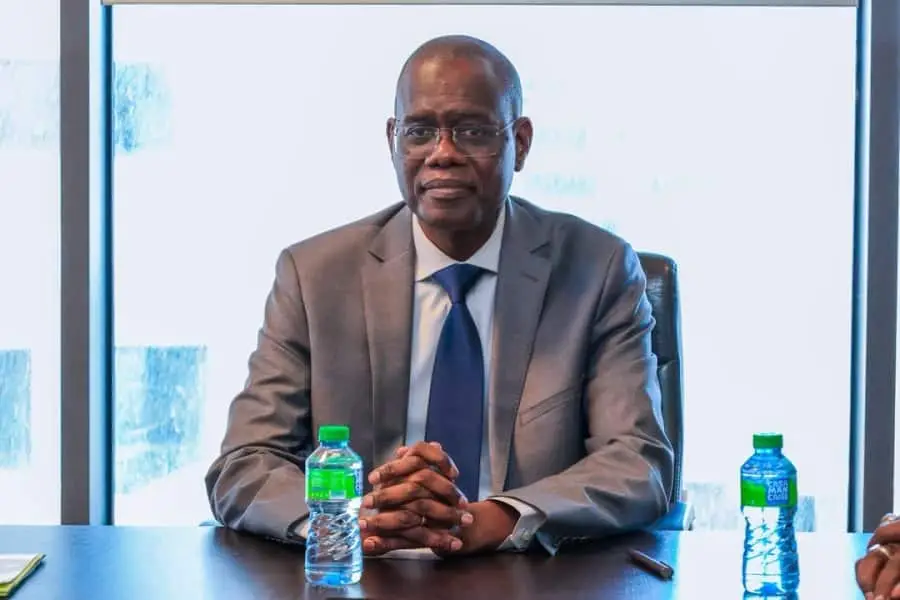
Coordination sessions bring together technical teams in order to reconcile data, harmonize response elements and prevent possible contradictions between ministerial departments. The objective is to allow the Prime Minister to approach the debate with sufficiently precise knowledge of the issues relevant to government action.
From technical text to political discourse
Another step consists of transforming this administrative matter into an accessible and political discourse. The Prime Minister obviously cannot present a succession of technical reports to MPs. The information collected by the different ministries must be prioritized and organized around a common thread.
The editorial work then consists of determining the essential messages, the priority announcements, the structuring reforms and the results to be highlighted. The speech must retain its precision while being clear enough to be understood by parliamentarians and, beyond that, by public opinion.
The choice of words is therefore of particular importance. A DPG politically commits the Government. Each commitment must be formulated with sufficient precision to express political will, without creating inconsistency with the powers of the State, administrative procedures or budgetary constraints.
For this deadline of Tuesday, September 8, Ahmadou Al Aminou Lô has had his reference document for several days. He will appear before the deputies with all the members of the government, to present the priorities of his team and specify the main reforms and measures that he intends to carry out during the rest of the five-year term.
By Cheikh Gora DIOP
