
FILDAK 2026: For a real book and reading policy in Senegal
A few days before the 18th edition of the Dakar International Book and Teaching Materials Fair (FILDAK), scheduled for October 15 to 19, 2026 around the theme “Library, transmission and sovereignty”, Senegal is once again preparing to celebrate the book. But beyond the stands, signings and meetings with writers, a question should arise in the public debate: what book policy do we really want for Senegal?
The question is all the more urgent as the latest UNESCO report (published in 2025) devoted to the book industry in Africa provides, for the first time, a map of all 54 African countries. The diagnosis is unambiguous: Africa has tremendous editorial and cultural potential, but this remains largely underexploited due to insufficiently structured public policies, the weakness of distribution networks, the inadequacy of libraries and dependence on foreign publishing industries.
Senegal is no exception to this paradox. The country has an exceptional literary tradition, internationally recognized writers, a long publishing history and a real professional fabric. In 2023, UNESCO identified 51 active publishing houses, around 125 titles published annually, ten bookstores and some 500 public libraries. The sector represented around 2,250 jobs.
These figures, however, reveal a first contradiction: a country which produces literature of international significance has an extremely narrow book industry. With only around ten bookstores, mainly concentrated in urban areas, the distribution of books remains structurally limited. Even more worrying, nearly 80% of the Senegalese book market is based on school textbooks, while general literature rarely exceeds 1,000 copies sold per title. The royalties paid to writers also remain low, generally between 5% and 10%.
However, it must be recognized that the Senegalese state is not absent. The Book and Reading Department has missions covering the creation, editing, printing, dissemination and distribution of books. The country has also established a Publishing Assistance Fund, operational since 2009. In 2023, this fund had 750 million CFA francs intended in particular to support publishing, the purchase of self-published books, bookstores, libraries, fairs and initiatives to promote reading.
The problem is therefore not the total absence of public instruments. It lies in their dispersion, their insufficient articulation and above all in the absence of a true industrial and national vision of books.
A figure from UNESCO should particularly concern us: Senegal still does not have a national ISBN agency. Publishers must go through the French-speaking Agency for International Book Numbering. Even more symbolic, the Superior Book Council created in 1972 “does not seem operational” today, while the National Library established by a law of 2002 remains at the planning stage.
This is where the comparison with Morocco becomes particularly instructive. It is obviously not a question of mechanically transposing a model to another country, but of looking at what a State can do when it considers the book as a real public policy.
In 2023, Morocco had around 450 publishing houses, 1,493 published titles, 1,248 bookstores and 640 public libraries. Its ISBN system is managed by the National Library. The country also has a much more developed legal framework, with more than 160 legal texts relating to culture, including several instruments specifically devoted to books, publishing, legal deposit and support for cultural projects.
The contrast is even more striking when we look at the distribution. Morocco has more than 1,200 bookstores recorded, compared to around ten in Senegal according to UNESCO mapping. The Kingdom also has structured distribution mechanisms, public support programs for publishers and a higher education system offering specialized training in the book and publishing professions.
Morocco is obviously not a book paradise. The UNESCO report itself highlights the persistence of piracy, the geographical imbalances in the establishment of bookstores and the insufficiency of regular surveys on reading practices. But the Moroccan experience shows something essential: a book policy cannot be reduced to financing authors or periodically organizing a fair. It must structure an entire value chain.
Senegal, however, has considerable assets. It has historic and emerging publishing houses, a dynamic children’s edition, digital players like NENA, internationally renowned writers and production in Wolof, Pulaar, Serer and other national languages. The country also has a reference school such as EBAD and around twenty professional or cultural associations active in the book ecosystem.
But the ecosystem remains fragile. In 2023, Senegal imported approximately $7.19 million worth of books, brochures and similar printed products, compared to only $141,830 worth of exports. France remains its main source of imports and Senegal is among the main African importers of French books.
This situation raises a question of cultural sovereignty. How can we claim to promote national literature if our authors write here but the economic circulation of their books remains so low? How can we talk about the democratization of knowledge when readers in Saint-Louis, Tambacounda, Kolda or Matam do not have the same access to books as those in Dakar?
The linguistic question is just as important. UNESCO emphasizes that production in national languages exists in Senegal but remains difficult to measure and still depends, in certain cases, on one-off aid. However, a true national book policy should consider Wolof, Pulaar, Serer, Diola, Mandinka and other national languages not as peripheries of publishing, but as markets, heritage and creative spaces in their own right.
We must therefore stop thinking of the book solely as a cultural object. The book is at the same time an industry, an educational instrument, a cultural asset, a tool of linguistic sovereignty and a sector that creates jobs.
The next FILDAK may precisely become the moment of a paradigm shift. The chosen theme — “Library, transmission and sovereignty” — strongly invites this. The event should not only celebrate the book; it should make it possible to lay the foundations of a real national contract around books and reading.
Five decisions to finally escape the incantation
1. Adopt a real national book law.
Senegal must have a comprehensive legal framework covering publishing, printing, distribution, bookstores, libraries, digital technology, national languages, authors’ rights and public support mechanisms. UNESCO specifically recommends the development of national book policies and national book development councils.
2. Create a national book and publishing center.
This structure should have technical autonomy and a clearly identified budget. Its mission would notably be to manage the national ISBN, produce sector statistics, support publishers, support booksellers and coordinate the various players in the book chain.
3. Launch a National Plan “One community, one library”.
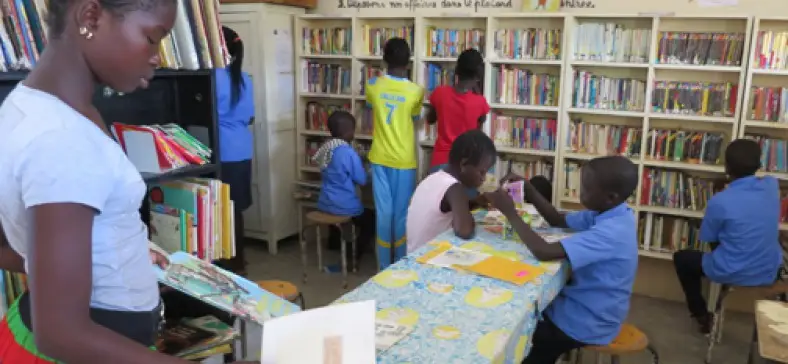
The 500 libraries listed by UNESCO constitute a base, but their equipment remains insufficient. We must now set a multi-year objective: functional libraries, regularly renewed funds, trained staff, digital access and permanent programming of reading activities, particularly in rural areas.
4. Make Senegalese books a priority economic sector.
Public purchases – school textbooks, libraries, universities, administrations – must become a lever for consolidating national publishers, printers and booksellers. We must simplify the mechanisms which already allow Senegalese publishers to compete in school markets, because UNESCO notes that their complex application currently limits their effectiveness.
5. Launch a true “National Decade of Reading”.
Reading cannot be promoted only during a fair. We need a permanent campaign bringing together schools, universities, media, local authorities, libraries, writers, cultural influencers and digital platforms. This policy must be accompanied, as recommended by UNESCO, by regular surveys to finally find out what the Senegalese really read, in what languages, at what prices and through what media.
FILDAK 2026 can therefore be more than a cultural meeting. It can become the starting point for a refoundation. Because a nation does not build its sovereignty only with infrastructure, industries or technologies. She also builds it with the books she writes, the books she publishes, the books she can buy and, above all, the books she gives her children to read.
Senegal has the authors, publishers, academics, librarians, teachers and potential readers. What it lacks now is neither talent nor tradition: it is a book policy that matches its cultural ambition.
Abdou Rahmane Mbengue
Journalist Literary critic
