
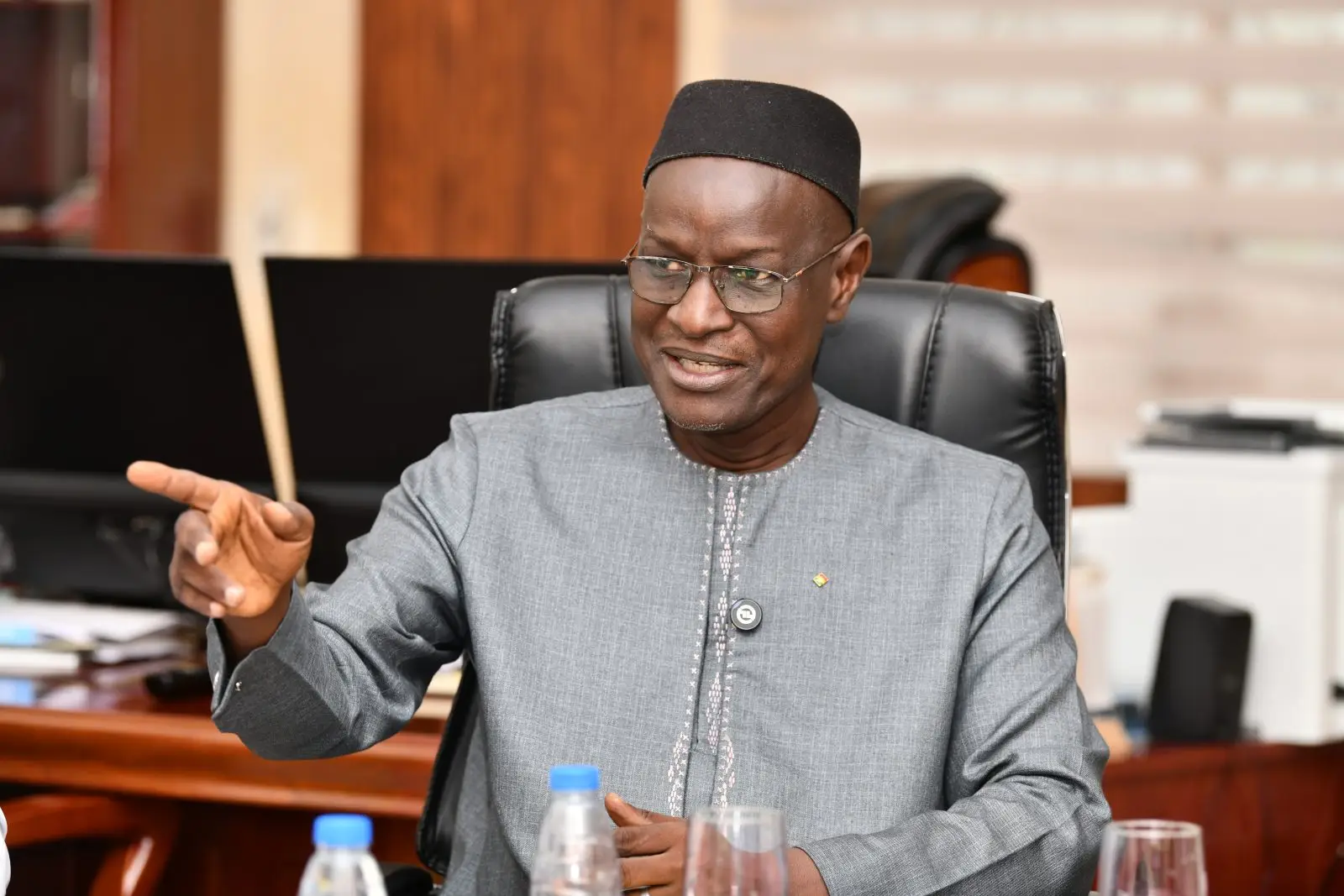
Djignaky: the 10 billion FCFA municipal development plan validated
The Municipal Council of the commune of Djinaky adopted, on Friday, October 23, its Municipal Development Plan (PDC) 2026-2030 aligned with the “Vision Senegal 2050” framework. It is organized around four strategic axes broken down into programs and projects. The overall cost of the Pdc is estimated at more than 10 billion FCFA.
BIGNONA – “Building a prosperous, inclusive and resilient rural center”. This is the vision of the municipality of Djinaky led by Alphoussény Diémé, which intends to rely on participatory governance and the development of natural resources. The municipal team intends to materialize this vision through a Municipal Development Plan (PDC) 2026-2030, validated Friday October 23.
In the projects, according to the mayor, it will be a question of transforming territorial assets into factors of development and wealth creation, of promoting the demographic dividend and of developing a system of sustainable exploitation and management of municipal space, resilient to climate change and disruption.
The overall cost of financing the Pdc is estimated at 10,218,050,000 FCFA. For its achievement, the municipality relies on the municipal budget supplied by tax revenues, State transfers, funding from various national organizations working in decentralization such as the Support Program for Communes and Agglomerations of Senegal (Pacasen), decentralized cooperation as well as on State projects/programs (Anrac, Diomaye Plan for Casamance, etc.), but also on loans and public-private partnership.
Alphoussény Diémé explained that the implementation of this municipal management tool, the development of which is financed by the Casamance Economic Development Program (PDEC), with the support of the ARD of Ziguinchor, will be preceded by a broad consultation at the end of which the best organizational plans will be built to guarantee its success in all areas of transferred skills, essentially.
Also, thinks the mayor, “the agricultural vocation of the municipality, consistent with that of the southern territory pole, invites us to strengthen collaboration with peasant organizations”.
Rich commune
Located in the district of Kataba 1, the commune of Djinaky covers an area of approximately 446.58 km² and has 25 villages. It is limited to the north by Kataba 1, to the south by Diégoune and Kartiack, to the west by the commune of Kafountine and to the east by the communes of Suelle and Djibidione.
According to the mayor, the district is home to important plant formations and several wildlife species. “Forest formations cover an area of 21,812.56 ha, or 48.85% of the municipal area,” he said.
He continues: “Rich and varied, they are made up of dense vegetation, wooded savannah and mangrove and are exploited by the populations who harvest woody products (firewood, lumber), non-woody products (fruits, leaves, roots, bark) and pharmacopoeia, with income for the population and a diet of plant proteins.
Also read: “Le Soleil” and the municipality of Djinaky sign a partnership
However, denounces Alphoussény Diémé, the forest and mangroves face several threats. “These include, among other things, the abusive exploitation and illegal logging of forests, bush fires, rainfall deficit and the disappearance of certain animal species,” he lists.
Young people represent 75% of the municipality’s population. Like several municipalities in the Bignona department, “Djinaky was not spared by the Casamance crisis, which caused displacements of populations abandoning their villages,” explains the mayor.
Thanks to the lull noted in recent years, he informs, these displaced populations have begun their gradual resettlement with the support of NGOs, development partners and State projects and programs, in particular the “Diomaye Plan for Casamance”.
Market gardening, a flagship activity in the town
Market gardening, adds Alphoussény Diémé, is a key activity for young people and women in the town. It is developing in collective market gardening blocks, in particular women’s groups organized in the form of GIE, with the support of technical and financial partners. There are also individual market garden blocks. “Market gardening contributes to improving the living conditions of households through the marketing of production,” confides the mayor.
The existence of processing equipment also contributes to reducing women’s workload and promotes female entrepreneurship. As such, there are 31 mills, 19 hullers, 12 threshers, 4 oil presses and 3 processing units, including 2 private (one being non-functional).
