
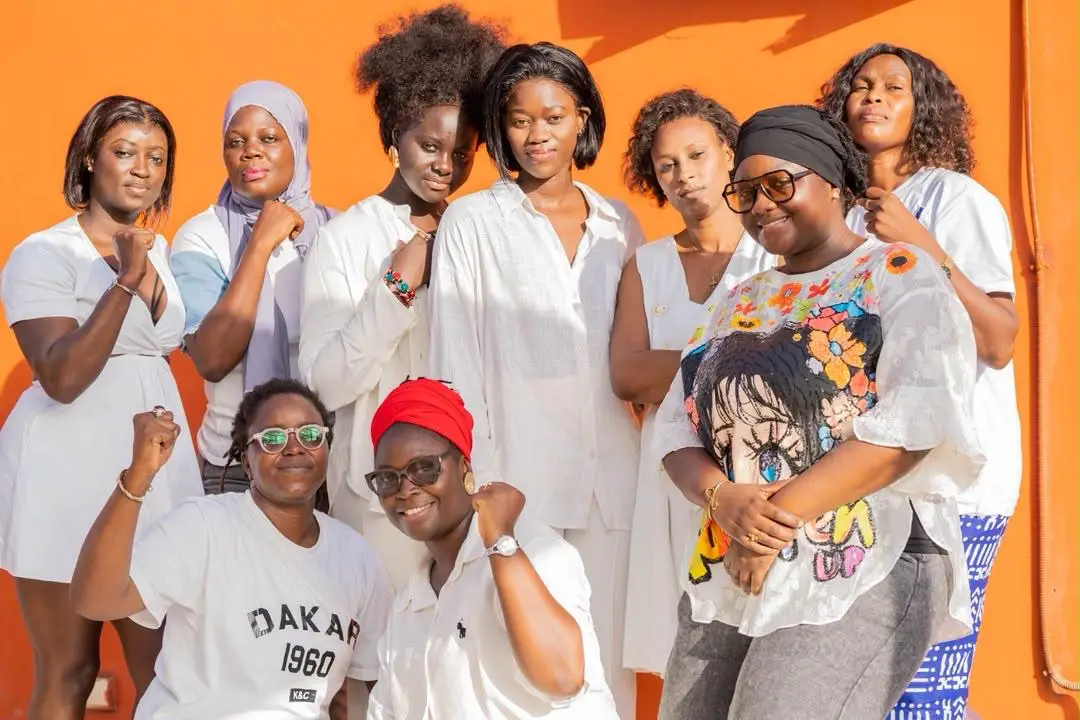
Cultural industries: Gënji Hip Hop displays its ambitions for 2030
Through its 2026-2030 Strategic Plan, Gënji Hip Hop wants to take a new step in the promotion of women within the cultural and creative industries. The organization intends in particular to train 500 women, support 100 women’s projects and strengthen its influence in Senegal and West Africa.
Villa 13 A, located in Ouakam, was transformed, on Saturday September 5, into a real space dedicated to the 80s. The guests of the “Troc Gënji” concept swapped their everyday outfits for vintage looks, in accordance with the theme of the evening, placed under the sign of fashion, music and culture of the 80s. Bell-bottom pants, afro cuts or even wide shirts: retro styles were at the forefront. appointment.

Participants were also able to discover a space dedicated to bartering and selling vintage items, creations and accessories, all in a musical atmosphere inspired by the 80s. But beyond this retro immersion, the evening above all served as a framework for Gënji Hip Hop to present its 2026-2030 Strategic Plan.
Making women full-fledged actors in the cultural and creative industries (ICC): this is the ambition displayed by the organization. To achieve this ambition, Gënji Hip Hop has set several objectives for 2030. The organization plans to train 500 women, support 100 women’s projects in the ICCs, reach 1,000 members in Senegal and West Africa, but also to establish ten partnerships in ten different countries.

Its roadmap revolves around professionalization, creation, visibility, leadership and international cooperation. Gënji Hip Hop intends in particular to set up a space dedicated to women working in the cultural sector. “It is high time to allocate a house of urban cultures for women, here in Senegal, or even a center for women artists and creators,” argues Maguette Diop, alias Magui.
The new president of Gënji Hip Hop emphasizes that the objective is to have a framework allowing women to train, develop their projects and strengthen their artistic and professional autonomy. “We also want to make this space a place of creation and innovation and make it an incubator for all women’s projects in culture,” she continues. The organization thus aims to contribute to greater equality between women and men in the cultural and creative industries.
Train, support and give visibility
The strategic plan is based on five axes. The first two are devoted to professionalization and the creation of an incubation space. The organization intends to strengthen the capacities of women working in ICCs and, ultimately, support their various cultural projects through the “Jangui” program.
Visibility is also a central issue. The “Waxal suñu bop” festival, the organization’s flagship program, must contribute to the dissemination of projects carried out by women. After three editions, the festival should evolve towards a new format dedicated to music and women in the cultural and creative industries.
The West African Women in Music Forum (WAWIM) must constitute one of the main meetings of this strategy. Scheduled for March, according to the president, this new format of the forum must extend the action undertaken around the visibility, networking and leadership of women in the music industry. “We want a cultural and creative industry where women are not only present, but where they decide, direct, produce, invest, innovate and transmit,” concluded the president of Gënji Hip Hop.
Arame NDIAYE
