
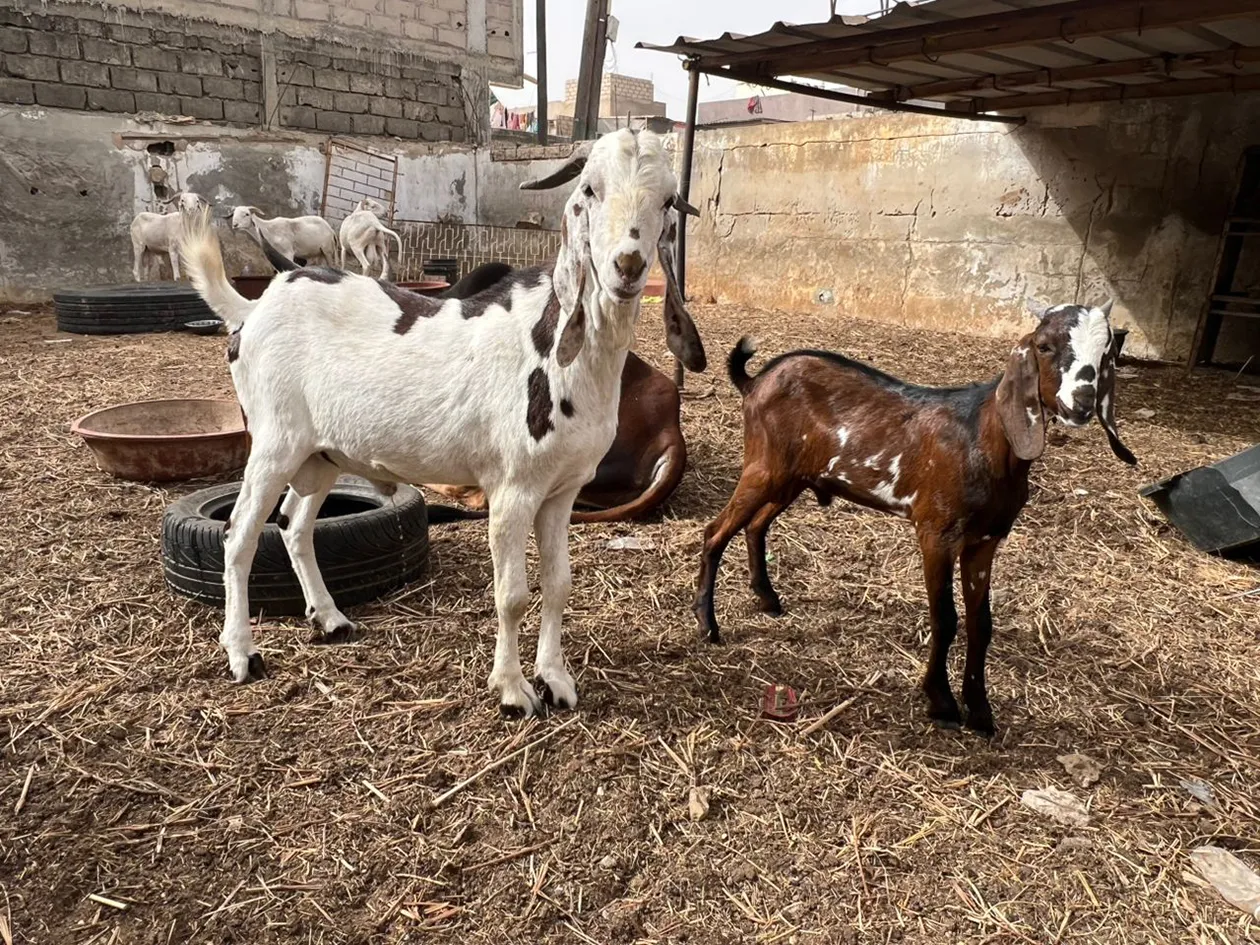
Caprine pleuropneumonia: herds in 16 departments of ten regions affected
Confirmed for the first time in Senegal in July 2026, contagious caprine pleuropneumonia (CCPP) is gaining ground. Already reported in 10 regions and 16 departments, this highly contagious respiratory disease has a fatality rate of 50.1%. Faced with significant losses, breeders are concerned about the weakness of preventive measures, particularly the unavailability of vaccines. Veterinary authorities recognize the difficulties and discuss ways to strengthen the response.
In Bari, a village located a few kilometers from Bambey, Malick Sow did not wait for the disease to further strike his livestock to raise the alarm. Its toll is eight goats dead in less than 7 days, or at least one subject per day. Known on social networks under the pseudonym “Sow breeder”, he describes a disease which destroys animals with disconcerting speed. A violent cough, breathing difficulties, deep depression and sometimes death within a few hours.
His testimony illustrates the growing concern of breeders about the progression of contagious caprine pleuropneumonia (CPP), the spread of which is putting a strain on health prevention capacities in Senegal. “It’s an epidemic that has spread to our village for a week now. We recorded losses of goats very quickly,” says Malick Sow.
The illness, he explains, begins as a sort of cold accompanied by a strong cough. The animal’s general condition then deteriorates suddenly, sometimes leading to its death in less than two days. “The subjects die very, very quickly, sometimes even within a few hours,” he insists.
But beyond the brutality of the symptoms, it is the scale of the losses which fuels concern on farms. “Personally, I have lost eight at the moment, but I know others who have lost nearly 80 in the Louga region,” he testifies. Other breeders have reported to him that the disease has been circulating in certain areas for more than six months now.
Data from the Directorate of Veterinary Services (Dsv) confirms the extent of the threat. According to Doctor Mathioro Fall, veterinary epidemiologist and head of the Animal Health Protection Division, 16 departments spread across 10 regions have already notified at least one outbreak of CCPP.
The regions concerned are Saint-Louis, Louga, Thiès, Dakar, Diourbel, Fatick, Kaolack, Kaffrine, Tambacounda and Ziguinchor. Kébémer, Fatick, Dagana, Nioro du Rip and Linguère are among the most affected departments. “This is the first time that the disease has been confirmed in Senegal,” explains Dr Mathioro Fall. The diagnosis was officially confirmed by the National Livestock and Veterinary Research Laboratory (Lnerv) in July 2026.
Since then, the report communicated shows 605 sick animals, including 303 deaths, representing a lethality rate of 50.1%. Vaccines not found Dr Mathioro Fall also informs that CCPP is a particularly formidable respiratory disease in goats. Its transmission occurs mainly by close contact and aerosols.
Livestock markets, transport, ceremonies and animal gatherings thus constitute spaces conducive to its diffusion. Transhumance, wandering and cross-border movements further complicate control of the epidemic. Beyond health surveillance, another challenge is of particular concern to breeders. This is about access to vaccination.
“We try to contain the disease with the means at hand, but in most cases it is already fatal when it breaks out. We therefore especially need a more effective prevention system,” asks Malick Sow. His concern relates to a difficulty that veterinary services recognize.
The unavailability of vaccines is one of the main obstacles to controlling the disease. However, vaccines against CCPP exist on the international market. Doctor Mathioro Fall cites veterinary products marketed in Kenya, Tanzania and Ethiopia.
However, their main limitation lies in the duration of protection estimated at six months. A constraint which requires vaccination to be repeated twice a year and makes a mass campaign particularly complex in a context marked by the mobility of herds.
Faced with this situation, the Ministry responsible for Livestock is considering building up a stock of vaccines to respond to declared outbreaks, underlines Dr Mathioro Fall. Veterinary services are also exploring the possibility of having a vaccine offering immunity for one year, a duration which would facilitate the implementation of broader vaccination coverage of the herd.
In the meantime, the response is based in particular on strengthening epidemiological surveillance and management of outbreaks. The Directorate of Veterinary Services indicates that it has supported the fourteen regional directorates of livestock breeding and animal production with veterinary medicines in order to support field interventions and the diagnostic capacities of Lnerv.
Also read: Public agricultural waqf for goat breeding: 110 goats and goats handed over to beneficiaries in Missira Wadene
However, the fight faces other difficulties. The porosity of borders, the uncontrolled movement of animals and the under-reporting of health events encourage the circulation of the disease. Some breeders still resort to self-medication, thus delaying the intervention of the competent services.
In this context, veterinary authorities are calling for increased vigilance. As soon as suspicious respiratory signs appear, sick animals must be isolated, goat movements suspended and a veterinarian immediately contacted to organize the samples necessary to confirm the diagnosis.
Assane FALL
