
At the heart of the excitement of Gadaye November 15, 2026
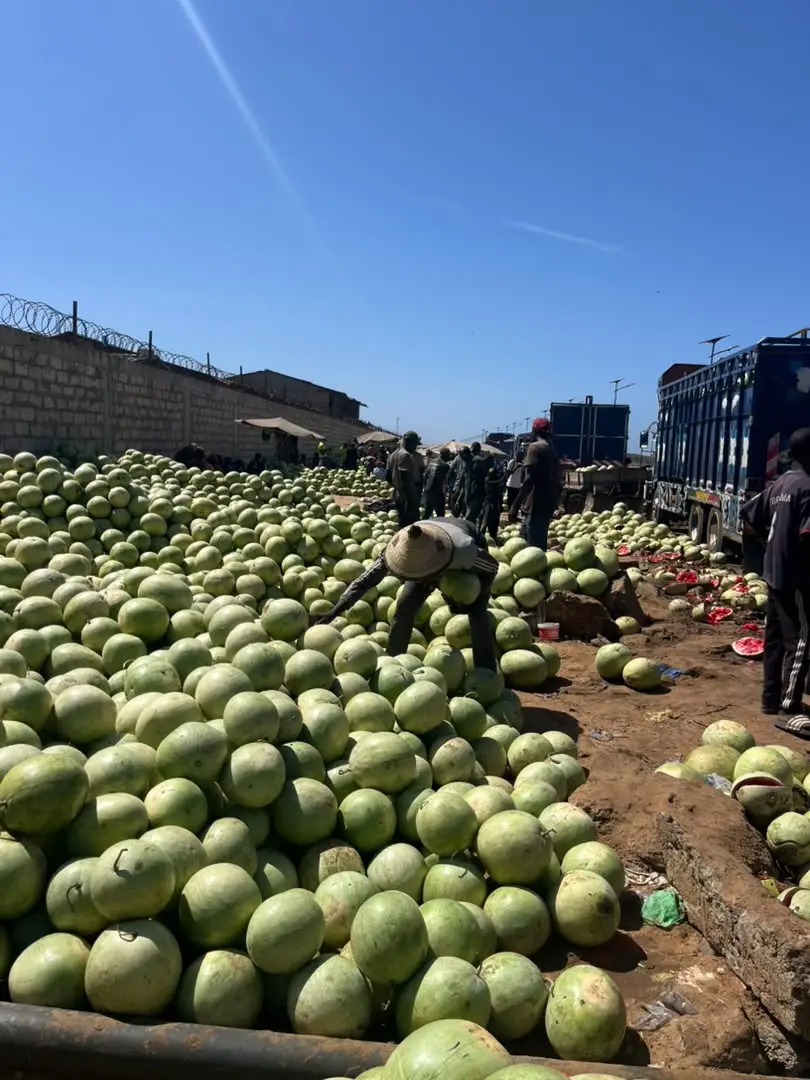
At the Gadaye roundabout, the watermelon market is in full swing under the blazing sun. Trucks, tricycles and carts bustle to the rhythm of an intense logistics chain. From wholesalers to small resellers, everyone benefits from this fruity windfall.
The sun is beating down strong this morning. A light breeze from the nearby sea tempers the heat of the rays, while the concert of horns mixes with the incessant hubbub of merchants. At the Gadaye roundabout, the decor is largely dominated by watermelon dumps: this seasonal fruit takes over the entire space, transforming the place into a vast open-air refueling point. While the parked trucks dump their cargo on the ground, the retailers who have come to stock up bargain hard. Three-wheeled motorcycles and carts work tirelessly, forming the essential links in this logistics chain. A juicy business!
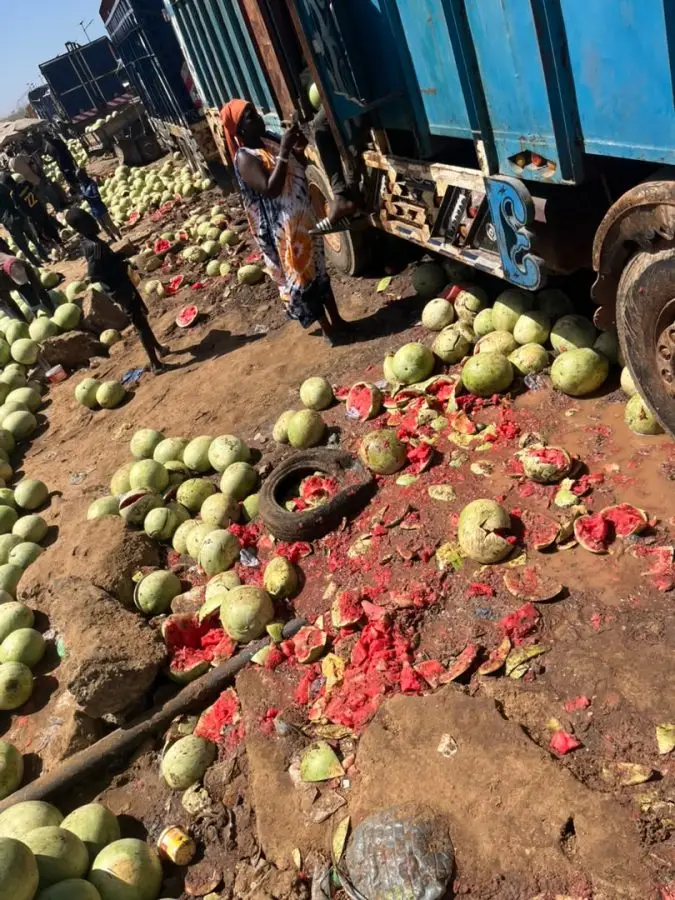
In the relative shade of a concrete block wall topped with barbed wire, a few workers take a brief respite after the effort, their gaze turned towards the colossal pile of watermelons. At the foot of the trucks, fruit split under the weight of transport and successive unloading stains the ground with bright red spots. While some bargain and unload the fruit from the trucks, others mark the watermelons with a felt-tip pen.
In the middle of all this excitement, cap on his head, glasses tightly screwed on, Abdou Ndoye, his gaze fixed on his truck and surrounded by men, provides information on the origin of his cargo. “The watermelons come from everywhere, from Saloum, Walo, Tamba and Gambia too,” he explains as he continues his work. The latter informs that these fruits are sold in bulk. “I got this truck for 3 million FCFA. I sell in bulk, but by setting a price for each unit of watermelon,” he explains. Its customers, for their part, flock from the four corners of the capital. “They come from everywhere. Some come from Grand Yoff, others come from Keur Massar, Les Parcelles, etc. “, he said proudly.
Although business is lucrative, climatic constraints and the absence of shaded storage infrastructure hamper their daily lives a little. “We don’t have a hangar. We have to unload our watermelons in the sun. There are some that get damaged. It is impossible to avoid any loss, because that is how the job is. We are just trying to sell our stock quickly so as not to suffer too many losses,” he said in a bitter tone.
From wholesale resale to the delight of small budgets
But there are not only wholesalers in this park. Yoro Séne is a reseller who gets his supplies from the same park. Out of breath and his black t-shirt wet with sweat, he says: “I get watermelons at different prices depending on the variety. There are some called panal, others which come from Holland, Denmark and the grain watermelon which comes from Walo. »
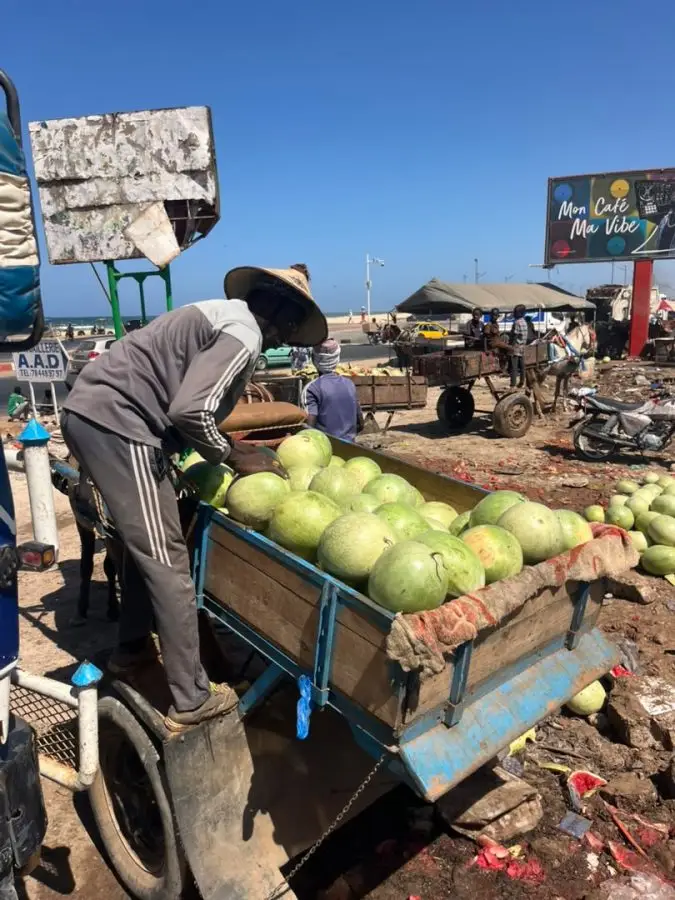
Asked about the strategy for detecting whether the fruit is ripe or not, he replies: “It can be learned, it’s like learning to read or count. By just looking, I can tell if this watermelon is succulent or not. » As for the techniques put in place to prevent the watermelons from being damaged, he specifies: “There are tarpaulins, there are parasols. When you buy and the sun is strong, you have to cover them. As soon as the coolness of the night sets in, we discover them. »
Another method of selling watermelons is in full swing: that of cutting watermelons. For only 100 CFA francs, it is the ultimate nomadic treat for small budgets looking for freshness. Ms. Dramé, a saleswoman, admits to being interested in it so as not to stay at home: “The profit is minimal. Sometimes, during the day, we only cut a watermelon or two and we only earn 300 FCFA or 400 FCFA as a bonus. Some customers prefer to buy a whole watermelon, eat it and take the rest home. »
A business that is not very lucrative for them, but which allows those who cannot afford a whole watermelon to enjoy this popular fruit during this period: “Passers-by stop and buy some, as do children who do not have the money to pay for a whole watermelon. »
A circular economic chain
An entire informal and circular economy is active in this park located at the Gadaye roundabout. The sector supports a multitude of players. On the one hand, motorcycle tricycles and carts are busy transporting fresh watermelons intended for resellers: “We transport the watermelons already purchased, and the price depends on the destination,” declares Fallou, a motorcycle-tricycle driver.
On the other hand, the chain even includes unsold and damaged or rotten fruit. Cart drivers are thus mobilized to evacuate these spoiled watermelons. Far from being simple losses, these scraps find a second use: they are recovered to be given as food to animals. From delivery to the customer’s mouth, an entire chain remains mobilized.
Fatou NGOM
