
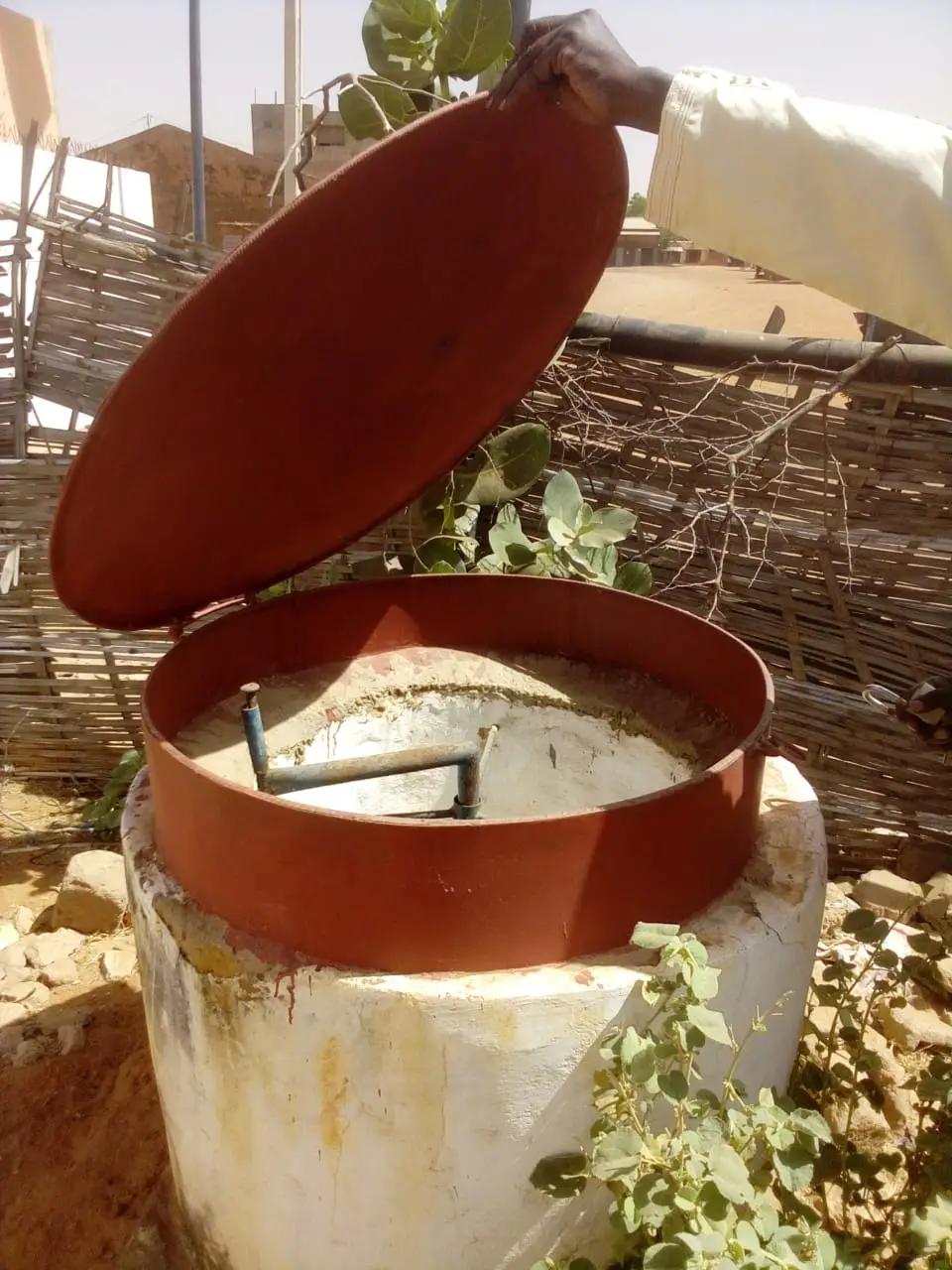
Renewable energy: the “Kanda Vert” GIE relies on the biodigester to produce biogas and digestate November 22, 2026
Created in 2020, the GIE Kanda Vert, based in Linguère, launched into the production of biogas using the biodigester. An initiative which aims to provide households with renewable energy for cooking, while recovering organic waste in the form of natural fertilizer.
LINGUÈRE – Transform organic waste into energy and agricultural resources. This is the bet of the GIE Kanda Vert, which relies on the biodigester to produce biogas and digestate. This device transforms organic matter, including animal manure and food waste, into energy through a natural process called anaerobic digestion, which takes place in the absence of oxygen.
In Linguère, this initiative is led by Pape Oumar Seck, a retired agro-geotechnical engineer and moral manager of the GIE Kanda Vert. The structure was set up to promote agriculture, livestock breeding and the production of renewable energies, in a context marked by the effects of climate change.
“We created the Kanda Vert GIE with the aim of developing agriculture, livestock breeding and the production of renewable energy to cope with the effects of climate change. We live in an area where pastoralism is one of the main activities. It is therefore essential that such initiatives are developed there,” he explains.
Since 2020, the GIE has developed a ten-hectare area intended for its agricultural and pastoral activities. But the lack of water constitutes a major obstacle to their development. “Our activities are currently slowing down because of this constraint. On the other hand, we have an abundance of raw materials, particularly animal waste. This is what encouraged us to launch into the manufacture of biodigesters,” explains Pape Oumar Seck.
The interest of this technology lies in its dual usefulness. The biogas produced is used in particular for cooking, while the digestate, a residue resulting from the digestion of organic matter and rich in nutrients, can be used as a natural fertilizer in the fields. Pape Oumar Seck has also installed one in his own home. “It provides me with energy for cooking and the digestate serves as natural fertilizer,” he says.
A transformation process into two products
The operation of the biodigester is based on a relatively simple biological process. Biodegradable organic materials, including animal manure, food waste and plant residues, are introduced into a hermetically sealed tank. They are decomposed there by micro-organisms, mainly anaerobic bacteria, in the absence of oxygen.
According to Pape Oumar Seck, this fermentation produces two main by-products: biogas, which constitutes a source of energy, and digestate, an organic residue rich in nutrients that can be used as an amendment and fertilizer for agricultural soils.
In an area like Ferlo, where livestock farming plays an important role in economic activities, the recovery of animal waste thus offers the possibility of diversifying sources of energy and land fertilization.
The biodigester therefore appears to be a solution with strong ecological and economic potential, likely to contribute to reducing the consumption of firewood, to the recovery of organic waste and to the promotion of more sustainable agriculture.
