
Rejection of the BIA 2027: Social financing under pressure
The rejection of the first part of the 2027 initial finance bill (LFI) by the National Assembly creates uncertainties over the financing of public spending and the continuity of several social programs.
During the vote on November 18, 128 deputies out of the 165 members of the parliamentary institution rejected the revenues, the spending authorizations of the general budget as well as the borrowing operations planned by the government. Eighteen voted in favor and three abstained.
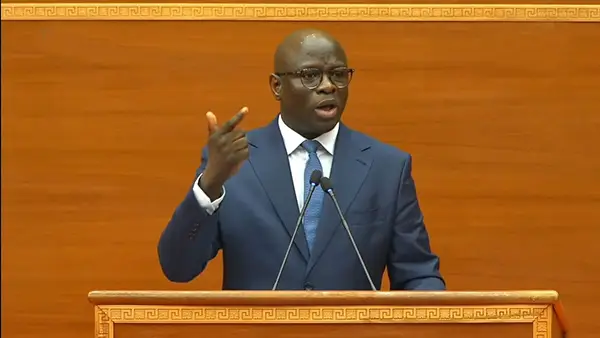
Before parliamentarians, the Minister of Economy, Finance and Planning, Cheikh Diba, warned of the consequences of this rejection. According to him, “budgetary uncertainty could compromise the mobilization of financing. It also risks causing delays in the execution of social programs, particularly in the health and education sectors.”
The stakes are all the more important as the social expenditure concerned represents 2,392.3 billion CFA francs, including 1,477.7 billion devoted to higher education and national education, 505 billion to social protection and 341.1 billion to health. Leisure, culture and worship benefit, for their part, from an envelope of 68.4 billion.
On a parliamentary level, the rejection of the first part blocks the examination of the second, which cannot be put to a vote before the adoption of the first. The President of the National Assembly, Ousmane Sonko reiterated this requirement by invoking the legal provisions governing finance laws.
This rejection thus opens a period of uncertainty for the 2027 budgetary programming, the financing of public policies and the respect of the State’s commitments.
O.BA
