
Local development: Guinea draws inspiration from the Senegalese experience of the PUDC
A Guinean government delegation is staying in Senegal from November 16 to 21, 2026 to soak up the experience of the Emergency Community Development Program (PUDC). This mission, organized with the support of the United Nations Development Program (UNDP), must contribute to the design of a new local development program in Guinea.
Senegal shares its experience in community development with Guinea. Led by Ambassador Kabelé Soumah, Secretary General of the Guinean Ministry of Planning and International Cooperation, a Guinean government delegation is carrying out, from November 16 to 21, a working mission devoted to the Emergency Community Development Program (PUDC).
Organized by the PUDC, in partnership with the United Nations Development Program (UNDP) in Senegal, this visit aims to enable the Guinean authorities to learn from the Senegalese experience in the design, financing, execution and monitoring-evaluation of local development programs.
The mission takes place in a context marked by the preparation, in Guinea, of a new local development program intended to support the implementation of the Simandou 2040 program. This aims in particular to strengthen territorial governance, reduce inequalities and improve people’s access to basic social services.
The future Guinean program should target the most vulnerable municipalities and villages, with interventions focusing on social infrastructure, income-generating activities, climate resilience and capacity building of local authorities.
In Senegal, discussions will focus in particular on the genesis of the PUDC, its institutional and financial system, mechanisms for targeting beneficiaries, procurement, monitoring of achievements and strategies for sustaining investments. An audience with the Minister of Infrastructure is also planned in Diamniadio.
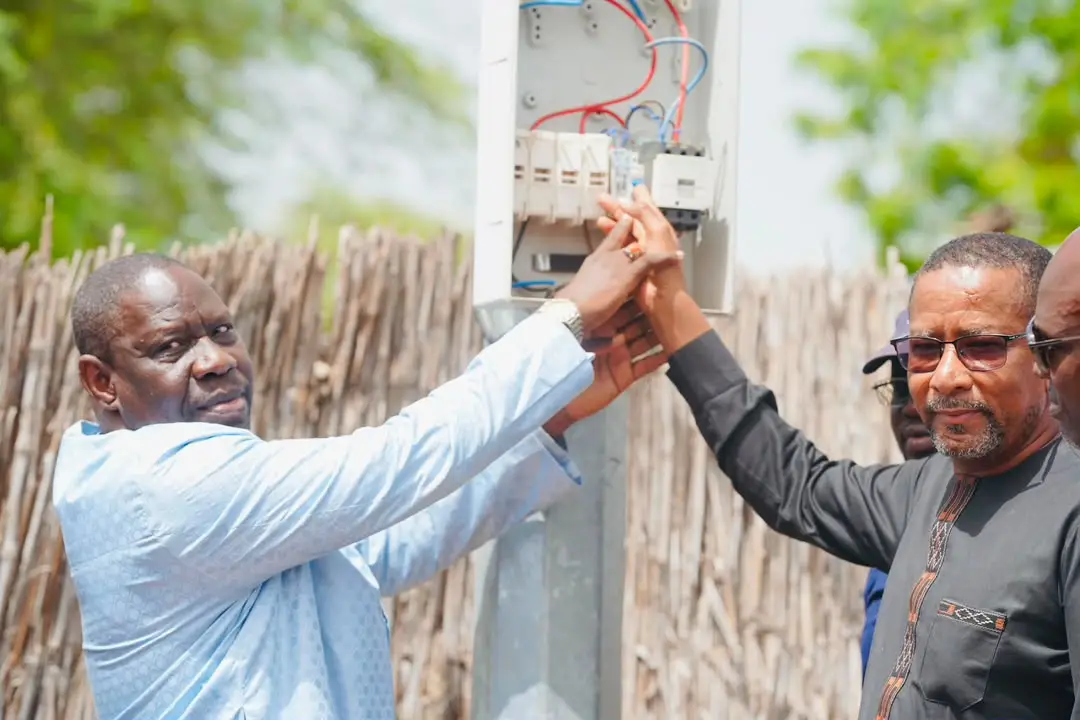
The delegation will also travel to the regions of Kaolack and Fatick, where it will discover several achievements of the program in the Central Regional Intervention Center (PRI). On the menu of visits are rural electrification sites in Keur Bakary Cissé and Kébé Ansou, the Passy-Darou Ndiayène rural track, post-harvest equipment in Ouyal Sandé as well as the Ndiob health post.
These field visits will be an opportunity to interact with the governors of the two regions, local elected officials and beneficiary communities, in order to assess the effects of the investments made on the living conditions of the populations.
The mission also plans working sessions with several Senegalese public structures, notably the General Directorate of Planning and Economic Policies (DGPPE), the National Agency for Statistics and Demography (ANSD), the National Agency for Territorial Planning (ANAT), the Municipal Development Agency (ADM) and the Local Development Agency (ADL). The Islamic Development Bank is also among the institutions to meet.
For Ambassador Kabelé Soumah, this mission should allow his country to draw concrete lessons from the Senegalese experience. “The PUDC experience shows that it is possible to bring basic services closer to rural communities when the state assumes leadership and partners align behind a clear vision,” he said.
The national coordinator of the PUDC, Gade Kounta, for his part underlined the interest in sharing achievements, but also the difficulties encountered in implementing the program. An approach which, according to him, contributes to strengthening South-South cooperation.
The acting resident representative of UNDP in Senegal, Catherine Phuong, also highlighted the interest of this cooperation in accelerating inclusive local development and transforming shared experiences into concrete results for the benefit of communities.
