
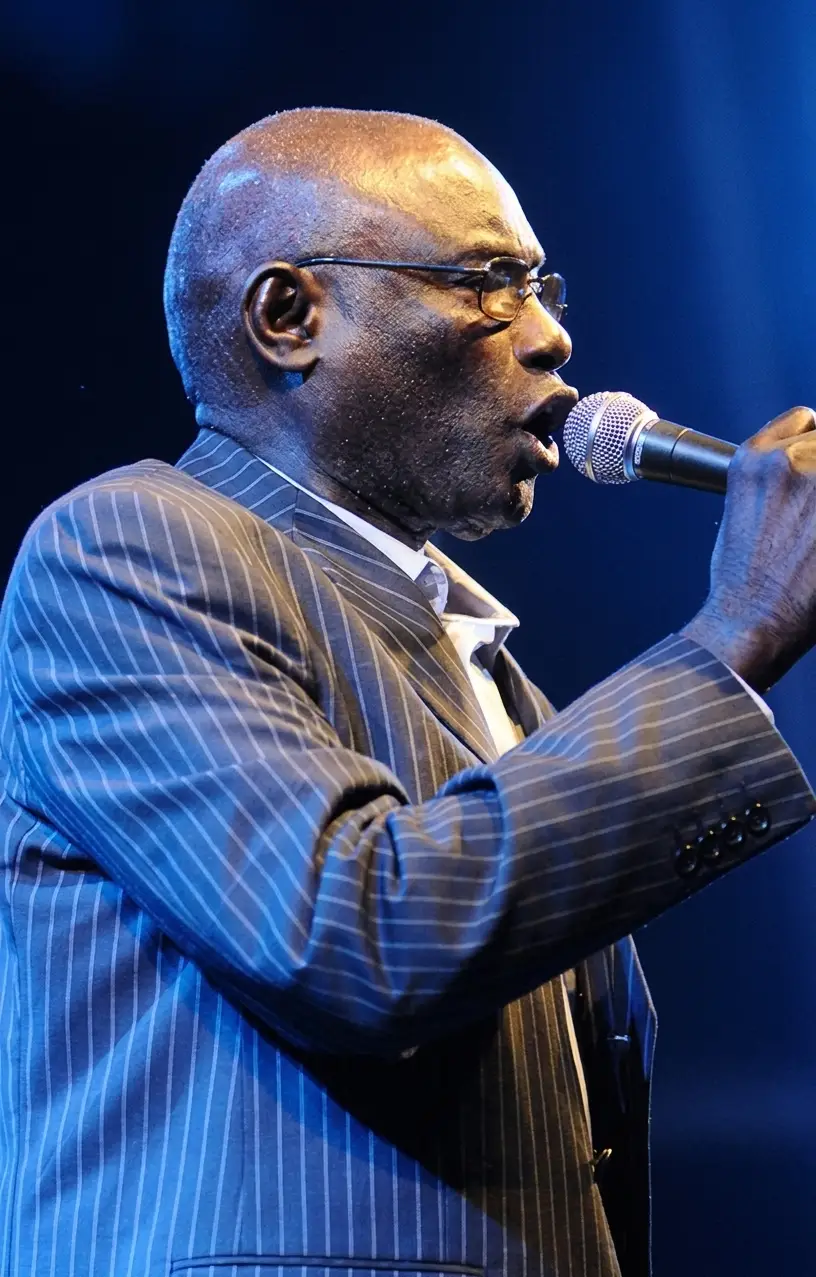
Ndiouga Dieng, a voice is silent, a Baobab remains November 10, 2026
Ten years after his death, his voice continues to travel across generations. On November 10, 2016, Senegal lost El Hadji Ndiouga Dieng, singer, songwriter and emblematic figure of Orchestra Baobab. At 71, the native of Rufisque left behind a rich musical heritage, but also a family which perpetuates his legacy, in its own way.
There are voices that never really die out. That of Ndiouga Dieng is one of them. In the choruses of “Dee Moo Woor”, “Bul Ma Miin”, “Jirim” and “Werenté Serigne”, the artist continues to echo a time when the Orchestra Baobab made Senegal dance and spread its music beyond its borders.
Coming from a family of griots, the singer grew up in an environment where music was much more than an art: a transmission, a memory and a way of telling society. An electrician by training, he initially took an unexpected path. After a stint in the army and the National Police during the 1960s, he ended up joining the musical adventure that would mark his life.
At the beginning of the 1970s, he joined the Orchestra Baobab, founded in Dakar in 1970. There he rubbed shoulders with great figures such as Abdoulaye Mboup, Balla Sidibé and Médoune Diallo. With this formation, which helped to popularize mixed music, nourished by Afro-Cuban sounds and West African rhythms, Ndiouga Dieng participates in one of the most beautiful pages in Senegalese musical history. The group then became a cultural ambassador for the country, notably accompanying President Léopold Sédar Senghor’s trips abroad.
But Ndiouga Dieng was not limited to his performances on stage. Municipal councilor in Bargny, he also combined political commitment and artistic career. A unique journey for this man who had several strings to his bow. He also left his mark on the Senegal National Orchestra, where he continued his career until his retirement in 2005.
His disappearance, on the night of November 9 to 10, 2016 in Dakar, plunged the world of music into sadness. But the Baobab was not going to forget one of its strongest branches. In March 2017, the group dedicated the album Tribute to Ndiouga Dieng to him, a tribute to the man who helped write his story. A posthumous recognition commensurate with his contribution to this legendary training.
Music as a legacy
Among the Dieng, music is also a story of transmission. Even before his death, Ndiouga Dieng had expressed his wish to see his children pursue the musical path. In an interview given to the daily EnQuête in March 2016, he spoke of this family succession. He didn’t have to wait long to see his wishes take shape.
Momo Dieng, now known on the music scene, has built his own career, while Sabel and Pama have also embraced music. Alpha Dieng has taken up the paternal torch within the Orchestra Baobab, where he in turn sings. A symbolic continuity: in the orchestra that made their father famous, a son now bears the name and memory of the Dieng family.
Thus, ten years later, Ndiouga Dieng remains present in the songs he left behind, in the memories of his stage companions and in the voices of his children. Time passes, generations come and go, but certain melodies resist being forgotten. November 10 remembers the death of an artist. Above all, it reminds us that a large Baobab never completely falls when its roots continue to nourish its branches.
YEAR
