
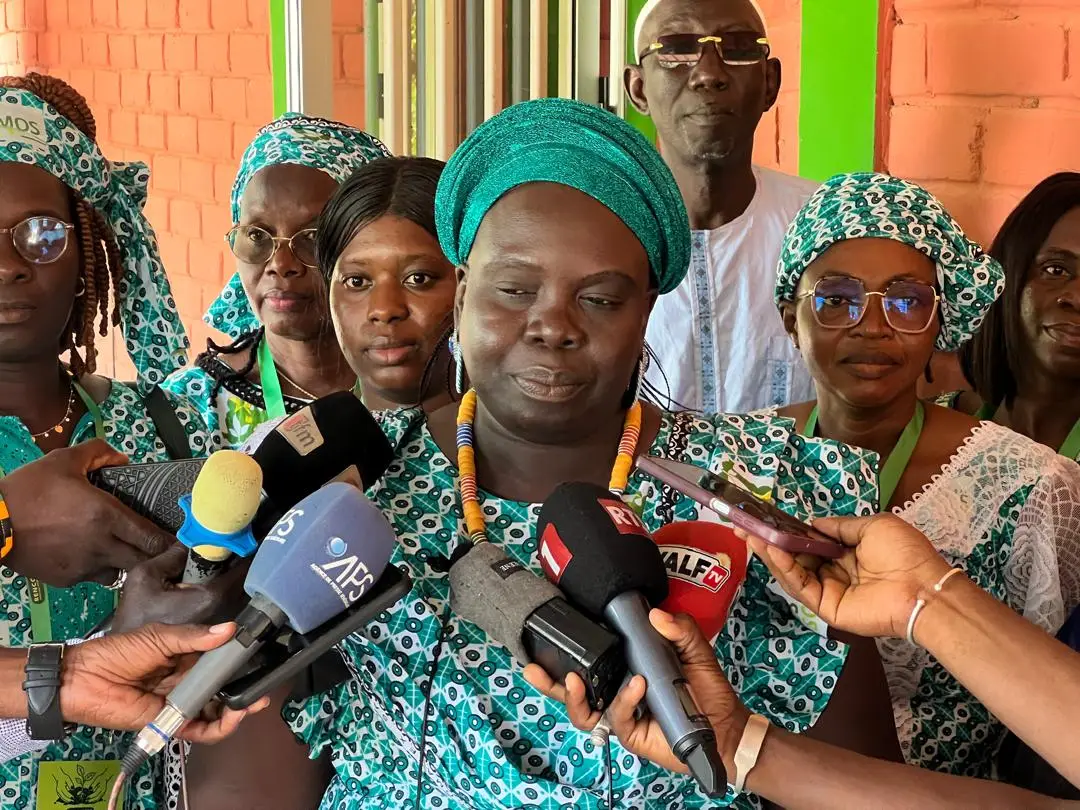
Peasant agroecology: in Ziguinchor, 23 African countries united to change farming practices
Faced with climate change, land degradation and threats to health, rural women from 23 African countries are mobilizing in Niaguis to defend agriculture that is more respectful of people and nature. For five days, they will harmonize their visions and make a joint plea to decision-makers to make agroecology a priority of African agricultural policies.
ZIGUINCHOR – In Niaguis, rural African women want to speak with one voice to change the future of agriculture. Gathered since Monday, October 26 at the initiative of the pan-African movement “We are the solution”, with the support of Thousand Currents, they intend to make peasant agroecology a lever for food sovereignty, environmental protection and the emancipation of rural communities.
The opening ceremony was chaired by the sub-prefect of the district of Niaguis, Massamba Mbaye, in the presence of leaders of peasant organizations and partners. According to Mariama Sonko, president of NSS, the urgency is first to agree on a common vision.
“Today, agroecology is defined in different ways. We need to agree on its principles and speak the same language to better defend this approach,” she explained. According to her, this harmonization will allow African peasant networks to strengthen their cooperation, before bringing their demands to the authorities.
“Our objective is to make decision-makers understand that agroecology must be taken more into account in national and regional agricultural policies,” added Mariama Sonko. The manager places the health of the population at the heart of this fight.
“The health of consumers, the protection of the environment and the balance of ecosystems must come before the search for profit,” she insisted, believing that climate change and land degradation make a transformation of agricultural practices essential.
Women at the heart of change
This ambition is also defended by Thousand Currents. Its vice-president of global programs, Zanelle Sibanda, recalled that rural communities are capable of finding their own answers to the difficulties they encounter.
“For more than forty years, we have trusted communities. They know their realities, can identify suitable solutions and act together to improve their living conditions,” she said.
In his eyes, agroecology provides concrete responses to droughts, floods, soil impoverishment and the challenges of food security. In particular, it makes it possible to restore land, preserve water, reduce dependence on costly inputs and better prepare farms for climate change.
Also read: Ziguinchor: equipment given to women and boats to CLPA
“Women produce our food, support our families and strengthen our communities. They must therefore occupy a central place in agricultural policies,” she argued, calling on governments to provide greater support for research, local initiatives and rural infrastructure. Presiding over the opening ceremony, sub-prefect Massamba Mbaye praised the commitment of women and young people in this transition.
“You are at the heart of African agriculture. Through your action, you show that agroecology can contribute to reducing poverty, strengthening the autonomy of women and protecting our biodiversity,” declared the administrative authority. He invited delegations to consolidate their links to build common responses to the continent’s agricultural challenges.
Over five days, participants from Senegal, Mali, Burkina Faso, Benin, Ivory Coast, Kenya, Tanzania, Guinea, Zambia, Zimbabwe, etc., will share their experiences and develop common strategies to raise awareness of peasant agroecology.
