
A life serving livestock (3/3) October 20, 2026
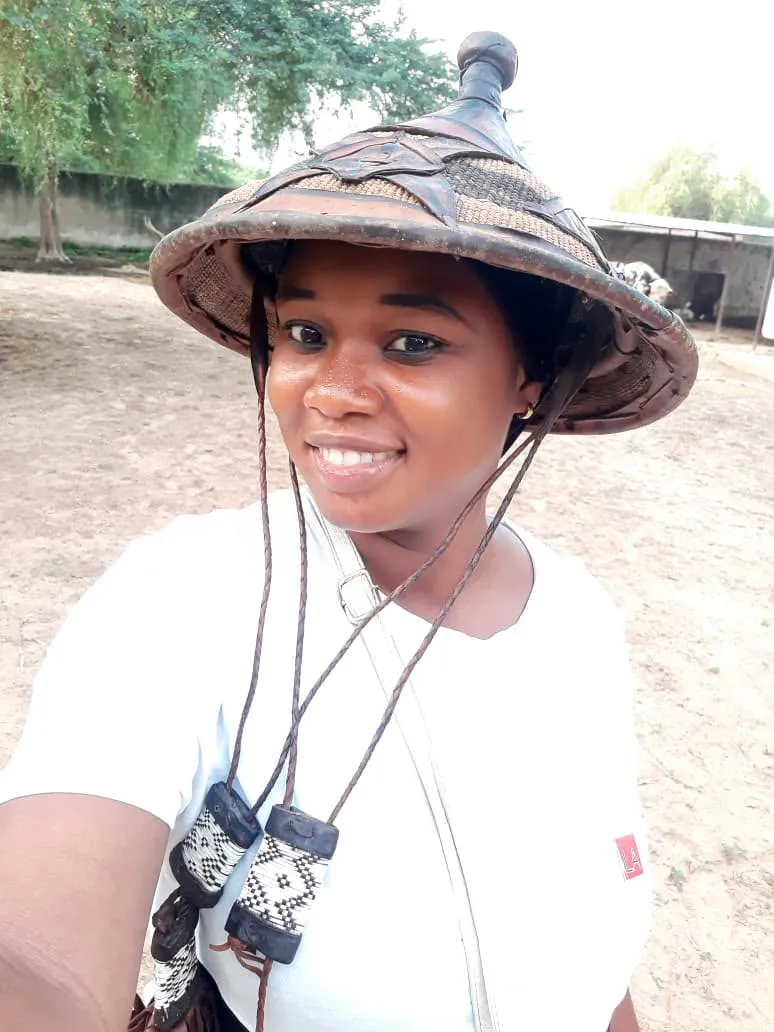
In the heart of the Dahra Zootechnical Research Center, where the Ferlo sky stretches to infinity and where the mooing of cattle punctuates the days, a female silhouette stands out. Astou Mboup, 38, has been a breeding technician at the National Center for Genetic Improvement (Cnag) for twelve years. The only woman to occupy this position within the structure, she never really thought about leaving. Here, far from the hustle and bustle of Dakar and the tumult of Thiès, she found a rare balance between a demanding job, family life and a deep attachment to a place that many would consider isolated.
Born in Dakar in 1986 and raised in Thiès, Astou grew up far from the great outdoors. In the busy streets of the rail capital, nothing particularly predestined it to herds and savannahs. After obtaining her baccalaureate at the Nouveau Lycée de Thiès, she passed the entrance exam to the National Training Center for Livestock and Animal Industries Technicians in Saint-Louis. The training years are dense, technical and sometimes harsh. In 2009, with her diploma in hand, she already knew where to turn.
Read also: A center of science facing the challenges of modernity (1/3)
A study trip had previously taken her to the Cnag in Dahra. He immediately liked the place: the immensity, the relative calm and the direct contact with the animals. She returned there for a first internship, then for a second, unpaid. “After a month, I found the activities interesting. At the time, there was almost no technical person other than the director and his deputy. I told myself I was going to come back. They didn’t really believe it. They said that no woman would want to work in this center lost in the middle of nowhere,” she remembers. And yet, twelve years later, Astou Mboup is still there.
Twelve years in the livestock service
The director of the Center, Dr Mame Balla Sow, believed in her from the start. After a two-year contract, Astou joined the civil service. Since then, she has not left Dahra. Twelve years surveying the enclosures, following the herds, observing, recording data and advising breeders. Twelve years of finding a place in a world where women remain rare. Astou specializes in artificial insemination and the production of bovine semen. Despite her small size, she knows how to handle both the imposing residents of the enclosures and the delicate samples she processes in the laboratory. It intervenes at different stages of the animal production chain and first-level genetic improvement.
In the enclosures as well as under the white light of the laboratory, she moves with an ease that seems natural. She explains the different stages of her work with a clarity that makes everything seem self-evident. Behind each of his precise actions lies expertise acquired over the years and in-depth knowledge of the reproduction cycle, seed conservation and insemination protocols.
For more than a decade, she has worked in a harsh and largely male environment, where the work can be particularly physical. Carrying, pulling, containing and observing imposing animals up close are part of his daily life. “I got used to it,” she said simply.
Living and working in rural areas
Over time, she also learned to deal with danger. Because handling cattle is never without risk. Barely a month ago, a poorly controlled bull charged her. A trainee managed to divert his trajectory just in time. Astou recounts the incident almost calmly, as one episode among others in the life of the Center. Working among livestock, especially cattle, requires constant vigilance. Astou learned to spot the signs, anticipate movements and stay focused. Caution has become second nature.
But beyond technical mastery, what carries her are also the views and trust of those around her: her husband, who is staying abroad, her colleagues and the breeders. “They have great respect and admiration for me, but they also trust me a lot. All this gives me a certain pride which, day after day, translates into courage and self-sacrifice,” she confides with emotion. In this still very masculine universe, his presence is singular. This singularity has become a strength. Breeders know her, come to her and entrust their animals to her. Over the years, strong bonds have been forged, nourished by a mutual trust that goes beyond the professional framework.
His family life is organized around this proximity. Astou lives with her husband and their two boys in company accommodation located just opposite the Cnag. The director and his deputy are his immediate neighbors. “They consider me their own daughter. They support me a lot,” she says. When she goes into the field and her husband is abroad, they watch over the children. Herdsmen, housekeepers and other staff also contribute. “Everyone, as many as they are, contributed to my development in my work. This is an opportunity for me to say a big thank you to them,” she says with great gratitude.
This daily solidarity makes possible a balance that many might consider difficult to achieve. Astou thus manages to reconcile her responsibilities as a mother with the demands of her job. Smiling and easy to approach, she carries out technical tasks at the Center before returning home, just opposite, to supervise domestic activities. She makes sure everything works, organizes and checks. Pious, she also finds time, during her free hours, to cook in the kitchen.
An excellent cook, she treated us to a tasty Ceebu cowpea, whose generosity seemed to make us forget, for the duration of a meal, the constraints of the economic situation. Behind the technician reveals a woman attentive to others, concerned about the well-being of those around her.
Behind the smile, the pain of mourning
But behind this jovial and welcoming face hides a bruised soul. Less than a week ago, Astou lost a friend, a sister and a colleague who worked in the Cnag administration. Binta left, leaving a void in the Centre’s secretariat, but above all a painful absence in the life of Astou and her family.
The two women shared much more than a workplace. They confided in each other, laughed together and supported each other in difficult times. They had gotten into the habit of filming their moments of complicity, their “girlfriend delirium”, as if to keep track of these precious moments.
Today, these videos have become fragile pieces of memory: images, voices and bursts of laughter that continue to keep alive the one who is no longer there. Every time Astou talks about her friend, her eyes fill with tears and her voice breaks under the weight of grief. The wound is still raw. She is reminded of her very recent mourning at every turn in the Center.
Despite this ordeal, Astou prefers to remember the good times experienced at Cnag. Out of passion for her profession and for the serenity she found in Dahra, she does not consider pursuing her career elsewhere. “I feel comfortable and safe here. In addition, I am surrounded by my family. What more could you want? “, she confides. In this haven of tranquility, among the animals and people dear to him, Astou Mboup has found his place. Even injured, even grieving, she remains. She continues to walk around the enclosures and welcome the breeders with a smile. Dahra adopted her and, in return, she chose to remain faithful to him.
By Assane FALL
