
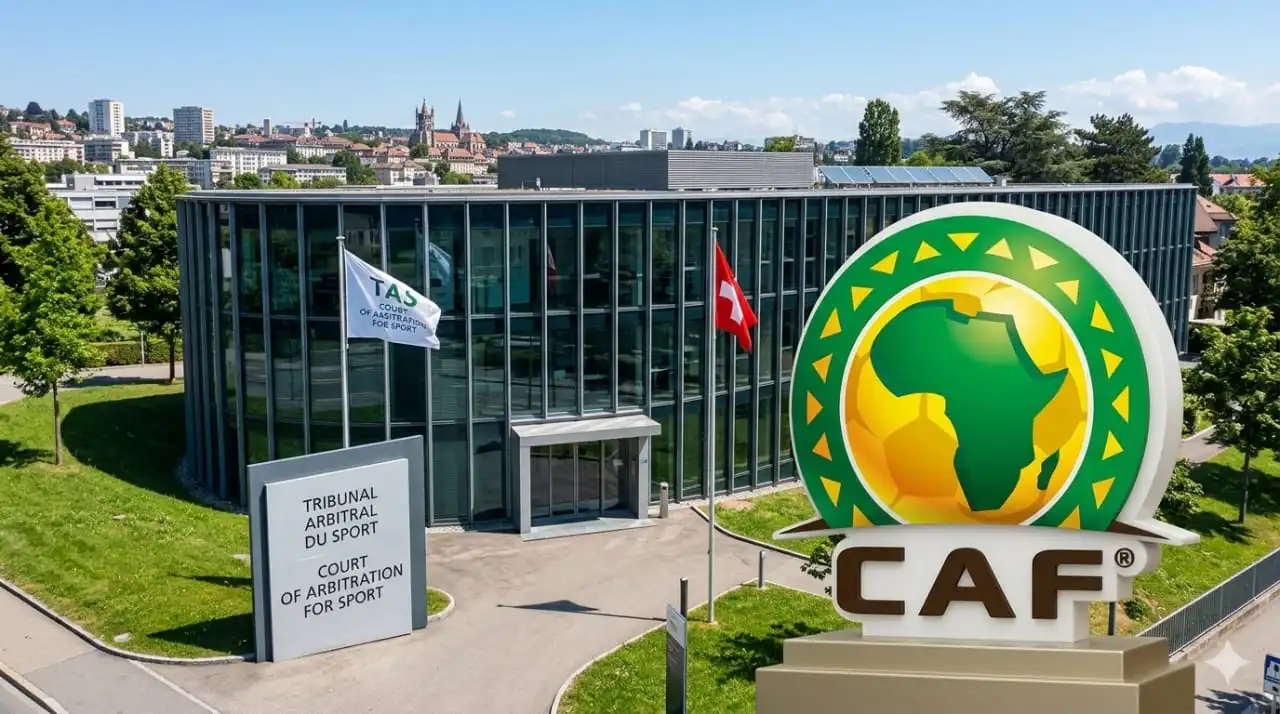
CAN 2025: the IFAB and the field doctrine, the two trump cards of Senegal before the CAS
Nine months after the Rabat final, Senegal hopes to recover its title of African champion before the Court of Arbitration for Sport (CAS). At the heart of its defense: the authority of the referee’s decisions, the Laws of the Game of the International Football Association Board (IFAB) and the doctrine of the field of play. For Thibault Ulrich, researcher in sports law at the University of Lausanne, the CAF decision is based on a particularly strict reading of its regulations.
Senegal won the 2025 African Cup of Nations (CAN) final on the field. But the title was then withdrawn by the Confederation of African Football (CAF), which declared the Lions forfeited and awarded the victory to Morocco on the green carpet (3-0). It is this decision that the Senegalese Football Federation (FSF) is contesting before the CAS, called upon to decide between two readings of sports law.
On October 8, in Lausanne, representatives of the two federations defended their positions during a closed-door hearing. No decision was announced following the debates. The director general of the CAS, Matthieu Reeb, indicated that a reasoned verdict was expected as soon as possible, citing a few days, or even a few weeks.
For Senegal, the stakes go beyond just keeping a trophy. The aim is to recognize the significance of the result acquired on the lawn of the Prince Moulay Abdellah stadium in Rabat on January 18.
The referee had chosen to restart the match
The first argument in favor of the FSF is based on the progress of this final. After Morocco was awarded a penalty in added time, the Senegalese players temporarily left the field to protest against the referee’s decision. They returned about fifteen minutes later, allowing the meeting to resume. Brahim Diaz missed his attempt, before Senegal finally won 1-0 after extra time, thanks to a goal from Pape Gueye.
For Thibault Ulrich, questioned by colleagues from Ouest-France, the CAF appeal jury carried out an “extremely strict” reading of the CAN regulations, without taking sufficient account of a determining element: the effective resumption of the match after the return of the Senegalese.
This circumstance constitutes one of the central points of the case. Congolese referee Jean-Jacques Ndala did not definitively end the match following the temporary departure of the Senegalese players. He authorized the resumption of play, then directed the game until its end. The result was thus decided on the ground before CAF called it into question almost two months later.
The IFAB, bulwark of arbitral authority
The Senegalese defense can also rely on Law 5.2 of the IFAB Laws of the Game, which establishes the final nature of the referee’s decisions relating to the facts of the game, in particular the validation of goals and the result of a match.
The text also provides that a referee cannot reverse a restart of play once it has been carried out, even if he finds that it was incorrect. This principle feeds the argument according to which the decision to continue with the final, followed by the completion of the match, cannot be ignored ex post without solid legal justification.
However, this rule alone does not resolve the dispute. The CAS will have to determine in particular how to articulate the authority of the referee with articles 82 and 84 of the CAN regulations, invoked by CAF to sanction a team which leaves the field before the legal end of the match without authorization.
The essential question is therefore whether the temporary departure of the Senegalese should automatically lead to a forfeit, when the team returned to the field and the match resumed until its end.
The playing field doctrine at the heart of the appeal
Beyond the Laws of the Game, Senegal can invoke the doctrine of the playing field, known by the English expression field of play. Long established by CAS case law, this principle protects, as a general rule, the decisions taken by arbitrators on the ground against subsequent challenge by judicial authorities.
This doctrine aims to preserve the stability of competitions and to prevent their results from being systematically rejudged after the fact. According to Thibault Ulrich, the results must be determined on the field and at the time of the competition, and not by judges intervening after the fact. The researcher thus underlines the importance of preserving supporters’ confidence in the outcome of matches.
For the FSF, the challenge consists of convincing the CAS referees that the CAF decision went beyond the framework of a disciplinary sanction by substituting an administrative result for that validated at the end of the match. The argument gains strength with the actual resumption of the meeting, but its scope will depend on the interpretation that the court retains of the applicable regulatory provisions.
The field doctrine is not absolute, however. It does not protect teams from any disciplinary sanction and does not deprive the competent authorities of the power to rule on offenses distinct from game decisions. The CAS will therefore have to assess whether the behavior of the Senegalese is an abandonment justifying the forfeit or an incident (insecurity in the stadium) whose consequences must be examined in the light of all the circumstances.
A legal battle to restore the land result
On March 17, the CAF appeal jury overturned the previous disciplinary decision and declared Senegal forfeit, approving the final with a score of 3-0 in favor of Morocco. The FSF contested this decision, demanding its annulment and the recognition of Senegal as winner of CAN 2025. The CAS recorded its appeal on March 25.
Three main outcomes are possible: confirm the decision of the CAF and maintain the Moroccan title, cancel this decision and restore the initial result, or send the file back to the CAF for a new examination. Senegalese victory before the CAS therefore remains a legal possibility, and not a certainty.
Neither party commented on the merits of the case following the October 8 hearing. The secretary general of the FSF, Abdoulaye Sow, however expressed the Senegalese expectation: “Let the rights of sport be said and this match be folded, for the dignity and for the honor of Africa. »
For the African champions stripped of their title by an appeal jury whose composition is contested, hope now rests on a question of principle: can a result obtained after the resumption and completion of a final be replaced, several weeks later, by a defeat by forfeit? By invoking the IFAB rules and the playing field doctrine, Senegal has arguments to put forward. It is up to the CAS to assess its scope with regard to the CAF regulations.
By Cheikh Gora DIOP
