
To relieve the breeders of Richard-Toll, the CSS is banking on fodder cowpeas October 2, 2026
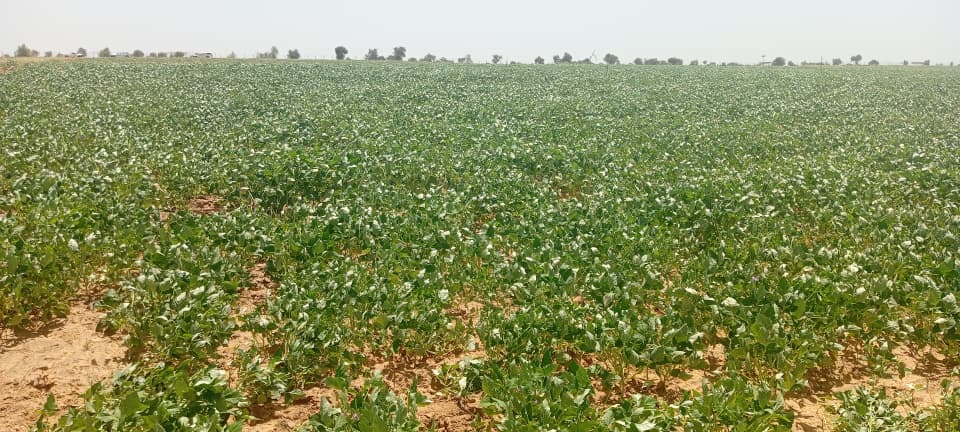
The Senegalese Sugar Company (CSS), historically known in the exploitation of sugar cane, has planted 145 ha of fodder cowpea in Richard-Toll, offering real relief to breeders in the area. Supported by the authorities, this initiative enriches the soil, improves livestock feed and confirms the ambition to go well beyond 600 ha in the coming seasons.
The Compagnie Sucrière Sénégalaise (CSS) remains historically associated with sugar cane. However, it has just confirmed, for the second year in a row, its commitment to fodder production. This season, 145 hectares of fodder cowpea were sown, a gesture hailed as a real “phew of relief” by the authorities and breeders. Ms. Ndama Thiam, head of the veterinary station of the commune of Richard-Toll and representative of the Ministry of Agriculture, Food Sovereignty and Livestock, indicates that we can say that there is a “phew of relief”. In an area where meat, milk, cattle and small ruminant production coexist, improving livestock feeding constitutes a major challenge. “With the policy of our Ministry in the area, we can achieve improvement in livestock feeding,” she emphasizes. For his part, Amadou Ndiaye, operational coordinator of agricultural activities at CSS, details the operation. The choice of cowpea is not trivial. This legume enhances the nitrogen in the air, enriches the soil and offers very palatable fodder, particularly rich in protein, prized by cattle in the area. “It contributes a lot to improving livestock feeding at Richard-Toll,” he insists.
The investment is substantial. Tens of millions of CFA francs were mobilized for these 145 hectares. After having had a seeder during the first edition, the CSS acquired its own this year, for more than 20 million francs, in addition to tractors, staff and diesel. The ministry provided decisive support with more than three tonnes of seeds, despite the difficulties in finding quality seeds at this time. The initial objective of 600 hectares was not reached due to constraints, but the ambition remains: to exceed this figure in the next campaigns.
By diversifying its crops in this way, CSS is not just producing sugar. It contributes to securing local fodder, supporting breeders and strengthening the resilience of an essential sector for northern Senegal. A public-private partnership which is already bearing fruit and promises more.
