
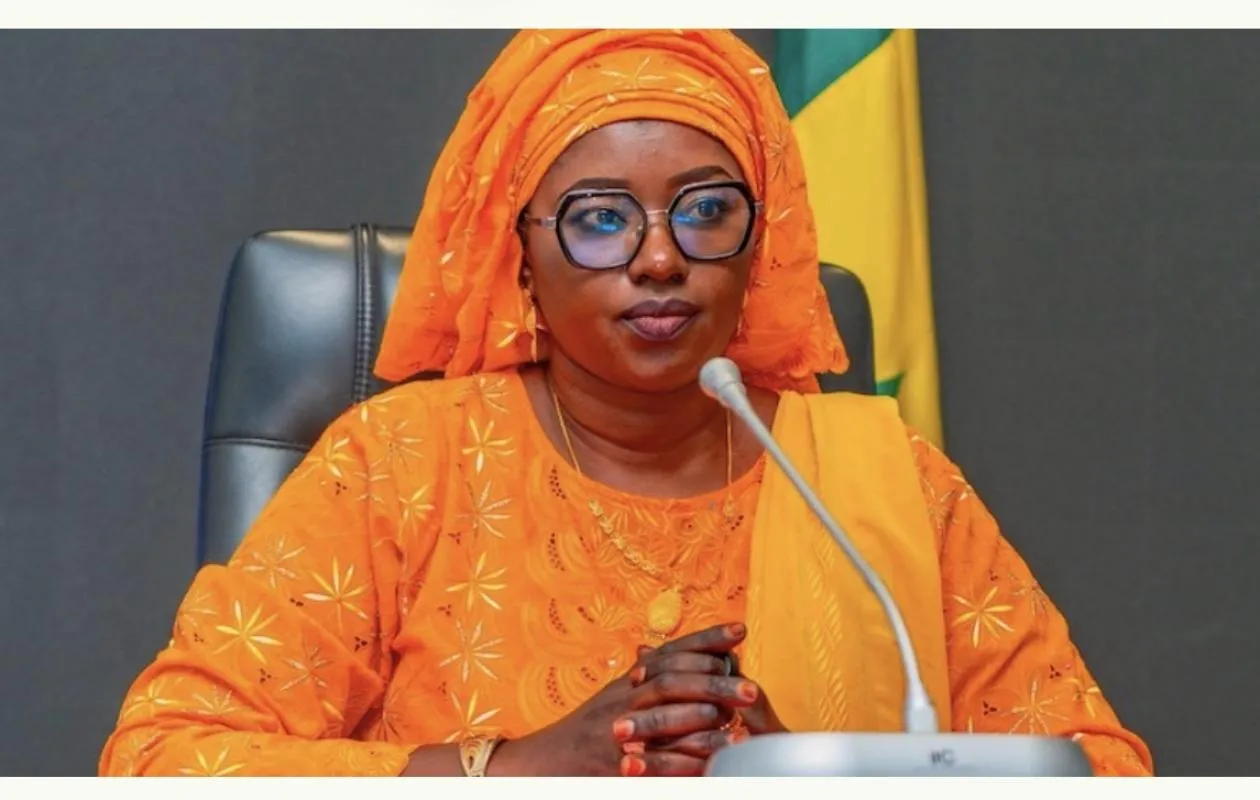
The Minister of Fisheries sets the course for modernization
The Minister of Fisheries and Maritime Economy, Amy Mara Dièye, paid a visit this Wednesday, September 23, to the Autonomous Port of Dakar (Pad). She called for accelerating the modernization of this economic lung in order to better integrate the different components of the blue economy, as part of the “Vision Senegal 2050”.
The Autonomous Port of Dakar (Pad) must strengthen its performance to become more of a driver of competitiveness and a reference maritime and logistics platform in Africa. This is, in essence, the message launched by the Minister of Fisheries and Maritime Economy, Amy Mara Dièye, yesterday, Wednesday September 23, during her visit to the general directorate of port infrastructure.
For the minister, the Pad cannot be reduced to a simple goods transit infrastructure. It constitutes, according to her, “a door of entry and exit from Senegal”, but also “an essential link of our economic sovereignty” and a determining instrument of the country’s opening to Africa and the rest of the world. In an economy where a large part of international trade passes by sea, the efficiency of the port system directly conditions national competitiveness, particularly through logistics costs and the attractiveness of the territory. In this perspective, Ms. Dièye called for continuing the modernization of infrastructure, improving the fluidity of operations and strengthening the digitalization of procedures. Port safety and security, as well as the quality of the logistics chain and the connection between the different modes of transport, are also among the priorities mentioned. The minister also intends to include the development of the port of Dakar in a broader approach to the maritime economy. In his view, this must bring port infrastructure closer to maritime transport, fishing, the processing of fishery products, aquaculture, logistics and maritime services. This integration should allow Senegal to better promote its 718 kilometers of maritime coastline and its geographical position. Amy Mara Dièye also insisted on the need to identify “without complacency” the obstacles which continue to weigh on the competitiveness of the port system. She notably cited logistical costs, deadlines, coordination between the different stakeholders, space occupancy and the quality of services. Each difficulty, she insisted, must correspond to “concrete, measurable and prospective responses”.
The transformation must, moreover, be accompanied by an effort on human resources. The authority thus wishes to invest more in the training, qualification and integration of young people into maritime and port professions. The blue economy, she stressed, must become “a concrete space of opportunities, income, innovation and employment”. The Autonomous Port of Dakar is also called upon to consolidate its role in regional integration. For Amy Mara Dièye, Senegal must strengthen its connections with other economic areas in the sub-region in order to consolidate its positioning as a platform for maritime, port and logistics services. An orientation welcomed by the general director of the Pad, Doune Pathé Mbengue. He, in turn, presented infrastructure as an essential link in the sectoral policy conducted by the ministry. “80% of the ministry’s concerns are focused on the blue economy,” he said, emphasizing the special place that the Pad occupies there.
Pathé NIANG
