
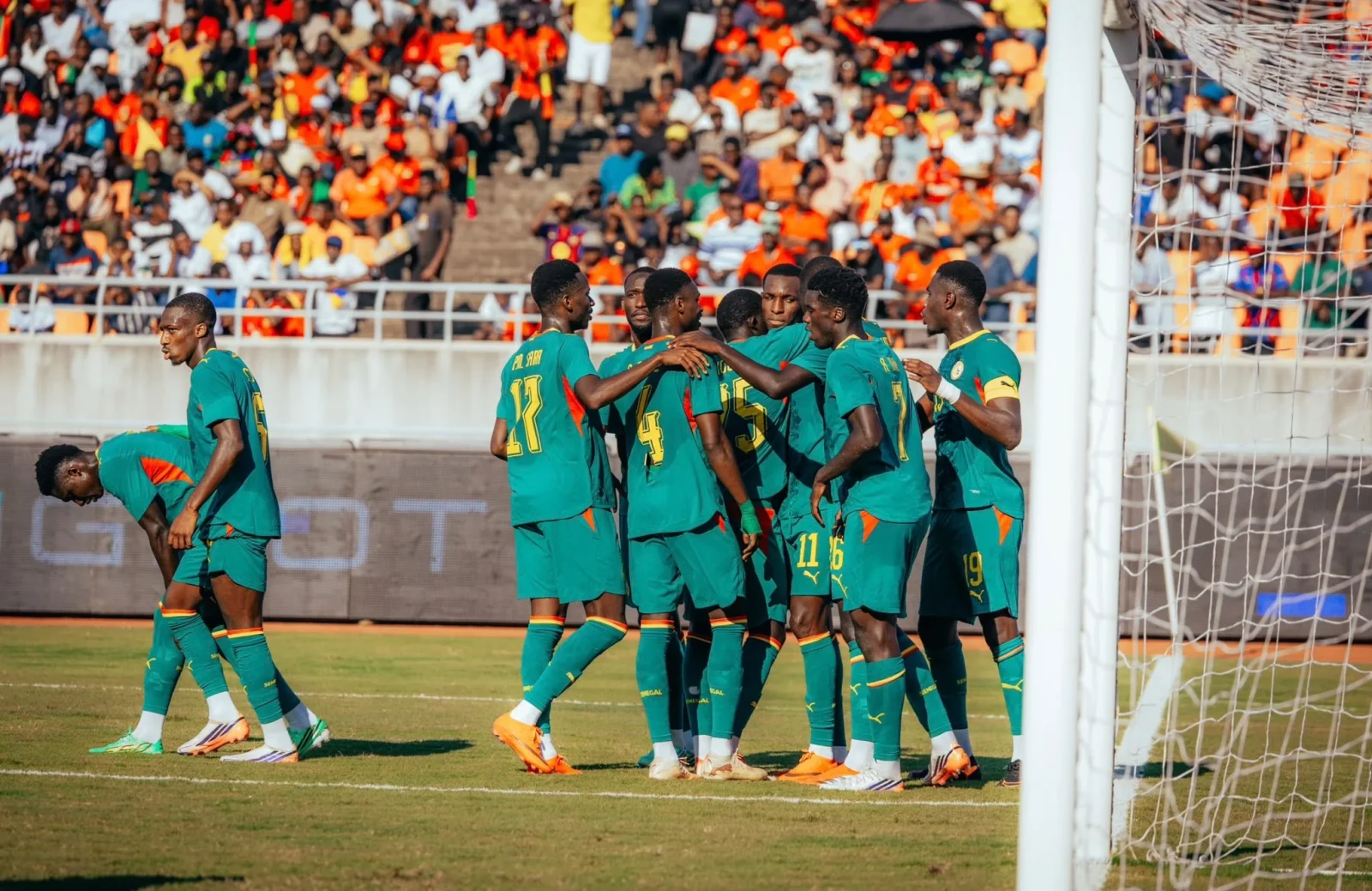
Senegal-Mozambique (1-1): the Lions of Vieira, between promises and the impression of déjà vu
For his big debut on the Lions bench this Friday in Maputo, as part of qualifying for CAN 2027, Patrick Vieira saw a two-sided match from his Senegal team. Final score: 1-1 against Mozambique. A frustrating result which, beyond the simple point of the draw, reveals valuable lessons a few days before the trip to Ethiopia.
When Nicolas Jackson opened the scoring in the 32nd minute on a pass from Nicolas Jackson, the Senegalese supporters doubted that the hardest part was done, since the Lions were far superior to the locals. Firstly because on paper, Senegal is far superior to Mozambique. Then, because the copy delivered so far lived up to expectations.
An attractive start, carried by the corridors and Lamine Camara
The first forty minutes offered an encouraging face of the new version of Senegal. On the sides, Assane Diao and Abdallah Sima multiplied the initiatives, bringing percussion and risk-taking in the final third, exactly the profile that Vieira seems to want to instill in his collective. In the midfield, Lamine Camara was omnipresent, recovering, distributing and projecting, confirming his status as the centerpiece of the future Senegalese midfielder.
On a collective level, the team also displayed a clear identity in its pressing: as soon as the ball was lost, the Lions sought to immediately stifle the opponent’s recovery, a principle of play which contrasted with certain shortcomings observed in recent months. This initial sequence gave a glimpse of a team capable of imposing a new rhythm and intensity.
The second period, or the return of the old demons
But this dynamic came to an abrupt end after the break. And that’s where the problem lies: the difficulties that had already plagued Senegal during the World Cup have resurfaced, almost identically.
The lines stretched, creating spaces exploited by the Mozambicans and making recovering the ball more laborious. Offensively, the team lost its ability to make a difference, settling for possession without any real impact in the last thirty meters. Direct consequence: several chances were again conceded, a sign of defensive solidity that could still be improved once the high pressure was released.
This two-stage scenario is a furious reminder of the same failings that Pape Thiaw never managed to lastingly correct during the global campaign. Hence this impression of déjà vu, as if the change of coach had not yet made it possible to erase problems that were more structural than cyclical.
Vieira’s priority construction site
This draw against Mozambique, if it does not call into question the appointment of the Franco-Senegalese technician, clearly sets out the specifications of his mandate. The individual qualities are there (Diao, Sima, Jackson and Camara have shown it) but the challenge is now collective and physical: how to maintain the intensity of the pressing over the ninety minutes? How to keep the lines compact at the end of the match? How to transform ball control into clear chances?
With Ethiopia from September 29 then the Comoros on October 4 in Marseille, Patrick Vieira will not have much time to provide answers. But it is precisely these tactical and physical adjustments that will determine whether this first outing was just a simple getting started hiccup, or a sign that the Lions’ difficulties are deeper than a simple coaching problem.
Oumar Boubacar NDONGO
