
Visit to the archives of Ababacar Samb Makharame: going backwards, to perpetuate the memory September 16, 2026
In recent years, the Senegalese have shown a marked attraction to archives, markers of a time for which they feel nostalgic or which they dream of. Among the curators of this plural identity, the African Archives Fund for the Safeguarding of Memories – Ababacar Samb Makharam figures prominently. In this cave, history and memory extend their meanings and their works spanning the present. They have the ambition to contribute to shaping the future. Immerse yourself in this sanctuary of graphic treasures from a century of stories.
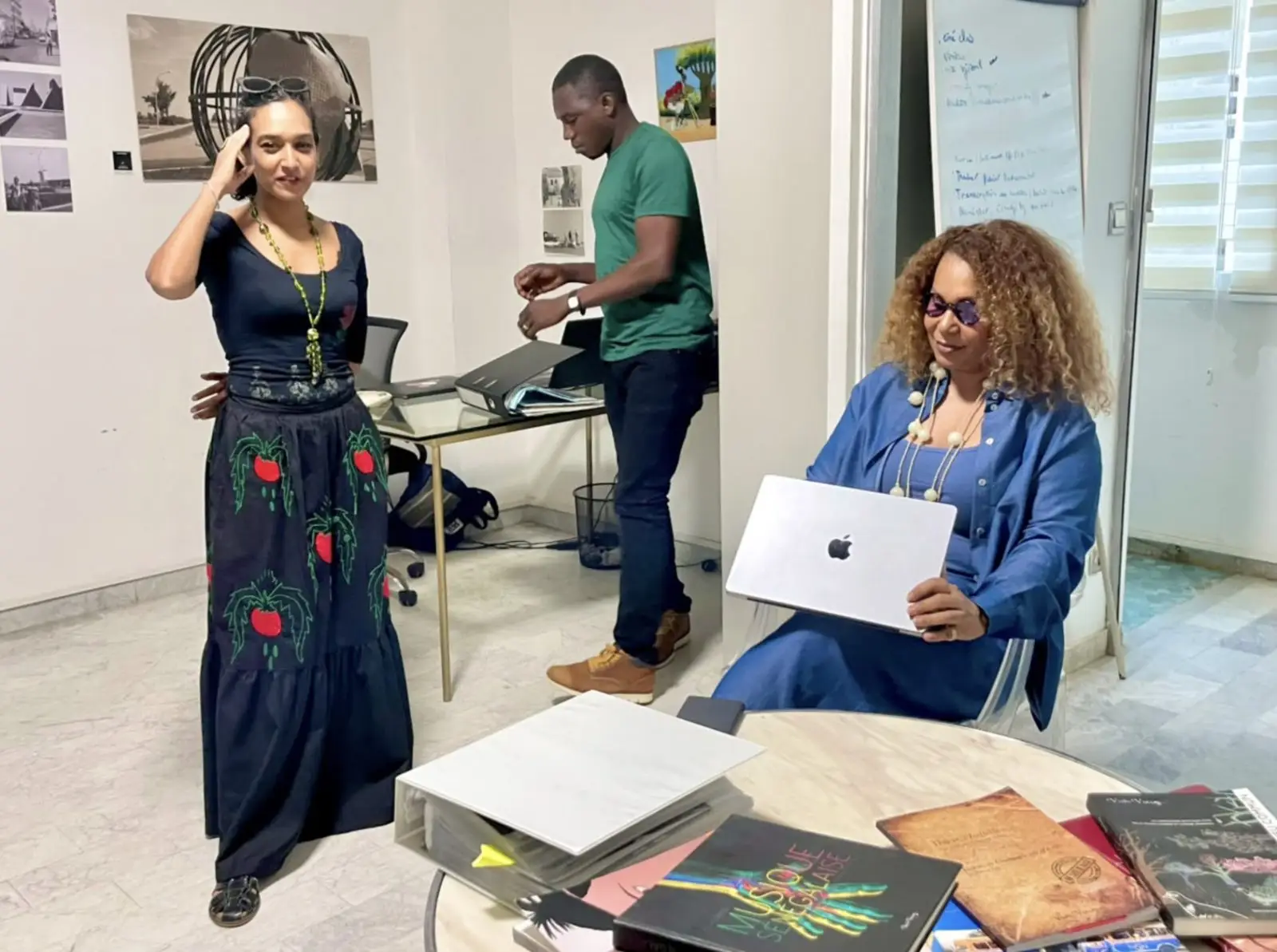
At 26, avenue Jean Jaurès corner André Peytavin, the pouring rain almost flooded the asphalt. The surprise of this storm still made the few brave people run on the pedestrian, most of whom were heading to the Plateau offices, in downtown Dakar, yesterday Tuesday, September 15 in the morning. Some passers-by and other traders managed to take shelter under the porch and in the hall of the Ndiouga Kébé building, without however disturbing the tranquility of the place. We pass them to take the elevator, which takes us to the 5th floor of Block D of the legendary building. This is where an apartment concentrates a more solemn calm, but very talkative about its treasures and its interest. These are the premises of the “African Archives Fund for the Safeguarding of Memories – Ababacar Samb Makharam”. The places house more than documents, photographs, period prints, glass plates, negatives and other manuscripts. It is the reserve of a history witness to many storms. Diluvian, but also emotional, fierce, aesthetic, loving and friendly, under the head or in a glass of water.
Signed Renaudeau, Abdou Fary Faye, Barber…
On site, the president of the Archives Fund, Ghaël Samb Sall, welcomes us, accompanied by her associate Vydia Tamby and the curator Elimane Dandio. On the television screen, hanging on the wall, “An iconographic cartography of Dakar”, a small digitized archive film, is waiting to be viewed. This will be after consulting the few issues of “Paris-Dakar” (1933-1961) and “Dakar-Matin” (1961-1970), ancestors of “Le Soleil”. On the front page of “Paris-Dakar” from 1957, we read “Two Senegalese champions of France”. In caption: “Thiam Habib, the athlete who won the two hundred meters of the French Athletics Championships”, with a photo of the former Prime Minister of Abdou Diouf. In the photo, the Enfom student finished his winning sprint, in the full vigor of his 22 years.
These clippings and issues of “Paris-Dakar” and “Dakar-Matin”, less than a hundred, are waiting to be digitized. A passionate third party entrusted them to the archives, “convinced that they will be valued”. These moldy papers carry less the weight of their age than that of their history. “We have thousands of photos already digitized and referenced,” says Ghaël Sall. “Even more than 100,000”, corrects the documentalist, Elimane who at the same time corrected Vydia Tamby whose approximation was “in the more than 50,000 in 5 years of work”. The latter also tells us that scanning a single photo, for the entire process, can take 45 minutes.
On the screen, the digitized archives parade like a memory train. Each wagon carries a set of symbols which tell the story of the national, even continental, trajectory. Photos of the barricades of May 68 are passing by. We see large stones signed “1 piece = 2,000”, and broken windows in the city center. Photos also show scenes from the World Festival of Negro Arts of 1966, as well as scenes of life in the Autonomous Port of Dakar in 1977. Streets of Dakar-Plateau, taken in 1971, reinforce the current urban decadence of the capital. A cabinet also houses cameras, plates and… a pipe by Sembène Ousmane.
We also admire images of the opening of the historic exhibition “Senegalese Art, Today” (1974, Paris). It is a pictorial manifesto of the Dakar School, without a doubt. At the opening, among the guests, there was a particular nuisance, literally and figuratively: Jacques Foccart. We similarly contemplate the grace of the young Sokhna Dieng, current Mrs. Cheikh Modou Kara Mbacké, and the almost phlegmatic charm of Sada Kane. The two covered the inaugural arrival of Concorde at Dakar-Yoff airport in 1976, interviewing Alain Delon, Mireille Darc, among other personalities. Archives sometimes cause bitterness, unfortunately. Like the lost majesty of the gesture of a certain era.
This nobility of manner was noticed by Douta Seck and Jaqueline Scott-Lemoine (in their interpretation of “La Tragédie du roi Christophe”, Fesman 1966), by Makhourédia Gueye and Younousse Sèye on the set of “Xala” (Sembène Ousmane, 1974), by Djibril Diop Mambety on the set of “Badou Boy” (1970)… We can also see photos of Cheikh Anta Diop, demonstrative in his white coat, in his Ifan laboratory. Curiously, the white journalist who interviews him appears in the same outfit, a few shots later, in the offices of Léopold Sédar Senghor.
These photos are mainly the works of the famous photographer Michel Renaudeau, “documentalist” of Senegal and Africa, and Abdou Fary Faye, formerly of the media library of the French Cultural Center and memory of the beginnings and the rise of Senegalese cinema. “Some pieces were offered to us, while the other part was given to us,” explains Ghaël Samb Sall, who also draws on the funds of his late father, the pioneering filmmaker Ababacar Samb Makharam.
A documented massacre
The archive also revives silenced pain; characteristic of all History. The oldest pieces held by the “Ababacar Samb Makharam Archives” date back to 1890. They are by the famous Joannès Barbier, who participated in the advance of colonial military columns.
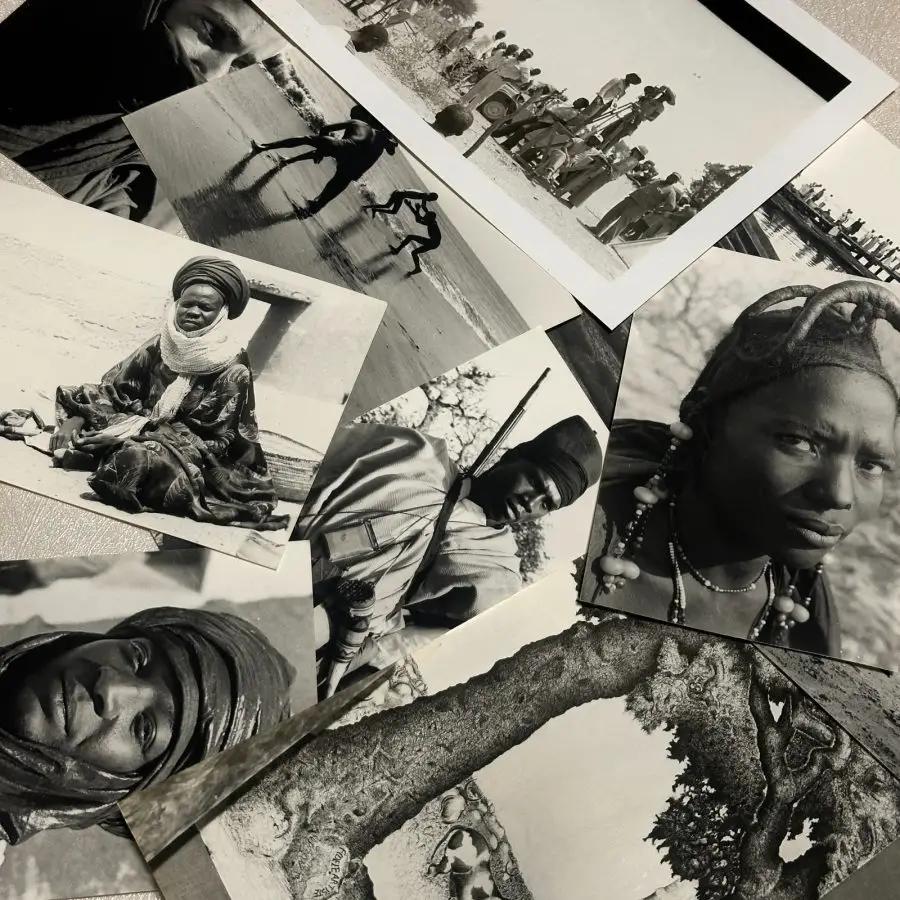
What beautiful photos of the suburb of Sor (Saint-Louis), the Madior Toro Fall damel, Podor-la-Rade, Tivaone, the surroundings of Tiaroye, Kayes, the 1res Gares, Cameliers de Louga, etc. ! But the most stunning comes from images of… massacre. We first see black hunters posing in front of dead hippos and carcasses of this animal. Further on, there are the remains of these Negroes scattered on a bank of Bakel, some of them completely with their throats cut. Amadou Cheikhou had surprised the colonial military column and reduced their ranks. In retaliation, Colonel Archinard’s troop attacked the Toucouleur warriors and decimated a good number of them.
The collection also has glass plates, dated between 1920 and 1940. These are essentially archives from Dahomey, notably an original from “Hunter Somba”, as well as scenes of royalty, the palace of Porto-Novo, the cliffs of the Dogon countries, the night king, customary drums, etc. The “Ababacar Samb Makharam Archive Fund” was born, explains Ghaël Sall, “from the imperative need to safeguard, conserve and promote collective memory, intellectual works as well as the historical trajectories of African territories”. For their missions, these archives want to establish scientific debate, stimulate research and promote the dynamic conservation of African cultures.
Report by Mamadou Oumar KAMARA
