
Management of extractive resources in Senegal: A new course set by the government
New mining code, local transformation and national strategy, during his general policy declaration (DPG), the Prime Minister, Mouhamadou Al Amine Lo, announced improvements in the management of extractive resources.
The Senegalese mining sector is entering a new phase. In his general policy declaration, Prime Minister Mouhamadou Al Amine Lo announced the milestones of an extractive policy more articulated around economic sovereignty. Several announced directions directly concern the environment in which industry players operate.
The first marker of this new approach is the continued review of contracts concluded in these strategic sectors. The ad hoc Commission created in July 2024 continues its work, according to the Prime Minister, Mouhamadou Al Amine Lo, who announces that around thirty mining conventions are currently being renegotiated. However, the government intends to avoid a logic of rupture at all costs. Three principles are reaffirmed: legal certainty for investors, firmness when the national interest is at stake and a balance in the processing of files, summarized by the formula: “neither brutality, nor naivety”.
This approach is accompanied by a broader requirement for future public-private partnerships. From now on, these must be based on “the truth of the costs and risks”, with a prior assessment of their long-term budgetary commitments, specifies the Prime Minister. An approach which reflects the desire displayed by the authorities to strengthen the economic evaluation of contracts and to better measure their impact on public finances.
Phosphate at the heart of local processing
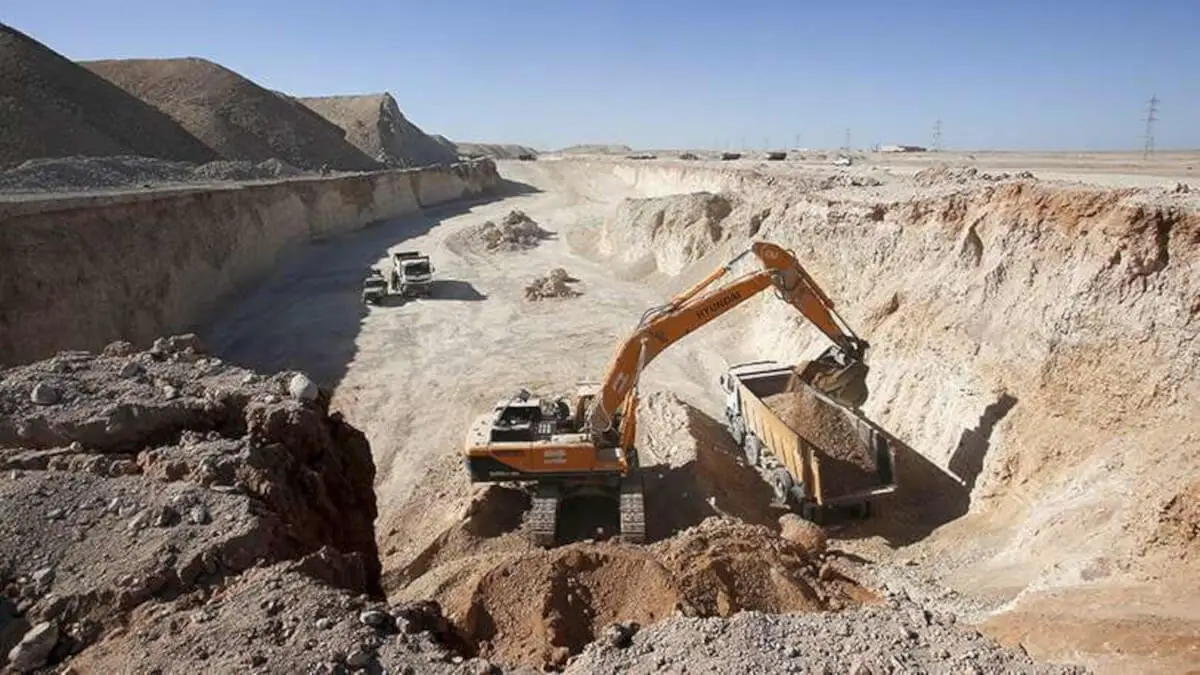
In the mining sector, the government announces the adoption of a new mining code before the end of 2026, the continuation of the renegotiation of conventions, the finalization of the audit of mining titles as well as the establishment of the rehabilitation fund for sites and quarries. The mining cadastre and the local development support fund are also concerned.
Furthermore, local transformation becomes a central axis. The Prime Minister announces that “iron, phosphates and gold will be processed more locally”. In this perspective, State participation must be consolidated while the access of the national private sector to titles and exploitation will be expanded.
On another note, the government is setting objectives for 2029. This involves bringing the State’s annual mining revenues to around 600 billion FCFA, compared to 370 billion in 2019, and the added value of the sector to 3,606 billion FCFA, against 1,969 billion. The local processing rate is set at 50%. In this regard, the Prime Minister announces that the government will follow “contract by contract”, with an annual publication of the achievement rates.
A national strategy in line with current requirements
The signal most directly linked to the phosphate sector, however, lies in the announcement of a national strategy dedicated to “optimizing the exploitation of the country’s phosphates”. The file is among those examined as part of the interministerial meetings held at the Prime Minister’s office, recalls Mouhamadou Al Aminou Lo. Its contents have not yet been made public.
At the same time, the government is identifying a North-East and Diourbel-Louga industrial center dedicated to phosphates and fertilizers. The Matam phosphate and fertilizer industrial project, backed by a research center and a university, is among the major mining projects announced. The government is finally reaffirming its commitment to the Extractive Industries Transparency Initiative (EITI).
O.BA
