
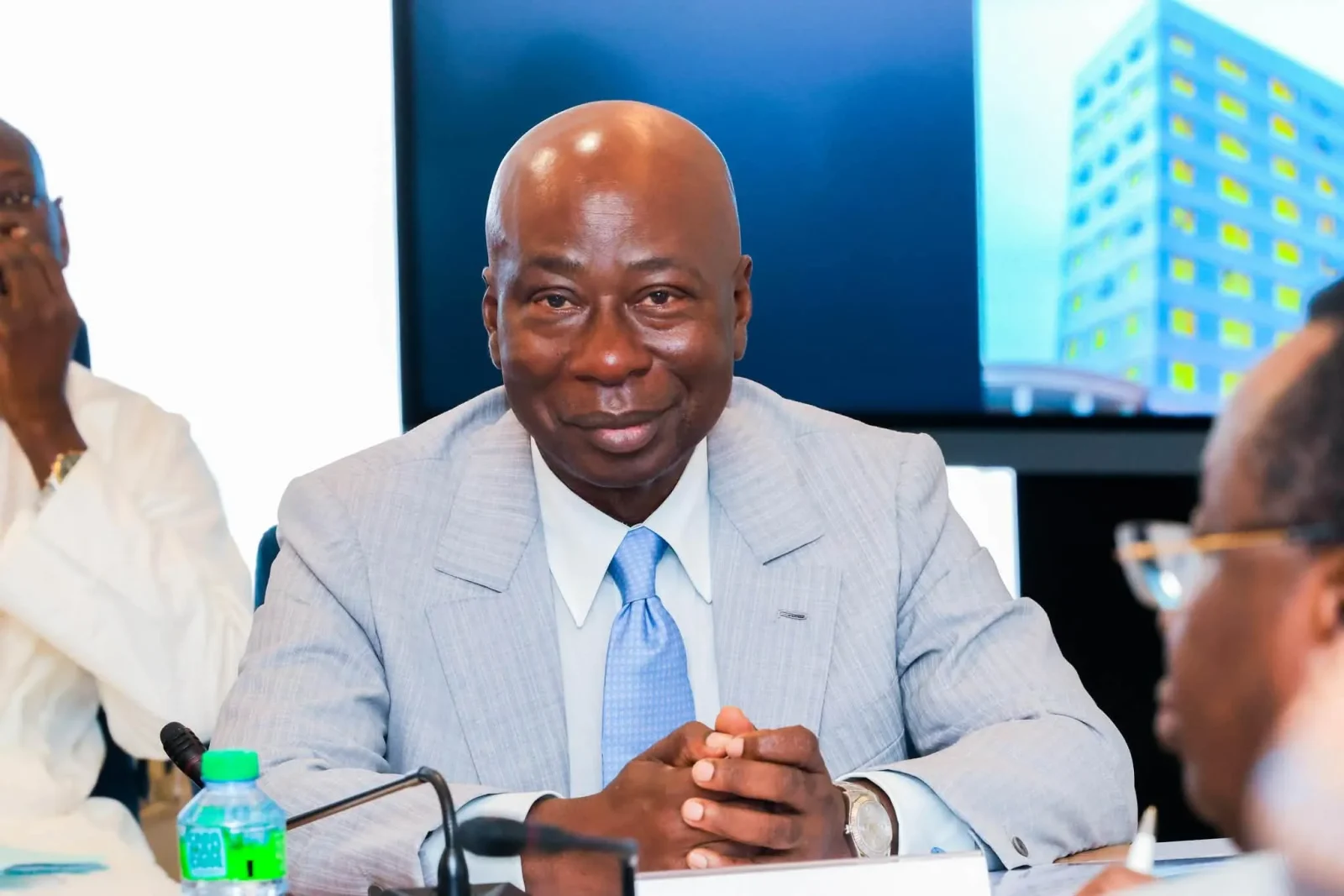
Public procurement: employers want guarantees for companies with Senegalese capital
The president of the National Employers’ Council (Cnp), Baïdy Agne, asks the government to give concrete content to economic patriotism. He pleads for a new definition of the national company, better access to public markets and the revival of construction.
Public procurement must benefit more companies with Senegalese capital. This is one of the main requests made by the president of the National Employers’ Council (Cnp), Baïdy Agne, during his meeting with Prime Minister Ahmadou Al Aminou Lo. For employers, the definition of the national company announced by the government must above all make it possible to correct the imbalances observed in access to public markets.
Baïdy Agne recalled that the current UEMOA framework considers companies established in member states as national. The CNP instead proposes to retain the criterion of majority Senegalese capital. “We are in favor of there being foreign direct investment because it is a source of wealth and job creation,” he declared. In his eyes, the special treatment announced by the Prime Minister and the bill on economic patriotism could help address this concern. The president of the CNP focused mainly on public procurement.
He took the example of public works to show, with supporting figures, the still limited role of companies with Senegalese capital. According to the data he provided, 90% of the projects financed through the Consolidated Investment Budget (Bci) are presented as executed by Senegalese companies. In fact, around 50% would go to Chinese companies, 10% to foreign French companies, while companies with Senegalese capital would only achieve, at best, half. “We think we can correct that,” insisted Baïdy Agne.
Construction at the heart of concerns Employers are demanding that local content in public procurement become an effective rule. He cites, in comparison, the practices of China, which reserves its financing for its own companies, and those of Europeans, considered more open. The question of public procurement is directly linked to the difficulties of the construction sector. The Cnp believes that Senegalese companies today have sufficient experience to conquer markets in the sub-region. They are particularly present in Guinea, Gambia and Ivory Coast. However, the sector has been experiencing difficulties for two years, according to Baïdy Agne, in particular due to the lack of public markets. This situation also affects banks exposed to the sector and weakens companies facing cash flow problems.
The CNP calls for its rapid relaunch. Energy and tourism are also among the sectors that employers consider to be priorities for supporting economic activity. At the same time, employers are demanding that dialogue with the State be long-term. Baïdy Agne raised ten to eleven concerns, with particular reference to the presidential directives of the Council of Ministers of September 10. It proposes sectoral consultations with bankers, oil groups and other economic players, as well as regular meetings with the Prime Minister, every three or six months.
The objective is to monitor the commitments made and transform the consultation into a permanent working mechanism. The social question is also among the priorities of the CNP. After the adoption by the National Assembly, on August 18, of bills relating to the Labor Code and the Social Security Code, Baïdy Agne wants new consultation with the trade union centers. He insists on preserving social peace in a difficult economic context. The Prime Minister assured that these texts would “never be a weapon of the State or employers against employees”. He also promised that once the State’s resources had been structurally restored, nothing should stand in the way of a peaceful social climate.
Pathé NIANG
