
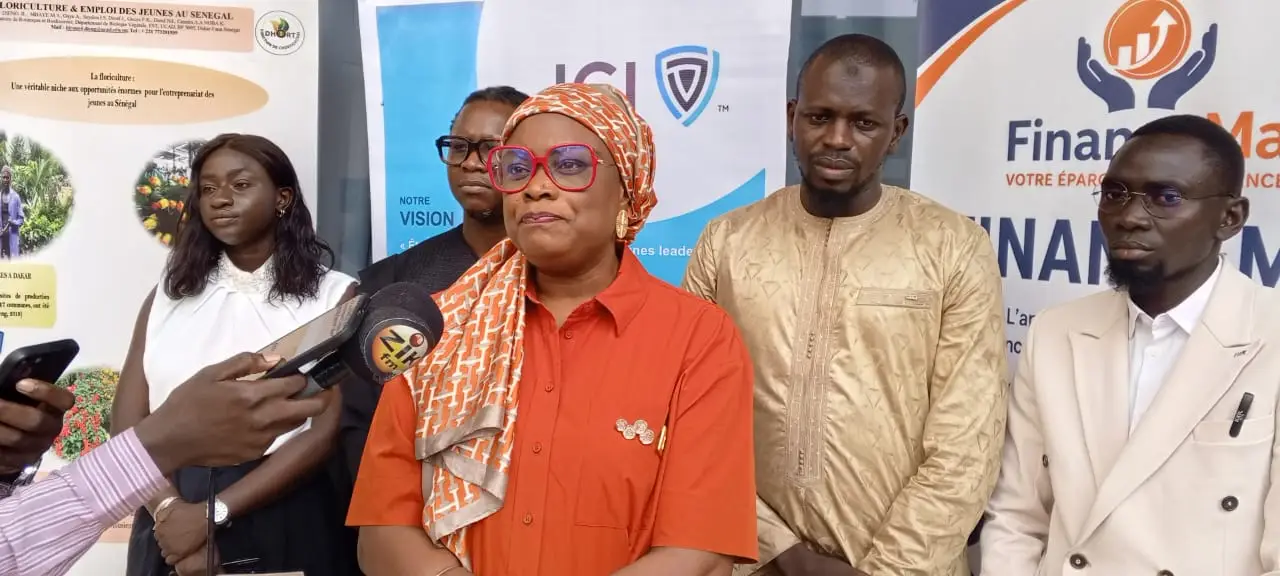
Female leadership: access to digital technology, an accelerator of opportunities
The Junior International Chamber of Dakar No. 1 (JCI), organized, Saturday July 8, in Dakar, a networking event to provide strategic answers on the relationship between new technologies and women leaders.
Aware of the rapid changes in the global economy and the imperatives of sustainable development, the Junior Chamber International of Dakar Number 1 (JCI), organized networking to invite its members to reflect on the theme: Digital skills and female leadership: How to accelerate the access of young people and women to opportunities in the sustainable economy. According to Ibrahima Faye, president of JCI Dakar N°1, access to digital skills and the promotion of female leadership appear for her organization to be essential levers to strengthen the inclusion and empowerment of young people and women in Africa. “
In this context of growing inequalities in which we live, it is necessary to build a strong and resilient economy by making digital tools available to women leaders, in order to accelerate the transition to a sustainable economy, especially for women,” said Ibrahima Faye. For him, through this framework, JCI Dakar N°1 aims to support the leadership of women by promoting the projects they carry, to promote inclusive growth where digital innovation and gender equality become catalysts for social and economic transformation. According to Sophie Diallo, director of partnerships and communications at the Pasteur Institute in Dakar, we need transformational leadership with a 360° approach that promotes the legitimacy of words and actions for young people and women.
According to her, the woman is indeed multidisciplinary. So, in his opinion, we simply need to support him to transform his skills into opportunities. Rokhaya Solange Mbengue Ndir, director of Start Up Factory at Orange-Sonatel, it is important to understand that the best profiles are not necessarily those with the highest qualifications, but rather those with soft skills. Still in his opinion, the challenge remains facilitating access to digital technology for women. “The more capable women we have, the more they will occupy positions of responsibility in structures, because they increasingly have the trust of the State and partners.
Djibril NDIAYE
