
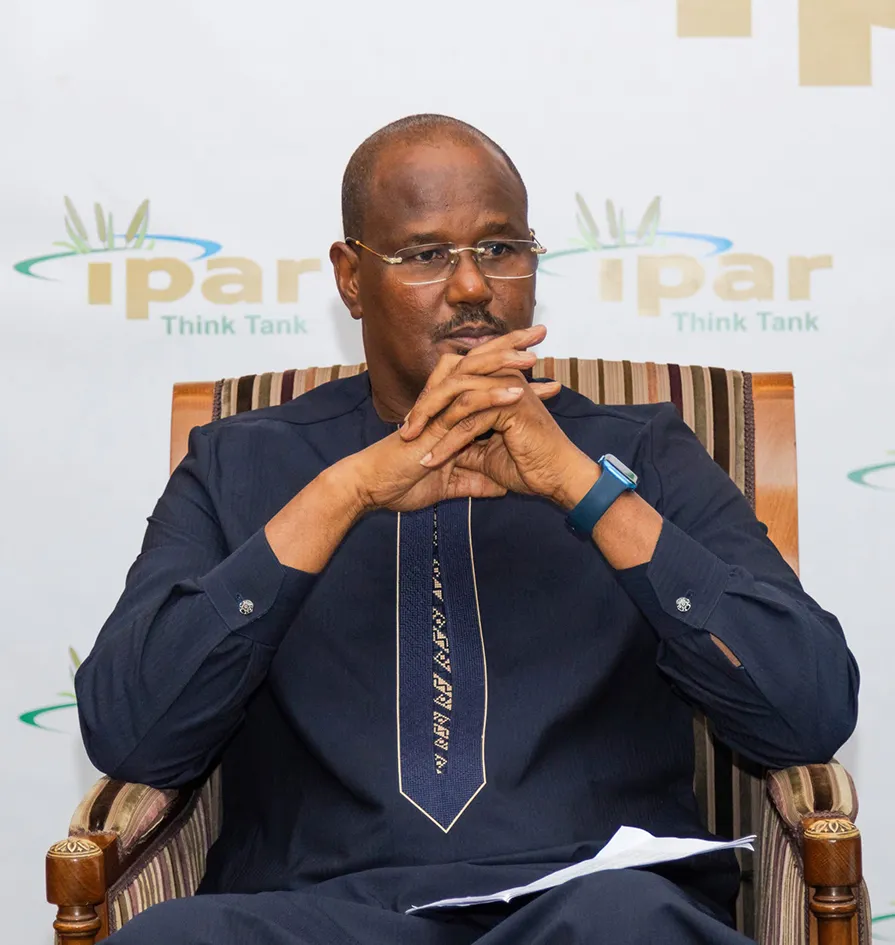
Dr Cheikh Oumar Bâ: “Direct subsidies towards mechanisms promoting the autonomy of producers” July 20, 2026
Aware of the current issues, the Minister of Agriculture, Food Sovereignty and Livestock, Dr Cheikh Oumar Ba, shares the opinion of many stakeholders on the need to engage in in-depth reflection on the agricultural subsidy policy in Senegal.
“Public aid cannot constitute a lasting solution. They must be reoriented towards mechanisms promoting the autonomy of producers and better valorization of their harvests,” he asserts. According to the minister, the priority is to build, in consultation with players in the different sectors, a system more in line with market realities. In particular, he warns against a situation where producers are encouraged to increase their production thanks to subsidies, without having sufficient outlets. “Subsidizing production so that it then rots in the hands of farmers constitutes a double loss, both for the producers and for the State,” he believes.
Dr Cheikh Oumar Ba therefore recommends a better match between production and market needs, a reduction in post-harvest losses as well as a strengthening of marketing systems. He also suggests initiating a reflection on a reorientation of subsidies towards the products themselves in order to facilitate their marketing, like models implemented in several countries. The minister also insists on the need to favor responses adapted to the realities of the territories.
According to him, communities have developed practices that allow them to face climatic hazards and adapt to their environment. These local solutions should serve as a basis for the development of public policies. “What can we do to stop reaching out? What can we do to be independent? Because that’s what’s sustainable,” he said. For the minister, the true effectiveness of subsidies is measured by their ability to generate sustainable income, make public investments profitable and strengthen Senegal’s food sovereignty.
“Protection must replace the logic of subsidies”, according to Professor Amath Ndiaye
For the economist, Professor Amath Ndiaye, rather than multiplying subsidy mechanisms, the State must further protect and structure agricultural sectors. He takes the example of the rice sector. “Subsidies cannot constitute the basis of an agricultural policy,” he believes, recalling that current budgetary constraints reduce the State’s room for maneuver. The delay, or even the absence, of payment of compensation to operators who purchased local rice illustrates, according to him, the limits of a model based on financial commitments that are difficult to honor. For the professor at the Faculty of Economics and Management (Faseg) at Cheikh Anta Diop University (Ucad), the priority must be to create an environment favorable to the competitiveness of Senegalese rice.
This involves in particular better regulation of imports. “We must protect rather than subsidize,” he defends, pleading for a gradual and targeted increase in duties and taxes on imported rice. According to him, such a measure would have a double advantage: strengthening the competitiveness of local rice while generating additional revenue for the State. These resources could be reinvested in the still fragile links of the value chain, notably storage, marketing, financing of stakeholders and improving product quality. For the economist, food sovereignty cannot be achieved through one-off support, but through a coherent strategy giving local rice the means to compete sustainably with imported rice. Protection of the sector, supported by investments in infrastructure and improved productivity, thus appears to be a more sustainable alternative to a policy of permanent subsidies.
O. FEDIOR
