
Monetary policy: the Bceao maintains its key rates
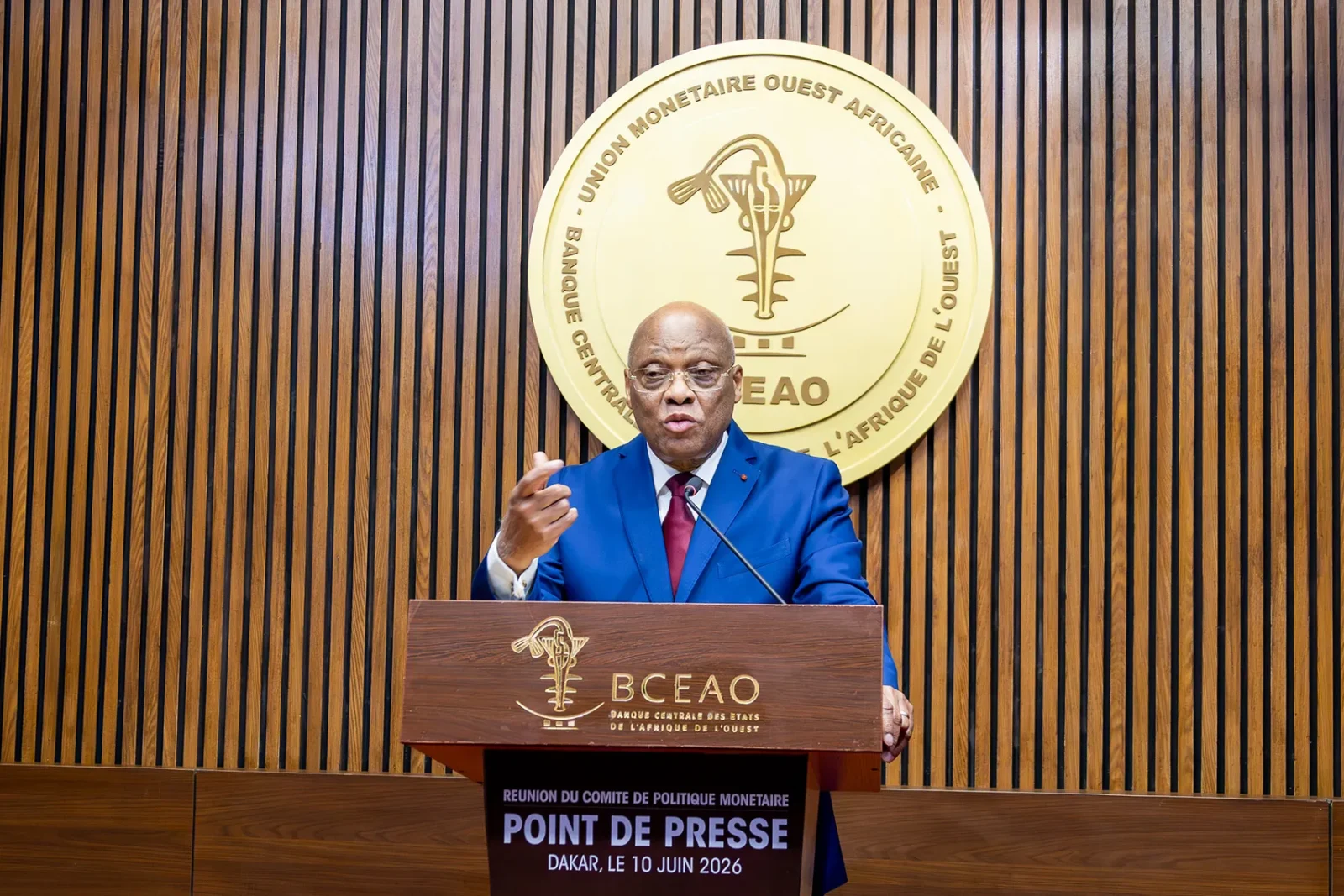
Faced with global uncertainties, the Central Bank of West African States (Bceao) is choosing caution. The Bceao maintains its key rates at the end of its second ordinary session of the year held on Wednesday, June 10, at the institution’s headquarters.
The Monetary Policy Committee of the Central Bank of West African States (Bceao) opted for stability during its second ordinary session of the year held on Wednesday June 10 in Dakar. Faced with an increasingly uncertain international landscape, the financial institution has decided to keep its key rates unchanged.
The main rate at which the Bceao lends its resources to banks remains fixed at 3.00%, the interest rate on the marginal lending window remains at 5.00% and the mandatory reserve coefficient applicable to Union banks is maintained at 3.00%. “This decision, placed under the sign of vigilance, is based on a regional situation that is currently comfortable, but subject to immediate external risks,” explained the governor of the Bceao, Jean-Claude Kassi-Brou.
Also read: The Bceao lowers its key rate to 3%
The conflict in the Middle East, which began at the end of February, is getting bogged down and disrupting world trade. The BCEAO governor stressed that the closure of the Strait of Hormuz, through which a fifth of world oil production passes, caused an increase in energy and freight prices of more than 20%. This situation led the International Monetary Fund (IMF) to revise downwards its global growth forecasts to 3.1% for 2026 while projecting higher than expected overall inflation (4.4%).
According to Jean-Claude Cassis-Brou, the first effects of this crisis are starting to be felt in the Union. Between March and May 2026, five member countries had to adjust fuel prices at the pump upwards. However, the impact on regional inflation remains limited thanks to a good agricultural campaign.
The inflation rate thus stood at -0.2% in the first quarter of 2026, after having stood at -0.8% at the end of 2025. However, the trend is upward and the Central Bank estimates that inflation should rise to 1.6% over the whole of 2026, under the effect of the costs of energy and imported food products. This level remains in line with the institution’s target zone of between 1 and 3%.
Despite these exogenous tensions, Jean-Claude Cassis-Brou welcomed the robustness of the region’s economy. The Union’s real GDP growth stood at 6.1% in the first quarter of 2026 year-on-year, driven by the dynamism of all sectors, in particular exports of oil, gold and cocoa.
For the year as a whole, activity should remain at this rate of 6.1%. This solidity is also reflected in the consolidation of public finances, the budget deficit having fallen to 4.1% of GDP compared to 4.3% a year earlier despite the efforts of States to mitigate external shocks.
Inflation under control, but on the rise
Furthermore, the Union’s external position continues to strengthen thanks to the high value of exports and the mobilization of financial resources by Member States; which makes it possible to consolidate foreign exchange reserves.
The banking sector is doing just as well. Liquidity is abundant there, as evidenced by the oversubscription of public securities by banks. This situation resulted in an easing of conditions on the money market where the one-week interbank rate fell by 68 basis points to settle at 4.26%. At the same time, credit to the economy continues to grow with an increase of 4.4% at the end of March.
Jean-Claude Kassi Brou recalled that the Union’s economy remains solid, but it must face three channels of transmission of the international crisis: the increase in the price of petroleum products, the increase in freight costs and the risk of monetary tightening by the major world central banks; which would increase the cost of external borrowing for States. Although the Bceao is not considering a rate increase immediately, it says it is ready to act and adjust its monetary policy in the event of a threat to the stability of the Union.
Mamadou GUÈYE
